A Coalition of Dignity

When John Lennon wrote Imagine in 1971 he presented a universal prayer that envisioned a fairer, saner and more peaceful world for everyone, free of oppressive forces, violence and prejudice. Unsurprisingly it remains one of the most popular and widely performed songs of the 20th century and it never dates because the issues it addresses have not changed.

Lennon was a courageous visionary who was unafraid to use his power and influence to speak out. He was a great artist and thinker and with Yoko Ono he explored his existence and interrogated the world in order to come to  an understanding of himself and his personhood.

Each and every person walking on the planet today has a right to understand their being, the very nature of their existence and what life means for them. Every human being is a wonder and a source of exciting possibility and potential.

And yet.

The world is a place riven by war, greed, violence, intolerance and prejudice. We have created dominant narratives that enframe our lives placing limitation in the way of potential. We have enabled a culture of fear and suspicion that obscures our ability to see clearly and directly causes us to view many of our fellow human beings as ‘other’, as ‘not like us’ and therefore outside of the tribes to which we adhere.

The result of ‘othering’ people is always awful. In the UK homosexuality was once a crime and individuals were persecuted, criminalised and dehumanised for their sexual orientation.  That has changed in the UK which is now a much more tolerant and open society but the othering of gay people continues unabated in other parts of the world. The othering of homosexuals in Chechnya has resulted in concentration camps where gay men are being tortured and executed daily as a homophobic narrative runs rampant across the culture.

However othering is not always so extreme and overtly violent. It is often so subtle that we barely notice it and accept it without challenge. Take as an example the attitude in the UK to care of the elderly. Health and social care policy has effectively othered elderly people in need of care and defined them as a problem to be managed. When this kind of managerialism takes over the human is essentially lost. We now accept as standard practice that vulnerable elderly people can have their needs met by 4 care visits a day to the home, lasting approximately 15 minutes. There are no guarantees of consistency as carers come and go, unsurprisingly as they are often on terrible pay under zero hours contracts. Between visits we seem to have accepted that the vulnerable elderly can be left to their own devices allowing efficiency to be served with minimum consideration for the needs of the cared for or the carer. Step back from the unexamined acceptance of this and the inhumanity at work is stark indeed.

We could go on, examining countless examples of the prizing of efficiency and meeting of targets over the needs of humans. It’s not just happening in social care, but in education, the health service and in businesses where humans are simply resources to be managed and organised and often exploited. This might explain the recourse to othering,  which defines humans as problems to be solved, dehumanising people and removing them from our sphere of personal responsibility.

So what do we do? Firstly we think about it. From thinking comes action and action can take many forms but it all comes down to resistance and making a stand in the name of what feels right; imagining a better world and fighting for it.

James Baldwin, the American writer, public thinker and activist has much to say on how oppression works and how it can be resisted. Baldwin talks about a ‘ coalition of dignity’, the idea that humans agree on the sanctity of human dignity and put aside separatist concerns to create the possibility of a better world that serves the best interests of every human regardless of race, gender, sexual identity or political sensibility. It seems an incontestable principle that human dignity should be at the absolute heart of how we live and how we treat each other. Imagine a world in which people are put first, in which at the centre of all decision making is placed the dignity of the human. Such a world is possible, first we imagine, then we act.

First published in The Cleethorpes Chronicle, May 2017


The Return of Twin Peaks

It’s been a long wait. Twenty-six years have passed since I sobbed as ‘the good Dale’ was trapped in the Black Lodge and his terrible doppelganger entered ordinary reality embodying the demonic Bob, intent on wreaking havoc.

I loved Twin Peaks, I mean, I really loved it almost to the point of obsession.  I had long admired David Lynch before it came along but Twin Peaks cemented me as a devoted fan. I wrote my Masters’ dissertation on Lynch’s work and traveled to Paris in 2007 to see his marvelous art exhibition and installation at the Foundation Cartier. The exhibition was the most immersive experience I have had in a gallery. I had to be asked to leave by the polite staff at the end of the day. I spent seven hours there.

This makes me sound like a geek, and hands up, yes, I confess, when it comes to Lynch I am an unashamed geek, a proud Peakie.

And so the arrival of Season 3 is a life event for me. It’s a piece of art I’ve longed for and so when its return was announced back in 2015 I was beside myself. At last, the good Dale can return to the world and his role as exemplary FBI special agent.

Last night I sat down to watch the first two episodes of  Season 3, excited, full of anticipation and also fearful that it might not be good. Lynch has produced confounding and inscrutable work of late, particularly Inland Empire which I found baffling and too difficult to wrestle with.

I was rapt for two hours, I barely moved, barely breathed. It was good. But it was also different. And of course it was always going to be different. Half a century has passed since we first met Dale Cooper, Sheriff Truman and the rest of those wacky and wonderful inhabitants of a world that is part real, part dream, part something else entirely.

The first two hours were deeply troubling and unsettling. Twin Peaks 3 is horrific in the unique mode of Lynch – no one does cinematic dread like him. It is violent, nasty and ugly in places. I have always felt uncomfortable about the way Lynch depicts violence against women and I am still uncomfortable with it. A barely dressed Darya is beaten and sadistically tormented before being murdered. It is hard to watch. Not for the first time with Lynch I found my heart beating too fast and feeling terrified. There were other moments of extraordinary violence and I expect there will be more to come.

And yet it is also strangely beautiful, wonderfully absurd, poignant and funny, sometimes all at once. The stilted dialogue, so much a feature of the previous two series is present, highlighting Lynch’s love of melodrama. Long, lingering shots and slow scenes unfold using strange camera angles, lighting and set design that all unnerve and intrigue.

It’s poignant and moving to see actors returning to roles they played in the first two seasons and inhabiting them with such ease. Michael Horse as Hawk is as dignified as he ever was and imposing with his white hair and aged face. Madchen Amick as Shelley, who appears towards the end of episode 2, is a mature beauty now and I can’t wait to see more of her.

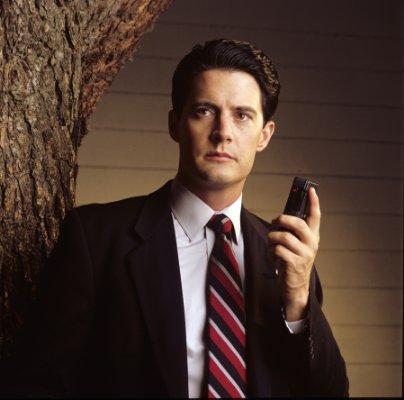
And then there’s Kyle MacLachlan, playing two characters and convincing completely as both the trapped good Dale in the lodge and the feral and foul Dale out in the world, murdering and torturing as he goes.

Sadly there are characters we won’t see again because the actors have died. Seeing Catherine Coulson, clearly very ill and close to death delivering her messages as the Log Lady choked me up.

It’s good to be back in the weird and wonderful world of Twin Peaks and in the hands of Mark Frost and David Lynch throughout. They now get to finish their story the way they want to tell it and the world-wide fan-base is thankful to them for that.

A Junior Fish Tale

This week I’ve been working in local primary schools giving workshops in readiness for the MAPAS (music and performing arts service) Key Stage 2 Singing Festival in July.  As part of our Arts Council funded jazz and poetry project we’ve written a junior version of A Fish Tale. It features a narrative set across three time zones and eight original songs telling stories about Grimsby’s fishing heritage.

Pat McCarthy and I wrote the songs together using different genres to make the piece as varied and dynamic for the children as possible and to introduce them to styles they might not have come across before. We’ve got rock and reggae, folk, gospel, a sea shanty, a lullaby, a nursery rhyme and a hymn. This week we’ve delivered 9 workshops in 8 schools working with about 30 children at a time and next week we have a further 7 workshops in 7 schools.

Working with children in this way is exhausting and exciting in equal measure. All schools are different in terms of atmosphere and of course all children are different because they’re all unique little humans. We’ve heard some gorgeous singing this week and seen such enthusiasm for the songs and the story. It’s been a lovely experience.

Music education is vital to children’s artistic and emotional growth. I’ve said before and I’ll keep saying it, singing is a birthright and we each carry our own unique instrument, our voice with us. Singing with children is uplifting and energising. Watching them grow in joy and confidence over these two-hour workshops has been extraordinary; gratifying and moving.

The cuts to arts education have been devastating over recent years and are set to continue if a Tory majority is returned on June 8th. It really isn’t party political to fear the impact of further cuts in arts education, simply realistic; fewer music teachers, less music in school, fewer musicians for the future. Ultimately, fewer projects like these that inspire children not just to learn about music but also about history, stories and superstitions. The kids have loved hearing about witches stealing egg shells to sail away in and cause havoc in the Arctic.

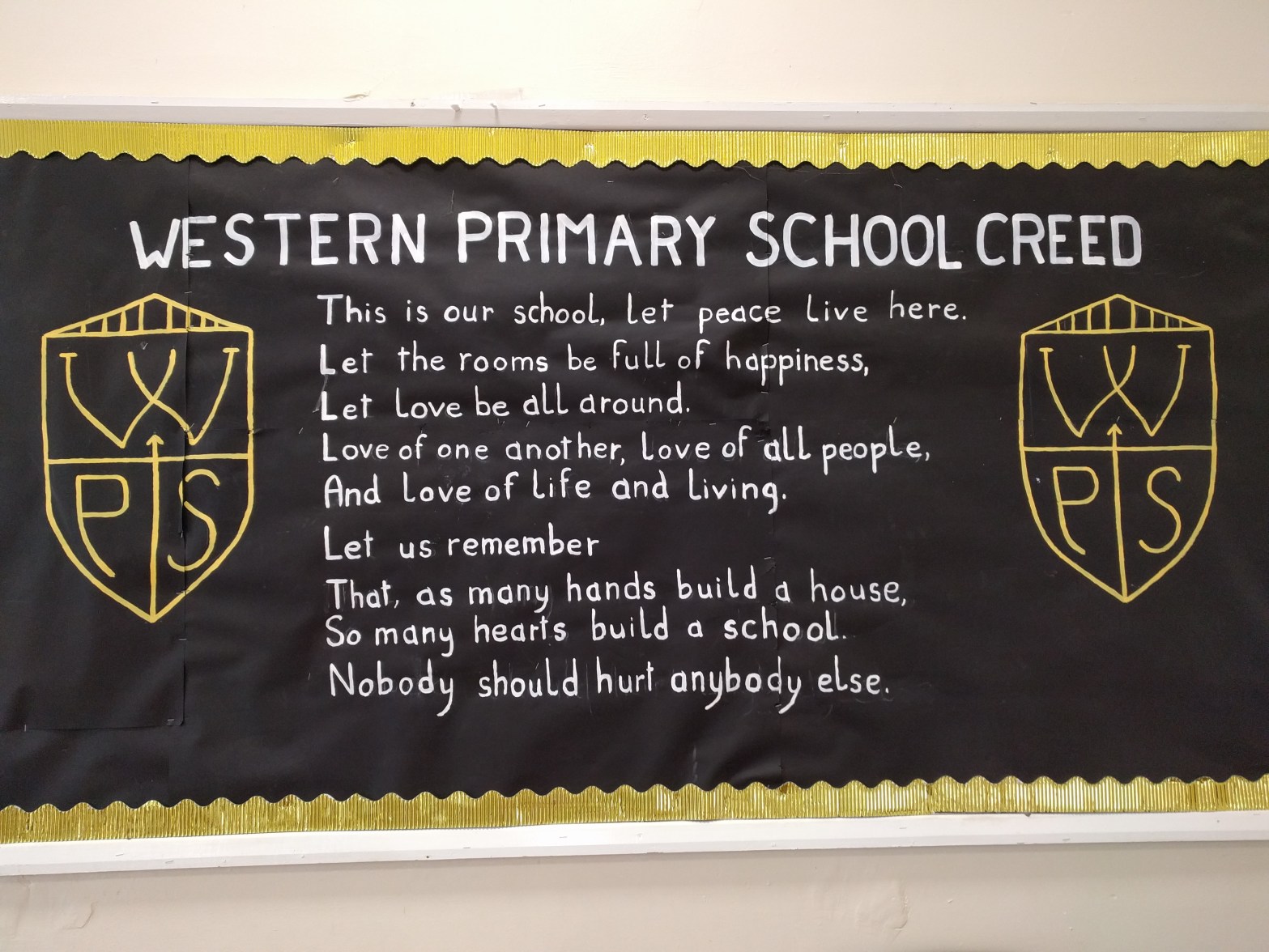
There have been many moments of joy and fun this week – kids say lovely things that charm, disarm and frankly stun you sometimes. We’ve had all of that this week. For me, a truly profound moment was reading the school creed for Western Primary School, shared here with kind permission of the head and staff. What a beautiful, inclusive and humane message the creed conveys. I stood and read it over and over before the children arrived to do the workshop and I thought, yes, if we all took this on and applied it to our communities, we’d change the world beyond recognition.

La Luna presents The Poetry of Person and Power

The Poetry of Person and Power - LogoI’m delighted to be able to announce that my submission to the Arts Council was successful and a grant has been awarded for a wonderful project, The Poetry of Person and Power. 
The grant will enable me to work with young people at Franklin College in Grimsby, producing an anthology of their work. Through the production process the students will be working with established poets, Helen Mort and Antony Dunn and editor, writer and project director Nick Triplow, who has extensive experience of producing outstanding publications.

The grant also covers a commission for Vivienne May and Maria Garner, two artists working together on an ambitious project, Calling To The Moon in which they are exploring a range of media including painting and poetry to produce a book and exhibition. Vivienne and Maria will be offering workshops for the community and details of those are to follow.

Finally the grant is enabling me to produce my next collection and to work on my own practice as a poet with editorial support from Nick Triplow. My project is still under wraps as I am immersed in the world of  A Fish Tale for now but suffice to say that I am planning something innovative and exciting. I am so grateful that I have this opportunity and time ahead of me to devote to my work. It’s very exciting and there will be much more to follow.

The Unpredictable Consequences of Change

This week on Radio 3 programming is centred around Martin Luther and The Reformation, obviously focusing on the change to music that resulted from radical thinking. Sometimes listening to Radio 3 is like being at university, such is the wealth and breadth of knowledge that is conveyed alongside the most sublime music.

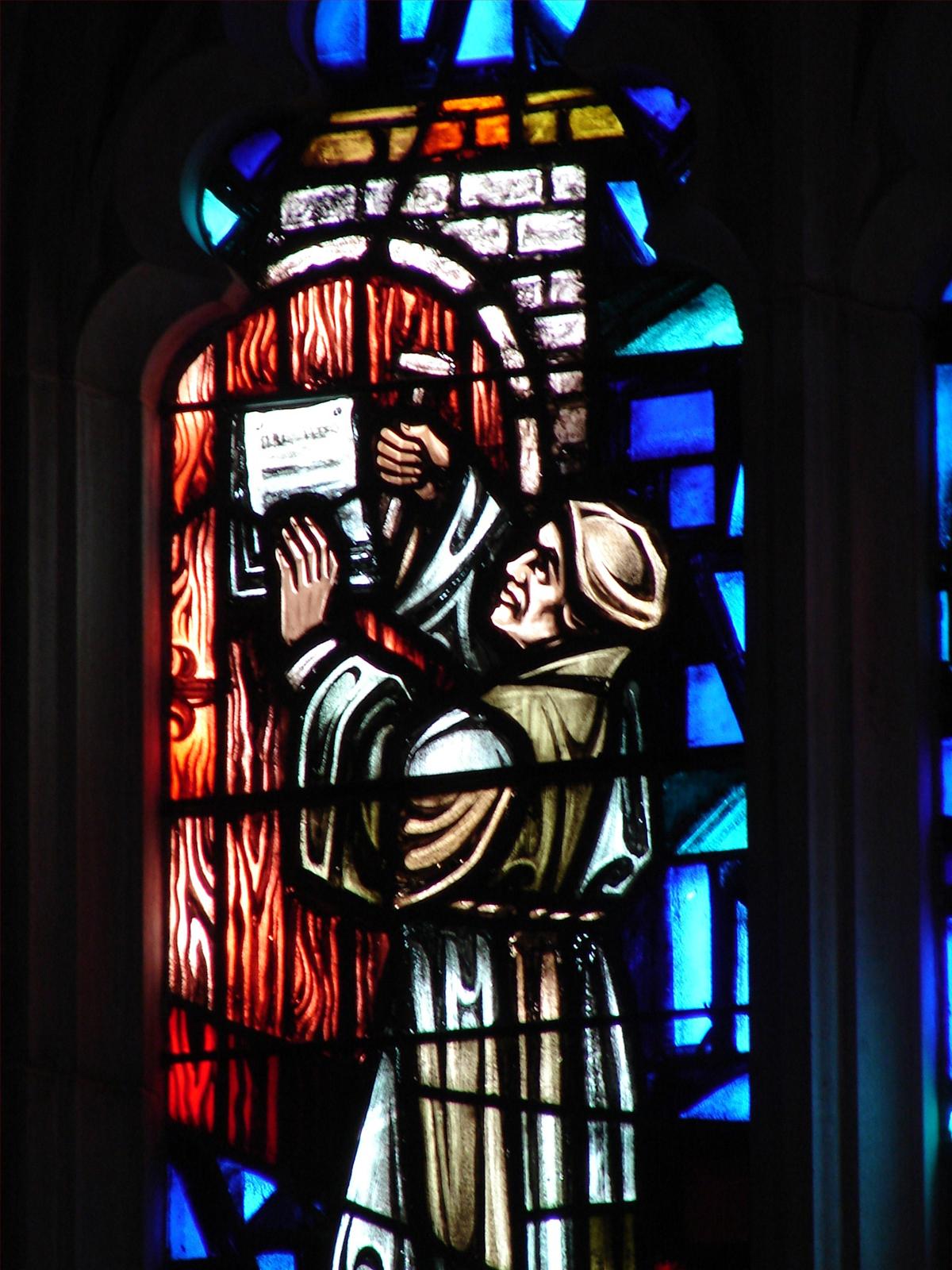
It seems peculiar to us now that prior to The Reformation the bible was in Latin and ordinary people relied totally on the intercession of the clergy and had no way of accessing scripture in a way that was comprehensible to them. I was astonished to learn that when Luther (allegedly) nailed his 95 Theses to the door of the church within two weeks his proclamation had traveled throughout Germany and within two months throughout Europe. This was in 1517. There must have been a great appetite for change, particularly for the principle of scripture to be in the vernacular.

Luther’s arguments paved the way for The Reformation and for the events in England under Henry VIII which led to the establishment of the Church of England, the dissolution of the monasteries, the iconoclasm and destruction of churches, artifacts, manuscripts and texts and the clear separation of English affairs from the influence of the pope and the Holy Roman Emperor.

No one could have predicted the changes that took place. Once a process of change begins it is not possible to know how things will resolve and what will be different at the end of that process. All that can be predicted is that events will be unpredictable. This is true of both private, personal change and change in the public and political spheres.

Brexit is not a reformation, even if it would like to think it is but it is an enormous change, the outcome of which is totally unpredictable. Born out of cynical politicking the reality now is that the UK has to negotiate its way out of an economic and political union that is labyrinthine in its complexity. What is clear is that the Leave campaign was dishonest  – remember Boris Johnson’s shiny red bus and the great big whopping lie painted on the side of it regarding the NHS? The population was not properly informed about what leaving the EU would mean, in part because nobody truly understood what it would mean. Cameron quickly got himself out of the way of the mess he had made leaving a robotic, cold and unconvincing Theresa May to wipe up after him.

Signs from Europe about the process of negotiation are not good. The word ‘delusional; regarding the British government’s view of how it sees the process keeps occurring. If the powers of Europe are using the term delusional then the nation should be concerned.

Brexit, like The Reformation will bring permanent and lasting change. It is likely that there will be violence and disruption along the way, chaos, fear and disarray as there was under the brutal policies of Henry VIII and his son Edward VI and of course under Bloody Mary when she attempted to restore Catholicism.

Looking at Scotland and Ireland there is a strong chance the union will break up and the UK will become fragmentary. We are already seeing tribalism in action with the right wing press referring to those who voted Remain as Remoaners and Saboteurs. There is not doubt that Brexit worked like a Pandora’s box, unleashing virulent racist attitudes and making it acceptable for those views to be aired in a way which they were not prior to June 23rd 2016. Of course those attitudes were there, under the surface but now they are visible and expressed with a kind of impunity that is frightening.

Brexit is not the only fearful and uncertain force for change that is frightening at present. Trump in the Whitehouse is almost unthinkable and yet it is reality. The sabre rattling with nuclear weapons that is happening should be terrifying to us all and yet the populace here in the UK is more uncomfortable with a political leader – Jeremy Corbyn – who says he would not use nuclear weapons than with the Tory party who say they would use first strike. It’s a bizarre situation that the electorate can be persuaded to vote for a party promising to wipe them off the face of the earth should a nuclear conflagration occur.

With Trump in the Whitehouse the likelihood of a major international incident has increased exponentially. He is the kind of leader so obsessed with his own ego and power that he appears to have no rational sense of what government, democracy and leadership should look like. Of course he was brought to power by antagonistic, dispossessed voters who rather like the Brexiteers thought they were voting for change and for their voices to be heard. The sad truth is that no one is listening because the Trump administration and the British Tory party are both obsessed with power, posturing and protecting the interests of neo-liberal super-wealth and not with the lives, hopes and dreams of the citizenry they are supposed to represent.

Luther and the Reformation brought change that led to an explosion in cultural life in terms of art, music, writing and thinking. The lumpen philistinism of Trump, May and Brexit is likely to do the opposite and far worse. And of course, it will not be them that pay the price of their hubris and venality. It will be the people, many of whom voted for monsters they could not possibly hope to understand and who they will never be able to control.

Music, Emotion and Meaning

It’s been a few days since attending a concert at the beautiful Bridgewater Hall in Manchester. The BBC Philharmonic Orchestra performed Vaughan Williams’ Fantasia on a Theme by Thomas Tallis, Offertorium by Sofia Gubaidulina and Vaughan William’s Symphony Number 3, A Pastoral Symphony.

Experiences of music performed by such outstanding musicians in what is an aural paradise of a building deserve reflection before pen is put to paper. I have thought about the experience a great deal since it happened on Sunday night.

Both Tallis and Vaughan Williams are composers whose work touches me deeply. The listening experience is always worthwhile and satisfying but there is something beyond listening that happens when I encounter their work.

At the very beginning of April I had the pleasure of singing Vaughan Williams’ Sea Symphony with a vast choir in Hull City Hall and it is a challenging and exciting work to sing with equal moments of the near impossible alongside the sublime.  I have therefore been immersed in his work for some time and feel as if I am approaching a deeper understanding of him as an artist. On Sunday night I felt washed in the choirs of strings during the Fantasia and transported to that world in which one composer speaks across centuries to another. I didn’t want the Fantasia to end and felt it as a balm to my spirit as it rose and fell and weaved a spell to which I was able to surrender completely.

Gubaidulina is a composer with whom I am not so familiar. Her Offertorium like the Fantasia is a work that draws on themes written by another composer, in this case Bach’s Musikalisches Opfer (BWV 1079).  Offertorium is a concerto for violin and orchestra and it was beautifully executed, particularly by the soloist Vadim Gluzman whose passion and virtuosity were faultless. Having learned a little in advance about Gubaidulina, a Russian born composer with deep spiritual and mystical sensibility at odds with the politics of Soviet Russia I was intrigued by the piece. I listened to it before the concert and found it hard going and hoped that live I would engage with it better.

Prior to the performance Vadim Gluzman spoke about his own spirituality and about what Gubaidulina wanted to express in the piece; Christian principles of self sacrifice, hope, love particularly. I struggled to find hope in the piece as it unfolded. I found it unsettling, dark and ultimately upsetting. For thirty-two minutes there was a relentless darkness that enveloped and affected me to the point where I could feel rage, sadness and profound loss threatening to swallow me. I could appreciate the piece’s brilliance and it’s structural bravery, tackling Bach and deconstructing then reconstructing the theme. The delivery was extraordinary but I was left bereft by it.

During the interval the light began to return and I felt my rage dissipate. I was grateful to return to the concert hall to hear The Pastoral Symphony as the final item of the program. Vaughan Williams was moved to write the symphony in response to the mass deaths of the First World War. It is a most moving and elegiac work and a total contrast to the Offertorium. Light floods in through the symphony bringing hope, a sense of redemption and pure love and honour towards those who were sacrificed in their millions between 1914-1918.

The beautiful trumpet cadenza  in the second movement was inspired by Vaughan Williams’ experience of hearing the lone bugler on the battlefield play an accidental seventh rather than the octave. The sweet poignancy of the cadenza was restorative and generous after the harsh atonality of the Offertorium. 

The Pastoral Symphony finishes with a lone singer singing a song without words, bringing the work back to silence. The rich voice of the baritone on Sunday night was a voice singing for the dead but instead of feeling overwhelmed by rage and sadness I felt connected to humanity at a compassionate level, at the level of love. Vaughan Williams’ music does that for me, it brings me to love and to a sense of great peace and inner stillness.

It’s hard to countenance the horror of war or life under the dark oppression of Soviet Russia. Music is one of the ways in which humans make meaning out of experience. Music makes sense of the world in the same way that poetry and art make sense of the world. We owe much to artists for making meaning in these ways. For me there must be light in the work and hope. As the days have passed since Sunday and I’ve dealt with myself and the world, as we all do, every day I have made space for the light. I have turned my face away from the rage and the sadness of life; not because it isn’t there, it always is, but because the light and hope have more to offer in the end.

Tour Dates for ‘Fish Tales’

All tour dates are now confirmed and are available to view at the events page here on the site. Tickets are available from the venues and festival offices.

Here’s a summary list of dates and venues:

Tour Dates

Wed 11th October Swansea Jazzland, www.swanseajazzland.co.uk

Thurs 12th October Leeds Seven Jazz LS7 3PD www.sevenleeds.co.uk

Fri 13th October Wakefield Jazz WF1 3RR www.wakefieldjazz.org

Sun 15th October Herts Jazz Festival AL8 6BX www.hertsjazzfestival.co.uk/

Thurs 19th October Folkestone Jazz Club, Tickets: 01303 277175

Sat 11th November Lincoln Drill Hall, Box Office: 01522 873894

Sun 12th November Wigan Jazz at The CourtsWN1 1NA. www.theoldcourts.com

Sat 18th November, The Hive, Shrewsbury SY1 1TE www.hiveonline.org.uk

Singing for Life: the joy of singing!

SAMSUNG CAMERA PICTURES
Singing for Life on Grimsby Top Town Market April 2017

There is nothing like a good sing.  All singers know this. They know that singing either solo or with others has enormous benefits. Thanks are due to Gareth Malone, whose popularising of the joys of choral singing has led to a remarkable renaissance in the UK and elsewhere of community choirs.

Having started a community  choir in January, 2016  that is going from strength to strength, I have been humbled by what I have witnessed over the past year and a half.  During the first few weeks, I was shocked by the numbers of people who told me they could not sing. It was the first thing many of them said as they walked through the door. What I found heartbreaking was that many of these people had been told at school, by teachers when they were six or seven years old that they couldn’t sing. They, of course, believed this and shut themselves down as singers at a tender age. How devastating. There are many things that six and seven year olds can’t do, or can’t do very well and that is because they are children and they are developing. What entitles anyone to tell a child they can’t do something, especially something like singing which is something everyone can do?

I firmly believe that everyone can sing; that everyone has a voice. It might not be a strong voice or a voice that can range very far or a voice that has great tonal variety. But a voice it is and it is everyone’s right to use it to the best of their individual ability to make music in the most accessible and democratic way of all. Our voice is our unique musical instrument. We carry it with us everywhere we go and it can be used in all sorts of exciting and unique ways to create music and to express ourselves.

What I have witnessed since the choir’s inception in January is a group of people, many of who initially lacked faith in themselves and their abilities, making a glorious sound, week in week out. They sing with passion, verve, humour and conviction and it is an honour to lead them in song. I am sure my experience is not unique and that it is a story replicated in many places where such choirs have sprung up in recent times.  

Singing has so many proven benefits it should be available on prescription. It can help overcome anxiety, depression and insomnia. It can help overcome shyness and social anxiety as people get together and sing in groups, sharing in music making but not having to stand alone in the spotlight. Singing can help alleviate respiratory problems like asthma and can increase flow of oxygen to the blood vessels and brain.  It is a joyful and invaluable enterprise that should only be encouraged.

As part of my practice I offer one-to-one and small group singing lessons. This singing for well being is designed to enable adults to find their voices and learn techniques to help them get the very best from their voice. My sessions are ideal for beginners and singers who wish to sing for joy rather than for public performance or exams. Click here to contact me on the website for more information.

Long may we sing and also may we get into the habit of not telling people that they can’t!

A Fish Tale

A Fish Tale book cover - cropped & no backgroundThe process of writing this collection began in the distant early spring of 2016 when Gill Wilde, promoter and director at Grimsby Jazz asked if I’d like to collaborate on a jazz and poetry project with Alan Barnes and Pat McCarthy in which we would use the heritage of fishing in Grimsby as inspiration. I was thrilled to be asked, not just because of my Grimsby origins and the fact that people here are 90% sea water and 10% east wind but because the story is a compelling and multi-faceted one. Furthermore, the opportunity to work with musicians of such outstanding calibre was not something I was going to miss.

Gill arranged a visit to the Grimsby Fishing Heritage Centre and a tour of The Ross Tiger, the trawler that stands in dock as a lasting testimonial to the astonishing fleet that made Grimsby one of the most significant fishing ports in the world at its heyday. It’s always made me sad how through my lifetime I have seen the docks decay and fall into disuse and disrepair. There is a wealth of history and heritage here that has been allowed to fall into nothing.

The tour of the centre and the trawler were impactful and I set about writing and produced the first draft of the poems very quickly. I like to write collections in this way as I can capture a mood and feeling and the work is always more cogent when it comes as a flurry.  Refining, editing and revising is where the real work is done and that took longer and was exciting as the poems developed their form and shape.

The story of fishing in Grimsby is a bleak one. It was built on a corrupt system of apprenticing boys from orphanages and workhouses and exploiting their labour. It was dangerous and uncertain and loss of life was an occupational hazard. However, I didn’t want the poems to just be bleak and unrelenting – like the work itself. I sought ways of telling stories about fishing that had elements of awe, wonder and magic about them. This led me to explore superstition and myth and to some wonderful and mysterious findings. Two of the poems, Witches in Eggshells and The Fisherman and the Seal Woman are centred on myths and the influence it had on our seafaring community.  I also looked to nature and the power of the elements. I was particularly unnerved by the power of the barfrost, the black frost that could sink ships rapidly. The poem Barfrost is an attempt at capturing the fear and danger it represented.

Once the poems were written I was able to wait, with considerable anticipation, to hear Pat and Alan’s music. I knew it would be brilliant and I knew the ensemble of musicians performing it would bring the whole work to life in a visceral way.

On May 18th, 2016, Gill and I were sitting in the Old Clee Club as the musicians warmed up and Alan gave his directions. I was trembling with excitement and when the first notes of the suite sounded, Gill and I yelped and leapt up. The air in the club danced and I was overwhelmed. What a sound. Alan’s arrangements were full of detail and movement. I could feel the sea as the music rose and swelled and then ebbed back.

During the premier performance that evening I was carried with the rhythms and tones of the octet and as I performed the poems I felt them fit the music, I felt my voice working to carry the mood and nuance of the suite. It was an astonishing experience and the rapturous response of the audience was as moving as it was surprising. As a poet I am used to reading to quiet and polite audiences, and I enjoy that, but this was something else entirely. It was the same at the Cleethorpes Jazz Festival and the euphoria I felt swept me away.

And so, what a thrill to be taking A Fish Tale on a national tour this year. We start in July in Hull and Grimsby and then take a leisurely national excursion with it until mid November. All dates plus information regarding tickets are here on the website with links to venues.

The book A Fish Tale is available to buy for £6.50 (including postage and packing) via the secure Paypal link (leave your address in the notes): paypal.me/msjosiemoon

The CD is available by following the link to Alan’s pages: http://www.alanbarnesjazz.com