Ever since a life-altering accident in May 2006, I have lived in deep, relentless denial. I treated my body like a machine that needed to be forced to work, whatever resistance it showed. And in my spirit I lived in the treetops, high in an eyrie, feeling the thermals under my eagle wings. Of course I was an eagle; if you’re going to live in the sky, be an eagle. Up there, I felt out of reach, floating above the frightening reality of a physical frame that was in perpetual, unyielding pain. Being disembodied felt like the only way to survive.
I called it determination. I called it a work ethic as often as I called it a bastard thing. I threw myself into full days of outdoor events, community projects and freelancing; believing that the price, those days of excruciating pain and total collapse afterwards was worth paying. When your body is a site of physical limitation and chronic suffering, leaving it behind for the sky and refusing to have anything to do with yourself seems like a really good survival mechanism.
I know now it was denial. A long, exhausting, twenty-year-long denial. Only in the past week or so has that come to an end.
For a long time, framing my condition as chronic fatigue made that denial easy. It allowed me to treat it as tiredness, somethingI could overcome with a strong will and a defiance of the pain. But the reality of ME is that eventually the post-exertional malaise wins. This is not about mind over matter anymore. It isn’t a lack of resolve either The truth is that ME sets really tough boundaries. The debt is systemic and no amount of willpower or mind tricks can bargain with it.
Over the past few weeks, the thermals under my wings have dropped. The transition has not been easy, but it has brought the heavy realisation that I cannot keep paying for the flight with my health. The grief of setting those wings aside is real. I have decided that I do not have to destroy them. They saved my life when staying inside my physical form was too unbearable to endure. I have retired them, knowing they kept me alive until I was safe enough to land.
And as for now, I am choosing to take the country lane instead of attempting to live in the fast lane that is no longer safe for me. The country lane is quiet and unhurried. It is a place where rest and boundaries are not a defeat, but a gentle act of self-preservation.
This shift arrives alongside the changing season. These early days of August have been hot and breathless, drawing the life out of the garden, but within that heat is the very first whisper of autumn. I can feel her coming. I am entering my own autumn now, 60 next year and I am learning to live as autumn by letting go of the brightness of spring and summer, and settling into a slower, earthbound rhythm.
There is no shame in this; after all autumn carries the richest, most beautiful colours in her hair, and the country lane offers a quiet shelter where I can finally inhabit my actual life, grounded and at peace.
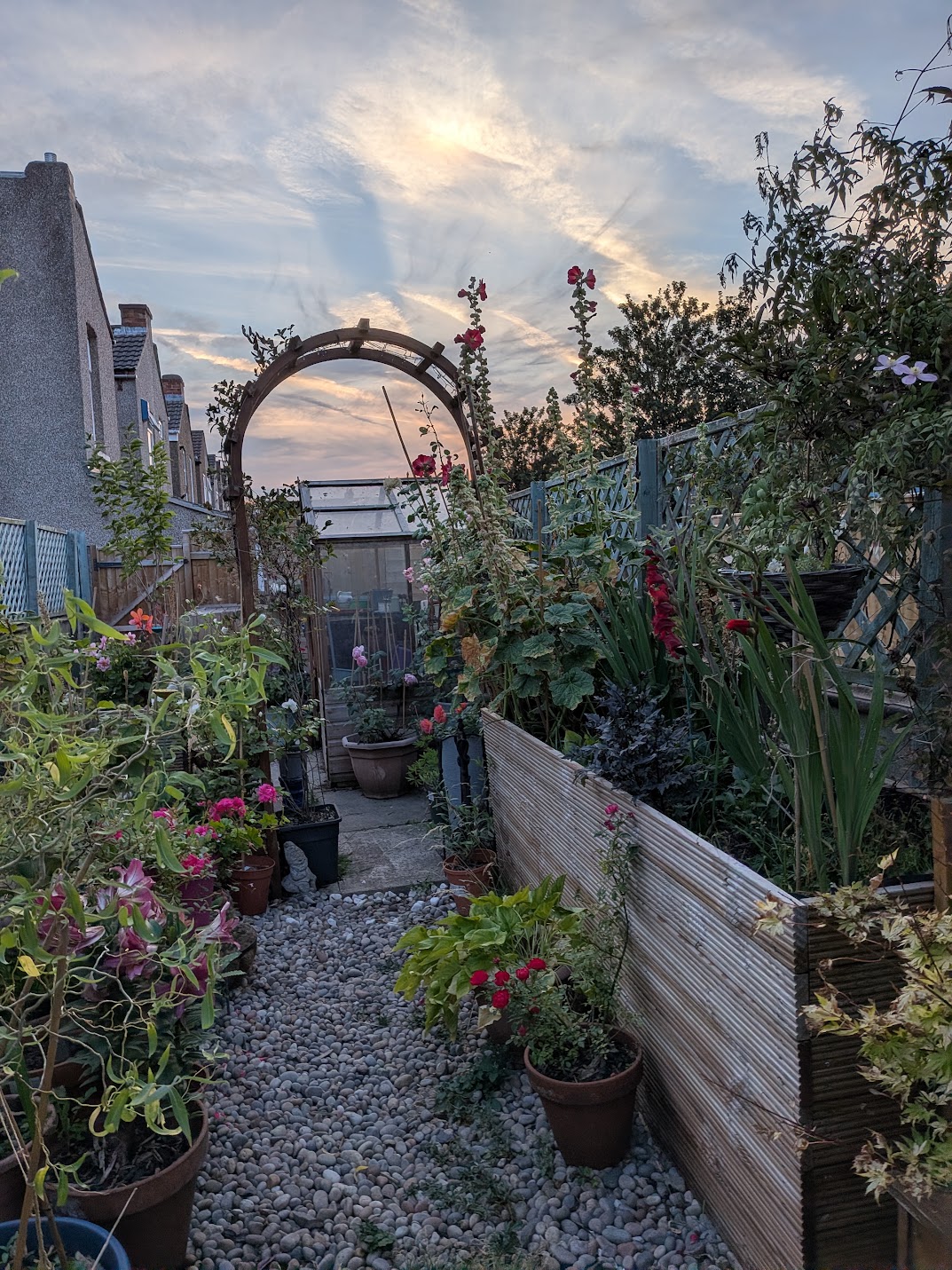
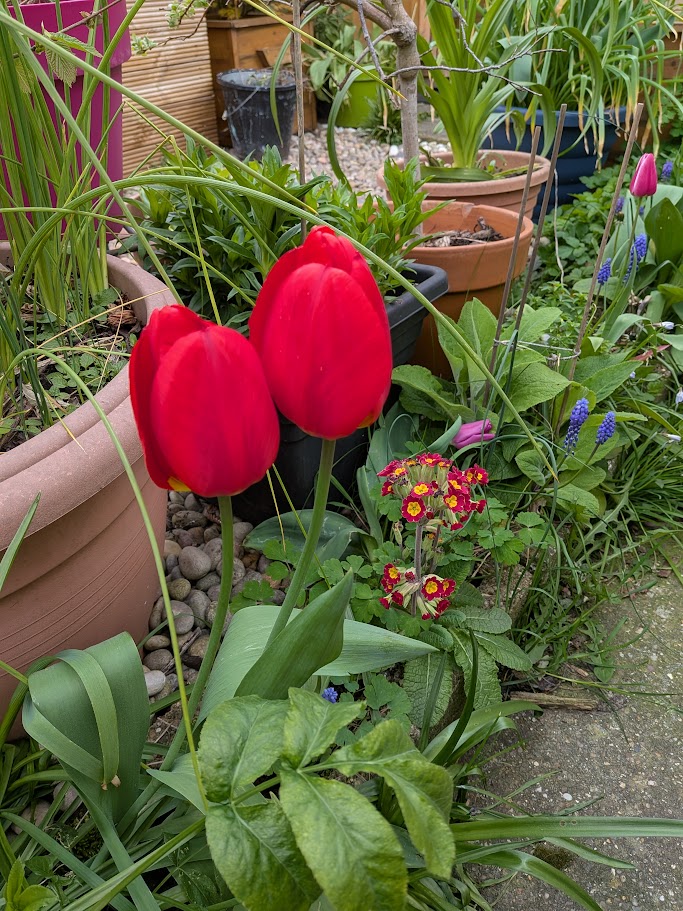
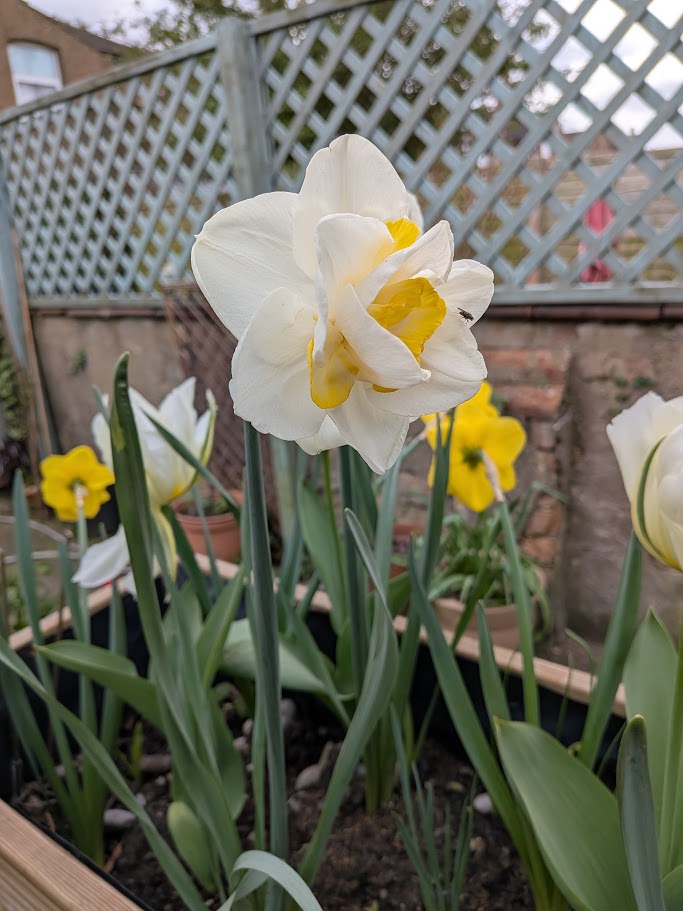
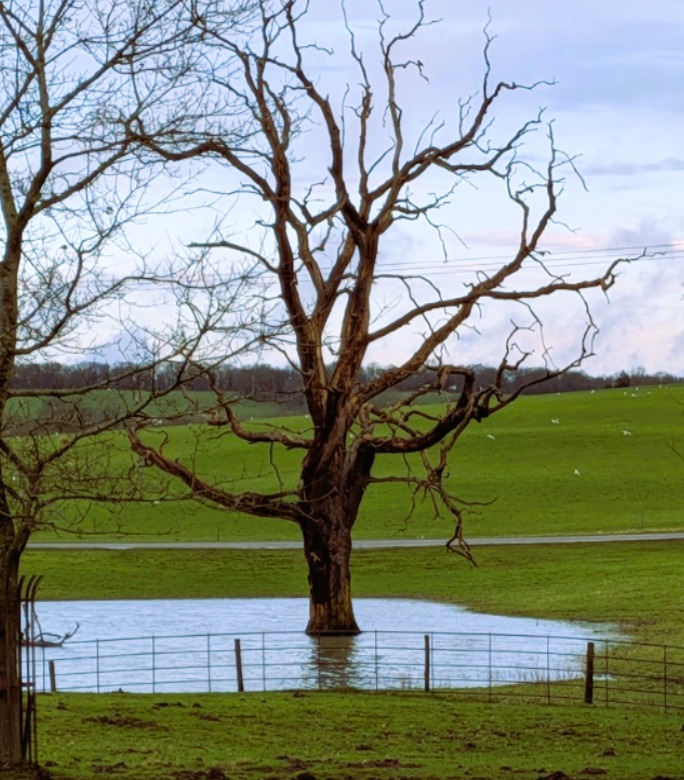
April is well underway. Spring has sprung in spite of the rain, the cold, the storms, and the lack of sunlight. My garden is currently a riot of defiant blooms: daffodils, grape hyacinth, tulips, bluebells, and primroses. The first buds on the rose trees have appeared and the clematis is about to explode into flower.
I have been the custodian of this garden for eight years now. It is over 150 years old, the same age as the house, and I have grown to understand its ways. It must have seen a great many green fingers over that century and a half.
While the world growls in an insane racket of war and violence, I go back to the garden and sit with its rhythm. It is a reminder of the tenacity of nature; a comfort in a world spinning out of control. When world leaders behave like toddlers having tantrums or technocratic managers, it is easy to fall under the shadows of fear and despair. People speak of “something in the air,” acknowledging a collective sense of wrongness. We know when the moral compass is broken. No one escapes this feeling, not even the demagogues pushing for annihilation.
Yet, history already knows them for what they are. They will be swallowed into the Mystic in their turn, just as my tulips will fall away and the spring becomes the summer.
The Radical Act of Gardening
Voltaire famously advised us to cultivate our own garden. In times of significant threat, this is not a retreat, it is an assertion of agency. To be a gardener is to be a custodian of the world we want to see grow.
Consider the power within a single seed. It holds total potential. What if, even in the smallest actions of our lives, we hold seeds of similar potential? It matters how every one of those seeds is planted and nurtured. Perhaps one day we, as a species, might learn the true value of every seed and what it produces.
Why the Small Scale Matters
In a world of unprecedented storms, the garden offers us three vital truths. First, the seed as agency.Choosing to nurture growth is an act of faith. It is an assertion that the future is worth preparing for. Then there is theperspective of ime. A 150-year-old garden has weathered previous follies and survived. It remains rooted, indifferent to the tantrums of the day. Finally the cycle of accountability: Just as a garden fails without care, systems fail when they ignore their foundational seeds.
History may remember the destroyers, but the world is sustained by the custodians. We must start from where we are. We must recalibrate ourselves to a system that actually works; where effort leads to bloom, and where even the most stubborn winter eventually yields to the glory of the daffodil.
At 3:50 this morning, the peace of Launde Abbey was shattered by the shrieking urgency of the fire alarm. Its insistent ‘get out, get out, get out,’ rhythm a jagged juxtaposition with the monastic stillness of this 12th-century sanctuary. For someone who has spent eight years living and working in the East Marsh dealing with the literal and metaphorical fires of managed decline, that sound was a trigger. It wasn’t just a noise, it was a physical invasion.
The second alarm at 5:50 brought with it the inevitable adrenaline hangover; that woozy nausea and the tightening around the sternum as if the ribs are bracing for a sudden punch. It’s the body’s automatic hyper-vigilance, a relic of our evolutionary past that doesn’t know the difference between a kitchen toaster and a marauding army.
I made myself a cuppa, dog-tired but wired, watching the dark dissolve into a drizzly dawn with some hopeful streaks of gold in the sky. As a natural owl, I rarely witness the dawn, but the fire alarm redeemed itself by giving me the opportunity to get up and out and to see the dawn it resolve from grey to gold to spring blue.
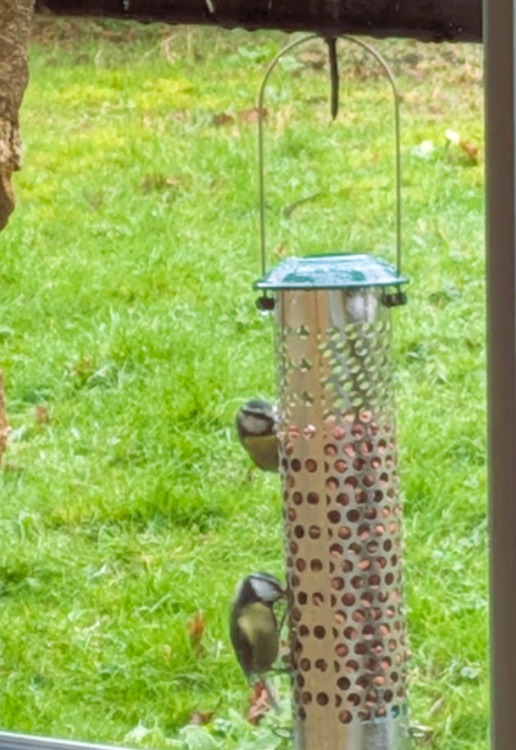
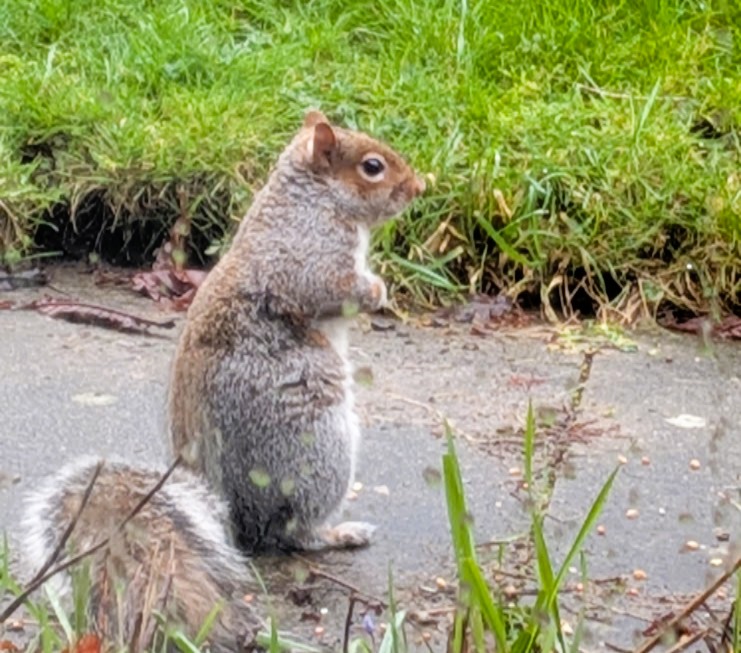
I went out to take a short walk to discharge the static in my nerves and to breathe the clean air of morning. I topped up the feeders, and the response was immediate. It was as if the entire Launde squirrel community and every blue tit in Leicestershire had been waiting for a sign. It was a bit like an invasion but there is a restorative power in watching a troupe of acrobatic squirrels and an army of blue tits. Their little blue caps and Zoro masks make me think of them as Resistance fighters. These are the more-than-human residents of this place, and they couldn’t care less about fire alarms and interrupted sleep, so long as the ‘hooman’ brings the goodies.
Watching them, I realised that this is the core of the struggle back home on the East Marsh. Our biggest problem isn’t just the broken bureaucracy or the class war, although these are real and brutal; it is our alienation from this engagement with the natural world, the loss of the healing, restorative relationship with nature is a wound we carry without even knowing its name. We are people severed from our place in the eco system and without that connection, we remain in a state of permanent, low-level alarm.
My reason for being here has been to dedicate deep time and focus to writing. For three weeks I have been wrestling with the material of the book like a person trying to pin down a shadow. The form of the book has been elusive, slipping away from me just as I thought I had it nailed. I was taking a too literal approach, an almost chronological “this happened, then that happened” account of the story of EMU. It was competent. It was alright but it lacked the breath of life. It wasn’t great, and it certainly wasn’t compelling. How we tell a story is just as important as the story we tell.
The realisation hit me on Friday, in conversation with Billy with more force than the fire alarm; I have been ignoring who I am as a writer. I am not a chronicler of incidents. I’m not a sociologist or a statistician. My creative heart sits in the Mundus Imaginalis, the imaginal world. My tools are myth, storytelling, Jungian archetypes, and the relationship with the natural environment. By sticking to the literal facts of the last eight years, I have been trying to describe a cathedral by counting its bricks, rather than feeling the space within its arches. The clarity came in my understanding that to tell the story of the East Marsh, I have to stop writing about a postcode and start writing about a human condition.
The struggle in Grimsby is a modern myth. It is the story of the Waste Land, a place of managed decline and post-industrial class war. It is a document of injustice that feels off the scale in height and depth and weight. But it is also a universal tale of human resilience. When we talk about the brokenness of the bureaucracy we live in, we are talking about the Broken King archetype of a system that has lost its way and no longer serves the land or the people.
By shifting into the mythic, I am not moving away from the truth;. I am moving deeper into it. This framework protects the material. It allows the particular circumstances of our lives on the Marsh to touch people who have never set foot in Lincolnshire. It gives the work a transcendent quality, turning a local history into a human map of alienation and the desperate, elusive search for restoration.
There is an irony in being a night owl, forced awake by a mechanical shriek, only to find the very light I have been searching for. For me the morning is often a blurred and bleary experience as I emerge from the owl persona. The 900-year-old sanctuary of Launde Abbey has acted as a temenos, a sacred, protected space where the noise of the world can be distilled into something meaningful. Even the rude interruption of the night served a purpose; it stripped away my defences and forced me to witness the dawn.
As I watched the light touch the trees, seeing the buds ready to burst and the tireless activity of the blue tits, I realised that my book is not just a document of a time and a place. It is an exploration of the soul’s relationship to its environment. The alienation we feel on the East Marsh is a microcosmic version of global pain, the disconnection from the natural world world that should be our greatest source of healing.
I have just five days left here before I return home. The landscape in front of me has changed. I am no longer just recording the class war or the managed decline through the lens of facts and events. I am writing from the Mundus Imaginalis, weaving the mythic into the story of the Marsh. The pain in my chest and the lingering tension in my head are the price paid for this shift in gear, the physical toll of a Revelation
The fire alarm was a false alarm. But the dawn? The dawn was real. And finally, so is the book.
As I watch the blue tits through the window as the afternoon light turns towards evening, I realise they are a metaphor for the East Marsh. We are small, we are masked by the labels society puts on us, and we are fighting for every scrap of feed in a landscape that is hard and often brutal. But like these birds, there is a transcendent energy in our survival. We aren’t just bit players in a post-industrial town; we are part of a much older, mythic story of resistance, persistence and transcendence.
And as if by magic, as I put the final touches to this writing a young dear appears on the lawn outside my window. We gaze at each other for a moment, and then she is gone.
I am halfway through my month-long stay at Launde Abbey. It is Sunday afternoon and cold. The sky is again overcast and we have had snow, which turned to sleet and then to rain. Rain on rain on rain. Yesterday the sun burst through and the sky cleared to that icy blue of early spring. It was as if the sun wanted to remind us and reassure us that it is still there, doing its best.
I ventured out into the wider world yesterday, to enjoy the weather and to re enter the day to day world. I didn’t enjoy it very much. I went to a huge garden centre and found it too overwhelming to engage with. I bought some figs in the farm shop and left for Oakham. The light was low but fierce yesterday and even with my sunglasses I struggled to cope with it. I thought about going to a cafe but decided against it. I had a rummage in the book shop but didn’t buy anything. I wandered around trying to get interested but failing and then I stopped and stood for a moment on the main street and felt overwhelmed by the light and the traffic and the volume of people and I realised I just needed to come back to the peace and quiet of the Abbey.
I have found this past week challenging in unexpected ways, some very unwelcome. The peace and the quiet and the solitude are great gifts and I acknowledge the privilege that has allowed me to come here and I do not regret that decision at all. But solitude in a beautiful place is not as straightforward as I thought it was going to be.
During the first week I grappled with the form and content of the book. It took days to mentally open the space to get into writing and into the flow of work that is essential when you are trying to produce long form work. I got upset because I didn’t feel that it was coming quickly enough and I didn’t feel that I had the right words in the right shape. But that passed and I started to write. That felt great, obviously, but then that thing happens that always happens with long form; you think you know what you are writing about, you know what you want to say but you brain has other ideas and suddenly you are excavating an internal landscape that is is full of surprises – some of them not very pleasant.
And then the dreams started in earnest; visceral, turbulent and frightening. Sleep became difficult and an old, familiar anxiety appeared. It is one thing to spend your days in solitude, wrestling with ideas, writing, having big emotions running through you. When night falls, the character of all that shifts subtly and the dark becomes a strange country. It is pitch dark here when night comes; natural, beautiful, rich dark. And it is quiet. Once the birds have gone to their nests, a hush falls and there is nothing outside to disturb that deep and dark quiet. I do have neighbours, a few feet away and in the Stables next door, others on retreat. But there is a respectful quiet here in the community itself, a sense of delicate engagement with the natural and spiritual environment. Most people here have come for reasons of faith. I have been attending evening prayer most days, sitting quietly in the 900 year old chapel, breathing in the peace and praying in earnest for the first time in many years. I am still a devout sceptic and that won’t change but spiritual life can take many forms and I am an inner explorer and entirely open to the mystery of the Divine.
Yesterday, my main purpose in going out was to buy a bird feeder. There are so many birds here of so many varieties, including a small raven population among the rooks. But the songbirds are plentiful and they are hungry. I put some fruit and nuts out a few days ago and suddenly I had a flock of blue tits, long tits, chaffinches, sparrows, blackbirds, a robin and a wren and briefly a goldfinch.
The birdfeeder will need replenishing later today, it has been depleted by a constant stream of fathered visitors, and a very cheeky squirrel who has spent hours nibbling away today. It is an absolute joy.
Unfortunately last night and today have been overshadowed by a ferocious migraine, which has meant that almost my whole day has been spent watching the birds and the squirrel while sipping tea.
This place, this time is so different from my usual world, my day-to-today reality and it will end in two week’s time. That is fine, that is the arrangement and I will return to my home and all my beloveds and be very pleased to see them again. I want to carry something of the peace of this place with me, like Wordsworth captured in Lines Written Above Tintern Abbey. There is so much resonance in that poem for me right now, and it is too lengthy a work to quote in its entirety, but today it is this passage that seems to be most apt:
These beauteous forms,
Through a long absence, have not been to me
As is a landscape to a blind man’s eye:
But oft, in lonely rooms, and ‘mid the din
Of towns and cities, I have owed to them,
In hours of weariness, sensations sweet,
Felt in the blood, and felt along the heart;
And passing even into my purer mind
With tranquil restoration:—feelings too
Of unremembered pleasure: such, perhaps,
As have no slight or trivial influence
On that best portion of a good man’s life,
His little, nameless, unremembered, acts
Of kindness and of love.
From: Lines Written Above Tintern Abbey, William Wordsworth, 1798.
I have spent my first week at Launde Abbey, Leicestershire, learning the difference between quiet and silence. Silence is an absence; quiet is a presence. Here, the quiet is a living thing, a restorative peace that the community here dedicates to being present with God.
I have attended prayers in the beautiful chapel with Christian people, and despite my deep ambivalence toward organised religion, I cannot deny the divinity here. It is as present in the antics of the squirrels as it is in the prayers for evening, woven into the soul of the place.
The Fellowship of Harmony
This sabbatical is only possible because I have the support of the Coral Foundation. As a Fellow, I am here to have the necessary space to write but I am also here to inhabit the intersection of climate, creativity, and citizenship and to explore it in relation to the work we do at East Marsh United.
In the East Marsh, we inhabit a landscape of concrete and nature deficit. It can be hard to find a connection to the natural world where there is just 2% canopy cover and most people do not have the skills, the energy or the time to cultivate their own back gardens. But here, in a valley in Leicestershire the environment does the work for you. It brings you into immediate and effortless harmony.
Earlier today, I sat in the woods and recorded the birdsong: Robin, Blue Tit, Chaffinch, Jackdaw, Great Tit, Wren, Greenfinch, and Wood Pigeon, all within just a few minutes. I then watched two squirrels quarrel in the heights of a giant redwood before going their separate ways.
There is a profound lesson here for our work in Grimsby. You cannot separate the health of a citizen from the health of their habitat. The snowdrops and aconites are pushing through now, not because they’ve been managed, but because they are held by a healthy soil.
The Art of Shedding
The internal work this week has been as wearying as the weather. My unconscious has been on overdrive, delivering traumatic dreams that feel like the backdrop to the long work of the past decade. I have always had nightmares and because I am alone here, they are harder to deal with. But they are useful, they are processing difficult things and offering symbolic and archetypal ways to understand events that have happened. This is a necessary part of the creative process, to confront the difficult things and present them in a way that has meaning beyond their difficulty.
I have also shed 7,000 words this week. These were words I wrote in September when I began to write the book.
In September I was pouring out a great deal of rage and grief. It was an essential purge, but it wasn’t the story. By condensing down to the essence of what that writing was saying, I’ve found the heart of the story and the right structure to take it forward. I am finding a way to tell the story of a powerful us, a collective that has grown in the crucible of action, building as we go, living forwards, learning backwards. I am asking questions about resilience and courage and how to be fleet of foot in the eye of a storm.
Solitude not Loneliness
I am solitary, but I am not lonely. I have shut out the noise of news and social media and stepped out of my ordinary daily reality into what I feel is a third space, a mundus imaginalis where reality has shifted and is different, just for a while. I am holding Billy and all my dear ones in my heart but I am not indulging in missing them; that would not be a good use of time and I will be back home before we know it and the third space will dissolve. I have to make the most of it while I am here and able to do so.
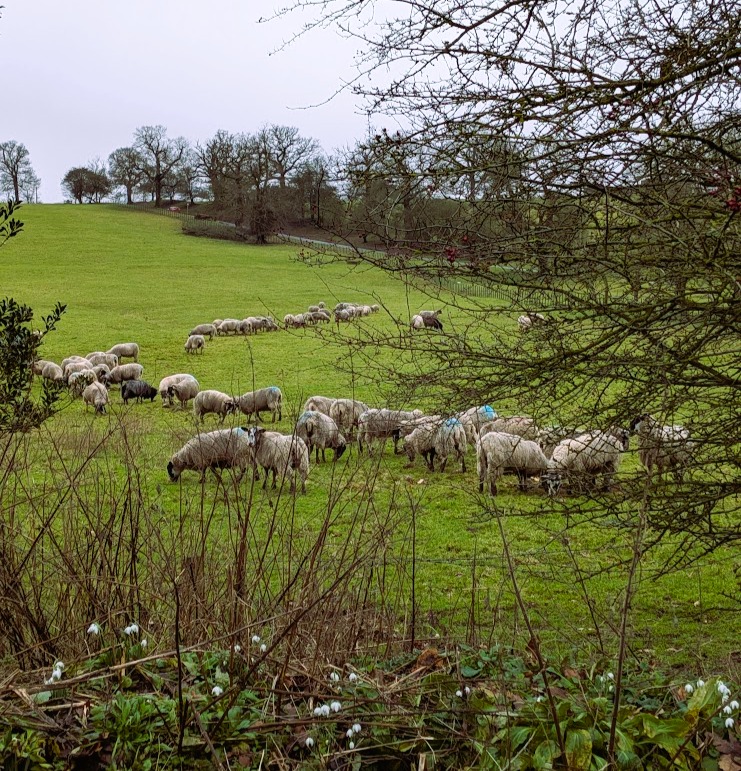
I find this writing much harder than fiction. It requires a different kind of organisation and structure. I’ve been writing in chunks for two years but now the scaffolding and cohesion is moving into place. I can see it and feel it taking shape, emerging, like the sheep in the fog outside my window. It is being in this place and having this time that is allowing the book to come through.
Gratitude
I am grateful that I have this luxury, privilege and opportunity. It feels deeply precious.
I sit here at my desk on the morning after the Solstice.The world outside my window is noisy. Two doors down, the clattering racket of renovation marks the progress of another East Marsh United house in progress. Usually, such a racket would fray my nerves, but today it sounds like a lullaby of possibility. It is the sound of a safe, forever home being made ready for a family in the New Year. It is the sound of the future we are choosing to make.
I am, by my own admission, a devout skeptic. I am a child of the sun, a lover of the spring and early summer but if I had to pin my heart to one short season, it would be Advent. There is something in the Hellenic simplicity of the Nativity in the story of the Holy Family, the young mother, the child refugee, and the angels singing into the darkness that resonates for me in a way that no other season can match. It suggests that the miraculous is found in the simplest, most overlooked places. It is a story that stands in absolute opposition to our modern perceptions of power and authority; a reminder that the radical can also be simple, transcendent, and gives us the faith to work for a better future.
The Social Cement of Joy
This December at East Marsh United has been a testament to that principle of simple transcendence. We have moved through this month at a pace that has left me, at 58 and a half, feeling every second of my time on this blue planet. But what a month it has been.
We have been busy growing our community with loving kindness. We’ve seen the tactile focus of wreath-making and crafting sessions where families came together to create beautiful things from scratch. We’ve shared joyful Christmas lunches and hosted a fabulous toy drop, where families could access lovely gifts donated to the NSPCC. We ensured that adults spending Christmas alone weren’t forgotten, and we took groups to see Santa and the panto.
These aren’t just events. They are the social cement that binds us. They allow us to engage in that precious sense of anticipation that Advent brings; the joy, the fun, and the simple beauty of being together. Across the team, there has been a relentless flow of compassion. The EMU team has given everything they have to give; they have been the Light of Love in a winter that feels particularly heavy.
Jazz, Legacy, and Finding a Voice
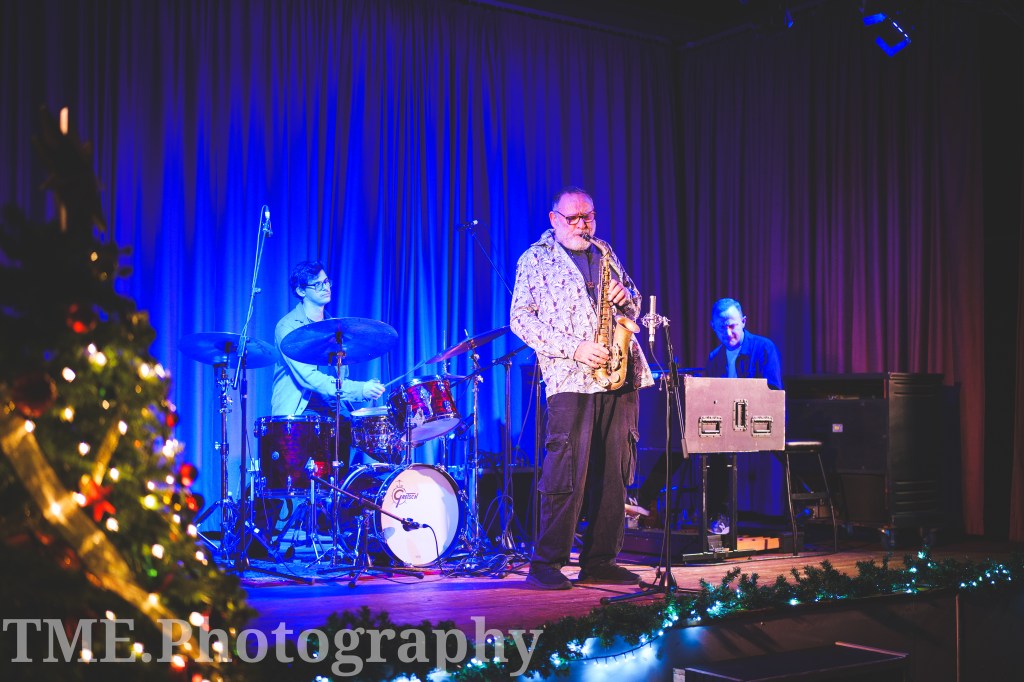
On December 5th, the roof was practically blown off the venue, Grimsby Central Hall, when my friend Gilad Atzmon and Organology came to town. Gilad is a warrior for justice and a kindred spirit; spending time with him and hearing him play is always a tonic for the soul. Alongside Ross Stanley and Joel Barford, truly the best of their generations, they brought a wild, free jazz energy to Grimsby that was nothing short of transformative. For me, sharing the gig with my jazz loving Dad made it extra special.
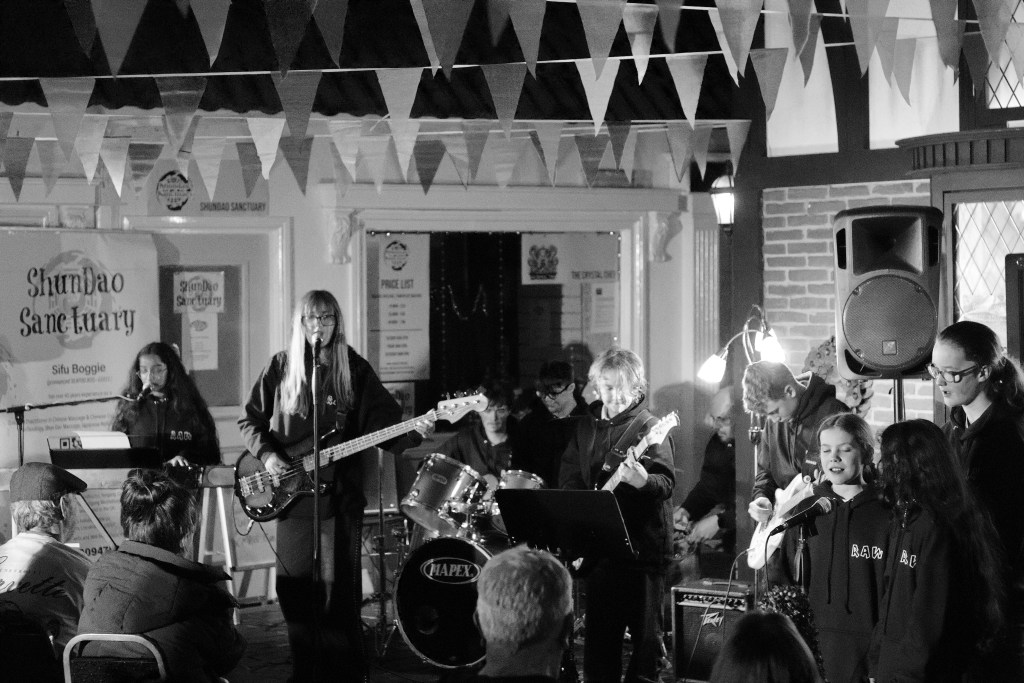
That same spirit of creative defiance carried through to the finale of our Hear Me RAW project. Named after the local legend Roy Arthur Wright, who spent decades helping Grimsby’s youth find their voices, the project was inspired and guided by his memory. Last Thursday, a group of young people who had formed their own band launched their song, Leap of Faith. With the support and guidance of local musicians and teachers, those young people achieved something spectacular
Too often, our systems tend to do things to young people, rarely trusting them to lead. Here, they owned the process. Watching them perform to a rapturous audience of families and friends was a profound reminder of what happens when you create space for people to thrive. Special credit must go to our EMU Outreach lead, Sue Baker, a true force of light and joy who made this all possible.
Photo Credit: Gordon Wilson
Poking Bears and Speaking Home Truths
While the heart of the month was in the Marsh, I found myself twice in London, rattling cages in rooms where power is usually spoken of in abstract and sanitized terms.
At The Shard, I had the opportunity to give a reality check to a room full of people talking about AI and tech automation. I spoke about poverty, the lack of literacy, and the 20-year gap in healthy life expectancy we face here. I know I made some people uncomfortable. That’s fine. I’ve spent too many years being a people-pleaser, frightened of speaking out. Now, I feel I have a moral responsibility to speak the truth as I experience it.
Power structures don’t act until they are discomforted by the harsh and ugly truth of life at the sharp end. We don’t need mealy-mouthed tinkering; we need radical change that puts the voices of the silenced into the rooms of authority and forces them to face head on the shame of systemic poverty and inequality.
The Foundation of Home
Our housing work is our most practical act of resistance. What we do as an ethical social landlord is a direct rebuttal to the wreckage of the free market, which has left us with 1930s style squalor and fear. By restoring tired houses into beautiful, secure sanctuaries, we are putting back the security that was stolen from the working class. A home is the very beginning, the place from which a person can feel safe enough to thrive. We are 16 houses into our goal of 100 houses for 100 years, and we will continue to build on our foundations next year.
The Righteous Rage of the Carol
Last night at St John’s and St Stephen’s, we sang Once in Royal David’s City. Not the 19th-century version of middle-class idealism, but a radical version rewritten with words of righteous rage about the state of our modern world. Our church, in the heart of the Marsh has no time for the abstract or the pompous; we sang about the reality of lived experience on the ground.
So many of our carols are hymns of peace and goodwill. Lovely as they are, it is hard to sing of peace while the horror of genocide in Palestine continues. We cannot look away from genocide and violence and honestly call this a holy season. The Nativity, the story of a refugee child in a dangerous land should move us to raise our hearts and voices to say NO to war and misery. This isn’t just a Christmas sentiment; it is a human necessity if we want to truly live in the peace that we sing of with such vigour at our Christmas services.
Entering the Radical Rest
I am tired. Our team is tired. More than that, I would say we are all depleted. We have given everything we have to give this year. Now, it is time for Radical Rest. We must now give ourselves permission to enter the Deep Midwinter. To sit in the quiet with our beloveds and allow ourselves to rest, recover and reflect on the great achievements of the year.
“The way to the future is the future you get.” If we want a future of kindness, we must start by being kind to ourselves. We must lay down our tools and trust that the light we have built together will stay lit while we sleep.
I leave you with the final lines of Requiem, the jazz and poetry suite I co-wrote and performed with The Alan Barnes Octet in 2019.
This year, the onset of autumn has been felt keenly, and the seasonal adjustment has been surprisingly difficult. Among our team at EMU, there’s been a collective, almost Canute-like desire to hold back the change, if only for a little while longer—an unwillingness to pull on the big jumper and sturdy boots, and to say a final goodbye to what was a long, hot summer.
As the sunshine disappears, so too do the fiercest memories of it: the worst moments of that baked air when it was impossible to enjoy being outside on the East Marsh. The concrete prevalence and lack of canopy cover creates a heat island that makes the summer hard to manage. But even knowing that, it is still difficult to let go of the long days and balmy evenings and embrace the sudden drop of night, the cooler air, and—at least in my case—a profound desire to be in bed by 9:00 pm. The change of the clocks to Greenwich Mean Time has only deepened that strange seasonal grief that comes with the reduction in the light.
The Call of the Inner Animal
Now, as November approaches, I am finally in the process of putting the garden to bed for the winter, reaching for woolly socks and jumpers, and accepting the season’s inevitability. In doing so, I find myself connecting deeply with my inner bear.
It is too easy to forget our animal self and the powerful effect that seasonal change has on us, yet we ignore these things at our peril. We have an animal nature and are part of an ecosystem that is seasonal and demands different things of us at different times. We are simply not the same being in May as we are in October. Understanding this better can help us transition between the seasons with greater ease and acceptance.
I feel that my shadow has changed shape; walking beside me now is the she-bear. She is getting closer, and as I finally let go of summer, she and I will integrate and ready ourselves for the winter. As I grow older, the she-bear becomes a much more important archetype for me in terms of what she represents on a symbolic and psychic level.
Finding Sanctuary with the Mother Bear
Identifying with the Mother Bear archetype as winter approaches is rich with meaning, especially around the concepts of introspection, fierce protection, nurturing, and renewal. The Bear is strongly linked to winter through the concept of hibernation.
Here is what I believe this connection is asking of me:
A Need for Deep Introspection and Rest: The bear’s retreat into the den is a symbol of a profound need for solitude and turning inward. As winter settles, I am feeling a clear pull to slow down, disengage from external demands, and dedicate time to self-reflection and inner work. Hibernation isn’t just sleep; it’s a period where accumulated resources gestate. I feel I am processing the year’s experiences, allowing them to transform into wisdom and deeper self-awareness. New ideas are gestating, much like a mother bear gives birth in the quiet of the den.
Fierce Protection and Strong Boundaries: The Mother Bear is a symbol of unwavering protection. Aligning with her suggests an awakening of my instinct to guard my boundaries, my loved ones, and my most vulnerable projects against external threats or distraction. This protection also extends to my internal world. I am ready to defend my need for quiet time, my emotional well-being, and my right to rest against the busy, often over-scheduled demands of the world.
Connection to the Earth’s Cycles: The bear’s re-emergence in spring with new cubs is a symbol of renewal. Honouring the she-bear means honouring the natural cycle of life and rebirth. I understand that this period of “darkness” and withdrawal is necessary for a potent and energetic re-emergence when spring finally arrives. I am seeking to tap into that primal strength, resilience, and grounded presence that the bear embodies.
The she-bear archetype calls to me before winter as an invitation to honour my body’s need to slow down, to fiercely protect my inner space, and to trust that great wisdom and new life will emerge from the quiet, restorative darkness of the season.
However you are this season, I hope peace, rest and quiet will come to you.
The last few weeks have been a melange of events, encounters, experiences, and realisations. The context is unignorable. From the ever-more distant and solipsistic political elites to the genocide in Gaza and the tantrums of the giant man-baby in Washington, the global circus and its devastating effects on citizens’ lives are affecting everyone. An atmosphere of unease—an Unruhe—leaves us unmoored and uncertain about the future. The pitiful, cynical handouts from the UK government are paltry sums, merely designed to keep the third sector and local government busy while achieving no real change. They are simply buffers against Farage and his grotesque menagerie of petty bourgeois opportunists, hell-bent on sinking the country and running off with the spoils.
I’ve stepped away from the mainstream media and wound down my social media engagement over the past few weeks. The air is easier to breathe as a result, and I’ve found more time for solitude, reflection, and focus on the things that matter most. I’m also detoxing. I’ve finally found an approach to eating well that works, and I’m starting to feel more at one with my body than I have in a very long time. Autumn feels like a good time for this change.
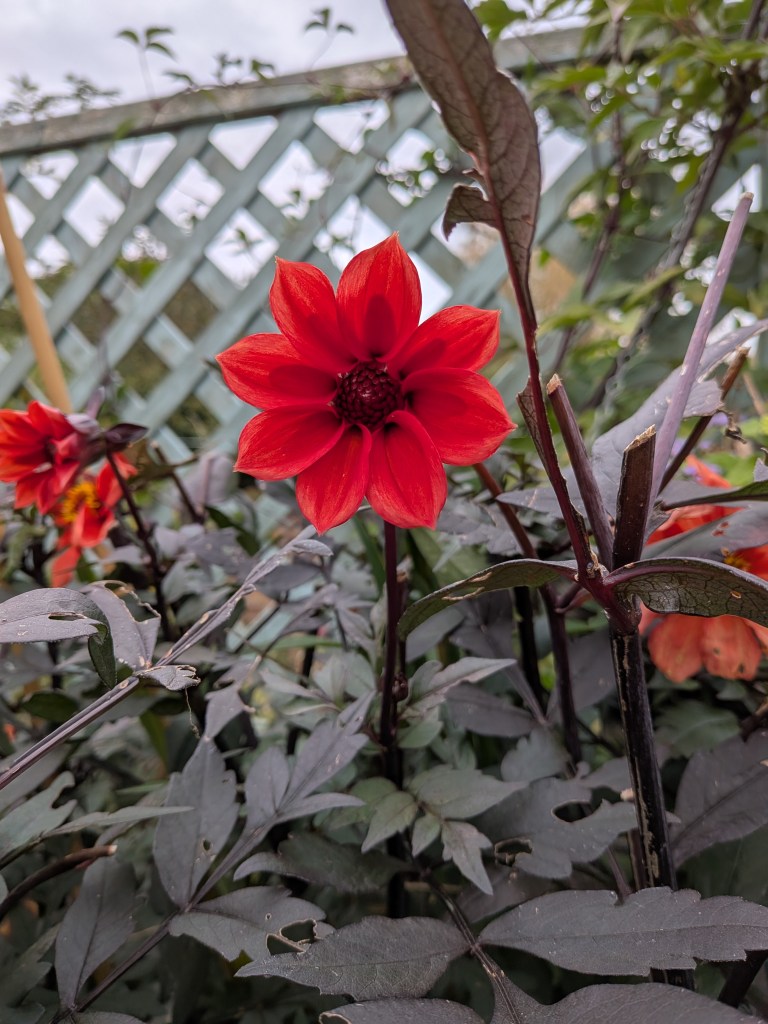
In the garden, the season change is speeding up. I’ve been eaten alive by mosquitoes and been bumping into spiders every time I go out. It’s time to shelter the more fragile plants, lift the dahlias, and get everything ready for a long winter sleep. Demeter’s breath is settling in the morning dew as Persephone begins her painful walk back to Hades. Knowing she will return in the spring is small comfort as each day fades faster than the one before and evenings turn cooler.
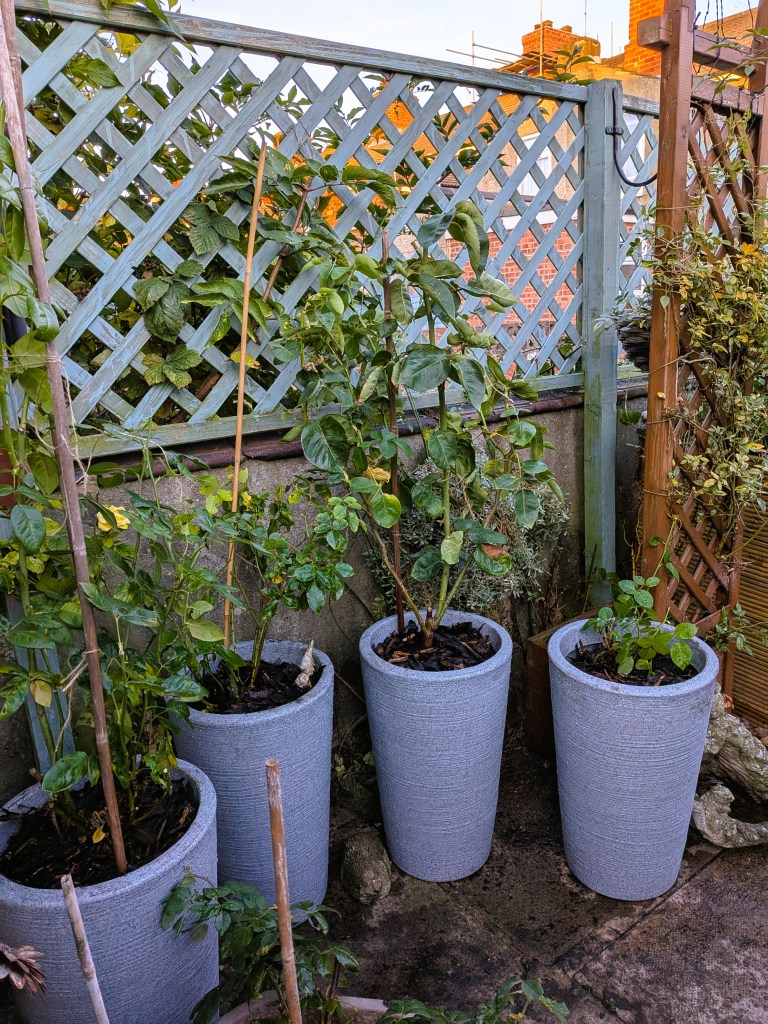
Overnight rain has added damp to the cooler air today, and the smell of petrichor is pulling me away from my desk. There is so much to do out there. I spent my weekend potting on my roses and harvesting the last of the tomatoes. I have a basket of green ones in the greenhouse; they need a bit more sunshine if they are to ripen now, but today is sunless, though still warm. Perhaps the air will clear this afternoon and the sun will show himself.
The hardness of the street and the neighbourhood is creeping in. A mournful, lonely dog is howling. Thumping music from cars, the neighbour’s dull music, raised voices, and the usual underscore of menace interrupt the birdsong. Yesterday, a gathering of birds—a robin, great tit, chaffinch, house sparrow, blue tit, dunnock, spotted flycatcher, white wagtail, and long-tailed tit—were in conference in the elder tree next door, enjoying the sunshine as I was. I have two bird baths, but no feeders because of the sheer number of rats; it’s a big risk I can’t take with a baby next door.
That baby is almost one and is absolutely adorable. She waves to us at night from her bedroom window and delights us with her vocal gymnastics. I feel so lucky to have the neighbours we have. Our corner is a good corner with people we know and care about. It makes all the difference. Wherever you live, wherever you find yourself, it’s never the location, never the house, always the people. If you have people, you’re OK and you can crack on with the job of living.
Autumn has arrived not in a season of mists, but in a blistering whirl of hard rain and hail, floods, and sultry warmth, bringing mosquitoes and blackflies. A warm spring and a hot, dry summer have left places like the East Marsh, which has been an urban heat island for months, with nowhere for the water to go. Rain has bounced moss and muck out of gutters onto the streets, adding to the ever-present mess of dog shit and litter.
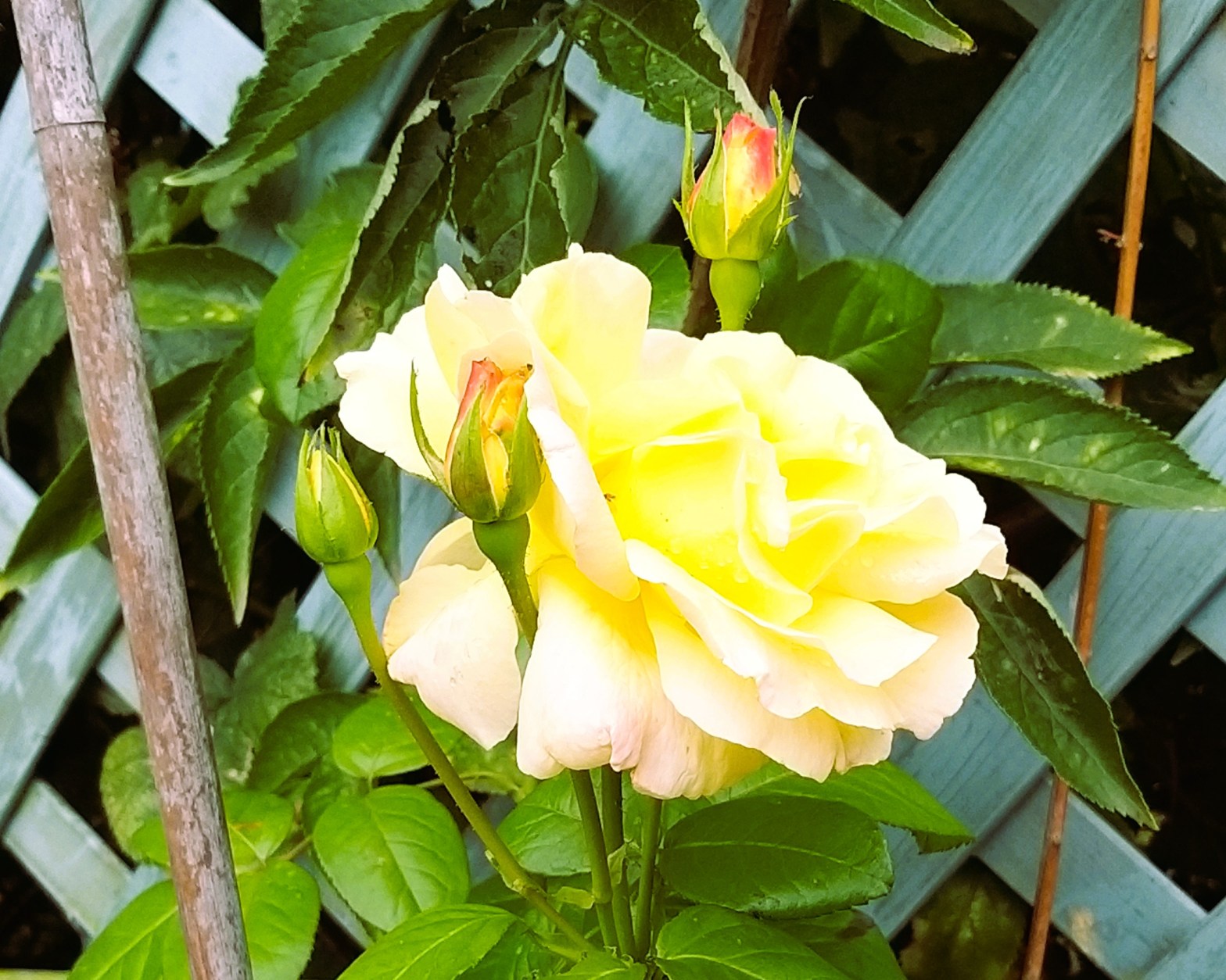
In my back garden, the second flowering of gold roses—roses that are increasingly poignant for me—faced a battering. They opened their petals to rain so fast and ferocious they didn’t stand a chance. The day I was born, my grandma cut a small posy of gold roses from her garden and placed them beside my mum’s bed. Throughout my life, my mum has reminded me of this, and so gold roses are more than just flowers; they are a memory and an invisible thread that lightly ties the hands of my grandma, my mum, and me together.
On August 31st, I had one of my regular back-to-school dreams. In the dream I was due to go back to teaching, having taken a job I really didn’t want. The sense of dread was overwhelming as I bargained with the universe for just a few more days and wondered if I could simply not turn up. I left teaching in 2012, but I am still haunted by the ghosts of former classrooms and students. In my dreams, the places and the children I taught mingle into a blurry mess of anxiety and stress, of the wrong kids in the wrong school and me having no clue what I’m supposed to be doing.
The current education secretary has been urging parents to ensure their children go to school this term, following a huge increase in absenteeism. A sensible education secretary might ask difficult questions about why this is. But then they would have to face uncomfortable truths about school refusal: the links to poverty, the inadequacy of SEND support, the irrelevance of the curriculum to 21st-century life, the stress of the exams system, the cost of uniforms, and the idiotic rules about socks, speaking, and going to the toilet. No one would argue that education isn’t a critical factor in being able to reach your potential, but a system that too often stymies and stifles that potential is an underlying issue requiring attention. However, it is so much easier to blame parents who ‘can’t be arsed’ to get their kids to school.
In the wildness of this seasonal change and the surprise of these storms, the country finds itself battling for its identity. The flag of Saint George is flying everywhere. Following the recent rearrangement of the political deckchairs on the Titanic, the former Home Secretary—now Foreign Secretary—gave her permission for flags to be flown anywhere, claiming she “likes a good flag as well.” Starmer hastily put up some St George’s bunting to show his support for the huge spate of vandalism: ugly, red spray-painted crosses and racist graffiti on businesses and homes. The irony is sickening; this is the flag of St George, the patron saint of Palestine.
@
The flag of St George, so well beloved across many countries and cultures, should be the flag of everyone. While there have been well-intentioned attempts to reclaim it, that horse has bolted at least for now. It is clear to anyone who is honest exactly what this spate of flag flying is about: it is part and parcel of the anti-immigration rhetoric that is dividing communities and encouraging thuggery outside hotels and on the streets where racist abuse is increasingly commonplace.
Underneath all of this is a level of crisis and confusion being manipulated by cynical political games. We have the spectacle of Farage and Reform, unabashed in their peddling of hate, pretending to be on the side of the “everyman” while being a very lucrative business rather than a political party. Their MO is to fan the flames of division and hate, setting neighbourhoods alight with antagonism between neighbours.
We have the shame of overcrowded detention centres where traumatised people wait to have their asylum claims processed in a backlog caused by political failure to address immigration sensibly. We have the language of “swamps” and “swarms” to describe the myth of being overrun due to the deeply problematic small boats immigration route. In this tragic situation the only winners are criminal gangs exploiting vulnerable people and putting their lives at risk while the government does nothing to secure safe routes, nothing to counter false narratives and nothing to address the backlog in asylum claims.
All the while, the bourgeois political class pretends to be in full support of the flaggery, when we all know the only time they have previously entertained flags has been at The Last Night of the Proms or at public occasions that required a show of patriotism, such as a royal drive-past or a VE Day commemoration. The hypocrisy stinks and would be laughable if it weren’t so serious and damaging.
The flag of St George flag has a short history in terms of its most recent presence in English culture. It dates back to Euro ’96, when it became associated with football and specifically the England team. As Richard Herring noted in his 2010 podcast, https://www.bbc.co.uk/programmes/b00vhgc7 this is a relatively new association as he unpicks the short history of a flag that has now become so ubiquitous and synonymous with the hard right. Of course there is a much longer history than this but for the purposes of this conversation, its relative newness in the culture is interesting, particularly its progress from being a genuine symbol of English pride in the national football team to a threatening symbol of the hard right.
In the ’80s, the National Front appropriated the Union Flag. I remember seeing them in Newcastle on Saturday mornings, gathered around the Monument, sullen-faced in their uniforms of bomber jackets, jeans, and Doc Martens. They would hold up their magazine, Bulldog, and people would mostly avoid them. I remember a friendly copper telling me to cover my face because there were National Front photographers around during an Anti-Nazi League demo I attended in London. How times have changed. Today the police are under government orders to arrest peaceful protesters for holding up cardboard signs with words on them – particularly if they are elderly or disabled. Those who are standing in solidarity with the people of Palestine as they endure a live-streamed genocide are demonised while the government dismisses the insidious racism stalking our streets and manifesting in a sinister proliferation of the St George flag and cross as innocent patriotism.
So what does all of this flag-waving and graffiti actually mean? There is a strong case to be made that in post-industrial, disadvantaged communities, where poverty is high and opportunity is scarce, the flag has been grasped as a means of demonstrating power and resistance. When people have little or no power, are alienated and disenfranchised, then any chance to take power becomes attractive. The power to shout, intimidate, spray paint, and shake your fist is better than no power at all. Of course, these communities have been sold a fat lie: that the reason their lives are so difficult is because brown people on small boats are taking over their country. They are being encouraged by those with real power to punch down, to attack those who have even less than them.
While they’re busy punching down, they don’t have time to look at the real reasons for their multitudinous problems. The bourgeois political elites know this and use it to their advantage as they continue to asset-strip and manage the country’s decline. They prioritise the interests of capital and kleptocracy, the industrial military complex, and the corporations that rely on their nefarious behaviour to go unseen and unchecked. Our problems as a country are many and complex, ranging from the extortionate price of energy bills to the shit in our rivers and seas, from a mental health crisis in young people to a care crisis for our elders. Governments should be afraid of the people, but with increasing authoritarianism, surveillance, attempts to silence dissent and protest, and austerity measures that keep people economically oppressed, the government is ensuring that people are afraid of it.
The fight for the flag, overt racism, the demonisation of migrants, and the suppression of dissent are not new. Powerful elites have played these games many times, and it never ends well. History doesn’t repeat itself, but it does provide useful examples we could use intelligently to create a better present and fairer future.
There are many comparisons currently being made to the 1930s and the rise of Nazism and Fascism in Europe. While it’s useful to understand those events, they had their own context, which is not the same as now. Still, there are similarities. I see a similar sickness and decadence in our bourgeois political elites as existed in the Weimar period in Germany—a similar arrogant belief that you can fan the flames of civic discord without getting burnt. Newsflash: you can’t.
There is a similar self-indulgence and distance from the lives of citizens, and a sense of entitlement that the rules don’t apply if you hold the power. Every now and then, they throw one of their own under a bus. This week it’s Angela Rayner bearing the red mark of the scapegoat. She’s been caught out and her greed exposed, but she’s by no means the worst offender in the rotten political class. The scapegoat provides a useful breathing space where the attention is diverted and the light is shining brightly on the ‘bad apple.’ They will never turn the spotlight on the whole circus or take an honest look at just how decrepit and corrupt the entire system has become.
So, what the hell do we do about all this? How can citizens stand against hate, cynicism, and the moral decay of the government? There are no easy or quick answers.
Each of us lives on one miraculous planet that is supporting life in the vast loneliness of space. We each have one short life, and then we are enfolded in the great mystery of the eternal universe. Isn’t it a bit stupid, given that indisputable fact, that we would choose hate, division, corruption, and greed over love, community, honesty, and generosity? We do have an opportunity to choose the latter rather than the former in our immediate communities. We can choose to be good neighbours, build friendship, trust, kindness, and mutual support. We can find out why people are angry and afraid and have grown-up conversations about the real reasons that people are living difficult lives. We can come together and find common ground, focusing on the things that matter to all of us. This is not utopian idealism; this is the work that is happening across the country at a grassroots level right now. On an increasingly big scale, people are finding each other, sharing their knowledge, expertise, and understanding, and working hard to shift away from division and into solidarity.
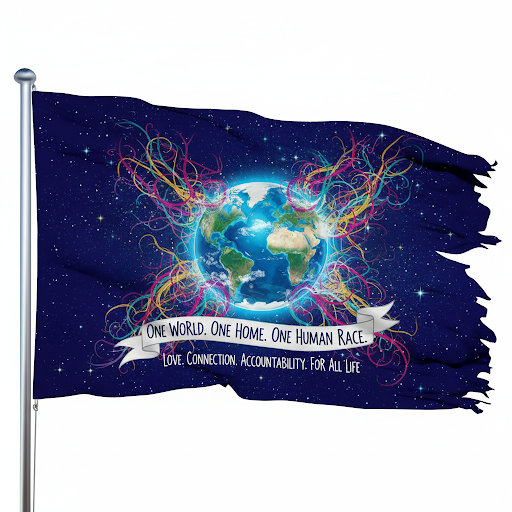
This is the work that truly matters, and it is the work that will most frighten elites and governments because it is beyond their reach, beyond their circles of power and influence. Not that they won’t try to co-opt and control it but we mustn’t let them. Our work is messy, organic, chaotic, and lovely. It is fierce, committed, and powered by love and compassion. If it had a flag, it would be an image of our blue planet against a background of stars, a reminder of what we all fundamentally share; one world, one home, one human race, and a plethora of more-than-human life in a beautifully connected ecosystem. If we can embrace connection and reject division, we have a real chance of healing the wounds inflicted on us by those whose interests it serves to have us at each other’s throats. Perhaps with that connection we have a greater chance of holding power to account and distributing it more equitably in the interests of all lives on Planet Earth.
We’re all seeing a lot of it recently; the flag of St. George, a simple red cross on a white background. It’s an image that’s supposed to make us feel proud of being English, but lately, it feels like it’s been claimed by a very narrow, specific idea of what that means. Some people hold it up as a symbol of a thousand-year-old tradition, but I can’t help but wonder if they’ve ever truly looked at who St. George was. The more I learn about him, the more I realise the man whose flag they fly stands for everything their beliefs reject.
He’s a Global Hero, Not a Local Lad
For so many of us, the idea of St. George is wrapped up in English legend. Some picture him as a medieval knight or a figure straight out of our own folklore. But the truth is far more inspiring and, frankly, a little more personal. The real St. George was a Roman soldier of Greek-Cappadocian descent, born in what is now Turkey in the 3rd century AD. He wasn’t English at all. He was executed for his Christian faith in Lydda, Palestine which means he was, in a very real sense, a Middle Eastern martyr.
Think about that for a moment. This man, a symbol of English identity, didn’t come from here. His story isn’t just a part of our history; it’s a part of the world’s history. He’s a patron saint for countless places, from Palestine and Georgia to Ethiopia and Portugal. It’s a profound irony, isn’t it? A symbol claimed by some to promote a singular, nationalistic identity actually belongs to the entire world—a world that is increasingly reflected in England’s own population. In fact, according to the 2021 Census, over 16% of the UK population was born abroad. The most common countries of birth for migrants include India, Poland, Pakistan, Romania, and Ireland, proving that our national story is a global one.
His Legacy Is Protection, Not Division
Many of us know at least something of the myth of St. George slaying the dragon to save a princess. It’s a classic tale of an archetypal hero fighting evil. The dragon represented malevolence, and George’s victory was about the triumph of good. This is the core of what he stands for: standing up for the vulnerable and defending the innocent.
So when I see his flag used to demonise refugees, to fuel hateful views, or to call for violence against those seeking safety, my heart hurts. It feels like the flag is being used in the service of the very dragons he fought against. This is especially painful when you consider the realities of migration. Many people seeking asylum arrive in the UK with no legal route to do so. Amnesty International points out, they are not legally required to claim asylum in the first country they reach. Many are simply looking for a safe place to land, perhaps somewhere where they have family, or friends.
Once asylum seekers get here, the system isn’t easy. If they’re destitute, they can receive basic housing and financial support, but it’s often as little as £49.18 per week. Most asylum seekers are not allowed to work while their claim is being considered, which forces them into a difficult situation. It shows us that they aren’t coming here for financial gain; they’re coming here because they are desperate for safety.
Who and What is EnglishAnyway?
When we talk about “Englishness,” we’re not talking about a single, pure lineage. Our history is a story of countless journeys and new beginnings. From the original Celtic Britons to the Romans, the Anglo-Saxons, the Vikings, and the Normans, our identity has always been a blend of different peoples who came, fought, and settled here. “English” isn’t a race; it’s a shared experience of a people built from different parts of the world. It’s a powerful idea, and it’s one that has been true for centuries.
Let’s Reclaim the True Story
It’s easy to get angry when we hear hateful and xenophobic views, especially when they come from people we know and love. But we can challenge the ideas without attacking the person. This is where the true story of St. George becomes so powerful. It provides a simple, factual counter-argument to a hateful narrative. Instead of getting into a heated argument, we can simply share a piece of knowledge: “Did you know St. George was from the Middle East? He wasn’t English.”
This small fact can plant a seed of doubt and open a door to a different way of thinking. It redirects the conversation from a hateful attack on people to a factual discussion about a symbol. The flag of St. George is a symbol of compassion, protection, and a global spirit. It belongs to all of us who are willing to fight for what is right, regardless of where we come from. I believe it’s time we took back the true meaning of the St. George’s Cross.