The Fabric of Decency: Why Care Matters

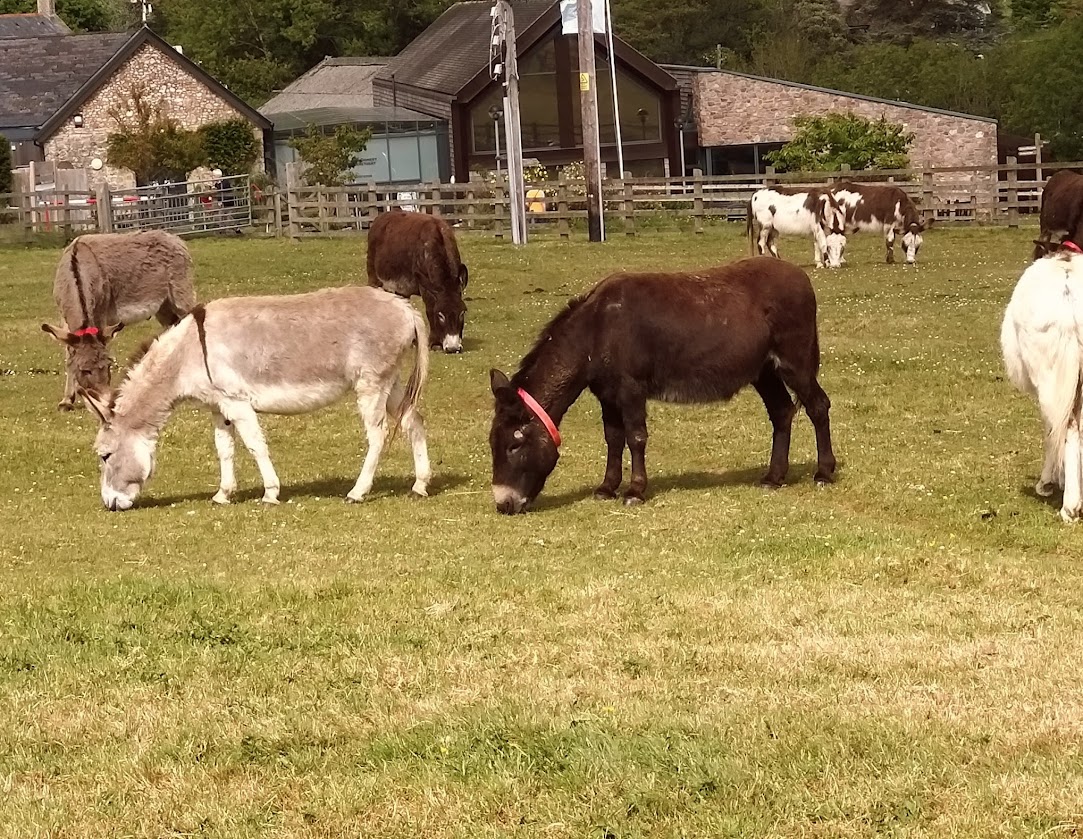
This week I have been thinking about Care and what it means to show, give and receive care when the world seems to hold it in deficit and even contempt. It’s a multifaceted notion that warrants careful consideration. As I’ve been exploring its various dimensions, I find myself confronted with a web of interconnected ideas. The header image is a photograph of donkeys at The Donkey Sanctuary in Sidmouth. This is a place of enormous care and generosity towards creatures who suffer much abuse and mistreatment. It is deeply peaceful and is a great example of care at its best.

Initially, our understanding of care is often (not always) shaped within the family unit. It is within this intimate sphere that we can encounter its most fundamental expressions. In childhood familial care and child raising are the most obvious examples of how care is given and received but as we grow it becomes more two-way such as simple acts of consideration. Someone making you a brew when you’re feeling a bit under the weather, or being there to lend an ear when you’ve had a bad day, exemplify this. It’s that unspoken understanding, that safety net you have (or at least, you hope you have) with the people closest to you.There’s a real privilege in that; knowing you’re not on your own, that someone’s got your back.

Of course, it’s not always straightforward or easy. Not everyone experiences care as a child. As an adult care can be hard work, full of emotional heavy lifting. It can be worrying about someone you love, feeling responsible for their well-being, and sometimes feeling like you’re being pulled in a million different directions. For me the deep moments of connection and support always outweigh the difficult bits. This is something I’m currently truly grateful for.

Beyond the family, the concept of care extends into the wider community, albeit in more nuanced ways. We often observe it in small acts of kindness. This week, the Rail Assistance team gave my Mum solicitous care as we travelled together by train for a family holiday to Devon. I was moved by the respect and kindness the rail staff showed her and their support made the travel so much easier than it would have been without them.  

Perhaps care is a de facto aspect of human behaviour.  I’d like to believe that it is, but there is so much evidence of where care is missing, where people are falling through the cracks. It’s easy to blame the system, to point the finger at the government or at society but  it’s more subtle than that. We’re all part of this and somewhere along the line, we seem to have lost sight of this basic truth: that we’re all interconnected. Looking after each other isn’t just a moral thing to do; it’s essential for our own well-being.

I keep coming back to this idea of how care has been monetised. It feels fundamentally wrong, this notion that something so basic to human existence – looking after each other – has become a commodity, something to be bought and sold. Childcare, elder care, even basic healthcare all comes with a price tag. This makes me question what kind of society we’ve become.

In part, it’s tied up with the relentless emphasis on individualism; the insidious idea that we’re all meant to be self-sufficient units, competing with each other, striving for personal success at all costs. But the reality is that we’re social creatures. We need connection, we need support. When those things are missing, when we feel like we’re constantly having to fend for ourselves, it erodes our capacity to care for others. We’re too busy trying to keep our heads above water.

It’s worth thinking about where this idea of care comes from. Those old words – caritas, kindness, compassion, love – they hint at something deep within us. It’s not just about the practical stuff; it’s about empathy, about feeling someone else’s pain and wanting to alleviate it. For many people, faith plays a big role in shaping their understanding of care, reminding them of their responsibilities to others but I would argue that there is a drive in all of us, whether we have faith or not, to care. The structures we have made in this neo-liberal nightmare often make it hard for us to show our care for others. 

How have we ended up in a situation where a lack of care, a lack of basic human decency, has become normalised? It’s evident in the way people talk about the vulnerable, in the cuts to essential services, in the general sense of indifference that seems to permeate so much of modern life. It’s a slow erosion, a gradual numbing of our collective conscience.

This brings me back to this central question: how can we expect people to be caring when they themselves feel uncared for? If you’re struggling to make ends meet, if you feel invisible and ignored by those in power, where do you find the energy, the emotional resources, to reach out to others? It’s a vicious circle, and it’s a difficult one to break.

There is, in spite of all the pressure and difficulty, something comforting in the idea that our capacity to love is infinite. That it’s this wellspring within us that never runs dry. The more you give, the more you seem to get back, not always in a direct way, but in a sense of connection, of purpose. So why are we so stingy with it? Why do we hold back, afraid to be vulnerable, afraid of getting hurt?

Maybe it’s because we’ve forgotten how. Maybe we’ve become so focused on our own needs that we’ve lost sight of the importance of connection. I believe that rediscovering that capacity for care, for genuine empathy and compassion, is crucial. It’s about building a society where everyone feels valued, where support is readily available, and where looking after each other is seen not as a burden, but as the very essence of what it means to be human. At the end of the day, love might not solve all our problems, but without it, we’re truly lost.

Running Free at Sunset

Polish Translation: Wolna w Biegu o Zachodzie Słońca

Kasia’s final journey took place on a Friday evening at sunset, the North Sea at Sutton on Sea providing the setting. It was her most cherished place, a stretch of coastline where, unconstrained by her lead, she could have a run. Her unfortunate tendency to bite meant that only the solitude of a deserted beach offered her true freedom. She came into our lives in 2018, coinciding with the purchase of our caravan. A year spent in a shelter, at least one failed rehoming attempt, and the looming prospect of becoming unadoptable marked her history. Perhaps the sanctuary hadn’t been entirely forthcoming about the extent of her behavioural issues, but in the end, it held no significance. She became ours, and we became hers, a complete and mutual belonging.

Kasia was our companion through the pandemic, the ideal dog for a time of enforced social distancing. Our lunchtime walks in the unusually quiet local park during those strange months hold a particular significance. The dog run, often deserted, became her domain, a space where she could run freely while we simply spent time with her, amidst the pigeons and the silent trees, against the backdrop of a world unexpectedly paused.

She arrived with a sense of unease, a palpable sadness. She bonded with me quickly, seeming to find a particular comfort in women; the few individuals beyond Billy and myself she tolerated were also female. But her connection with Billy deepened, his fluency in Polish proving an unexpected and invaluable bridge. It transpired that Polish was her first language, a detail that had likely been overlooked or unknown in her previous placements. Billy’s ability to speak to her directly, in the language of her early experiences, seemed to unlock something within her, fostering a sense of immediate safety and understanding. The three of us became inseparable.

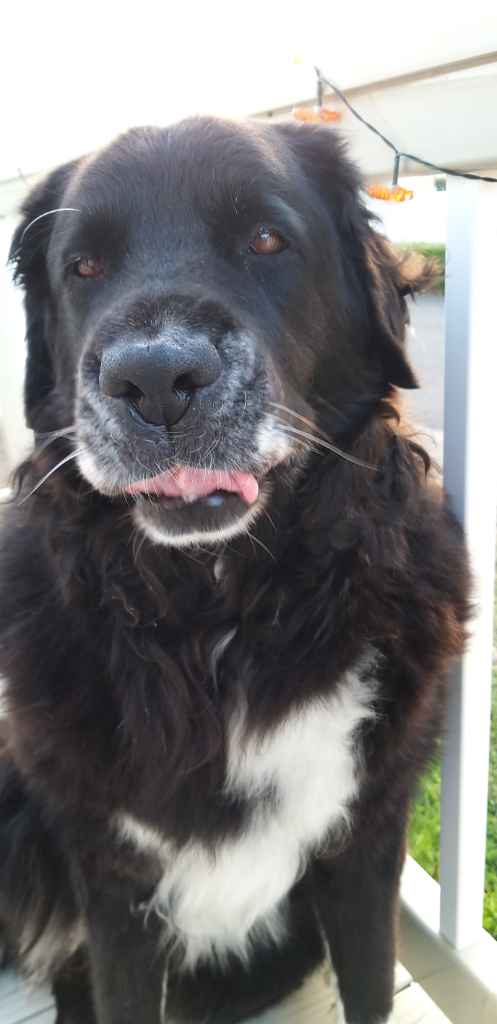
Gradually, her playful nature began to surface. Games became a part of her repertoire, her favourite being the audacious theft of socks and other soft items left at her level, a mischievous act that served as an invitation to a chase. She was a substantial dog, a Polish Collie/Newfoundland cross, her paws remarkably large. Her vocal range was impressive; she was a talkative presence, and many hours were spent in one-sided conversations, often while I was cooking when she would assist me in the kitchen. I called her my sous chef. Affection was something she both craved and offered. Her characteristic cuddle involved reversing between my knees, her body softening as my arms encircled her neck, my face buried in her thick fur. She carried an earthy scent, reminiscent of rich compost, yet with a subtle sweetness, a hint of vanilla beneath the deeper notes.

Her passing in August 2022, shortly after a diagnosis of breast cancer, marked the end of a period in which she had blossomed into her true self, fully loved and having experienced four years of a stable and joyful life. The depth of what she gave us is immeasurable, and her absence is a constant undercurrent in our lives. Consequently, when her ashes were returned later that August, a desire to hold onto her a little longer took root. That ‘little longer’ stretched into almost three years.

Then, on a Friday, amidst the preparations for a trip to the caravan, Billy discovered the box containing her ashes. His simple question, “Are you ready?”, hung in the air. A part of me knew that ‘ready’ was a state I would never fully achieve; such is my nature. Yet, the vivid memories of her unbridled joy on the beach surfaced, and I knew what she would have wanted. And so, I agreed.

The evening was beautiful in its understated way. The tide was high, the sea calm. The setting sun painted the sky with the muted hues of spring. The air was cool but gentle. We carefully removed the ashes from their container, each of us offering our final words of farewell. Then, with a quiet resolve, I released her into the water, watching as she dispersed, whispering a wish for safe travels. It was a deeply personal and profoundly emotional moment, tinged with sadness yet undeniably right.

Now, she is truly free to run on that beloved beach for eternity, to offer her oafish  playbows to all the other canine spirits, to pilfer endless socks without consequence, and to never again feel the constraints of illness or fear. She was an immense presence in our lives, a significant teacher, and a cherished friend and companion. We should never underestimate the profound love that dogs bring into our world, and we should always treat them with the respect they deserve, not as mere anthropomorphised ‘fur babies’ but as creatures of nature, with their own inherent ‘wolfishness’, their own distinct selves.

Our home now holds Loki, another adoptee, a being entirely different from Kasia. His affections lie firmly with humans, displaying a marked dislike of other dogs, the very opposite of Kasia’s tendencies. He possesses a sensitive and loving nature, andhis own unique set of quirks, and our love for him is no less profound.

If you share your life with a dog, honour them. Love them unconditionally, mirroring the boundless love they offer you. And remember that when their time comes, the grief you feel is not a burden, but the price willingly paid for the immeasurable gift of their companionship. It is as it should be.

Kocham Cię, Kasia.

Beltane and the Barometer of Discontent

The turn of the season, from the nascent energy of early spring to the more established growth around Beltane, has this year been accompanied by a disquieting shift in the national mood. The unseasonably warm spell of late April, which spurred a sudden flourishing in the garden and a corresponding urgency for water – a stark reminder of the erratic behaviour of our climate – gave way to a colder, more introspective May bank holiday weekend. The chill in the air seemed to mirror a certain cooling of optimism, a sense that the ground beneath our feet, both literally and metaphorically, is less stable than we might hope for at this time of year.

Observing the garden’s rapid response to the unexpected heat, followed by the almost immediate need for careful watering, felt like a small-scale parable of the larger challenges we face. The anomaly becoming the norm, the contradiction existing side-by-side – these are increasingly the hallmarks of our environmental reality. Even the small celebration in the East Marsh on that hot day, the music and the youthful exuberance played out against a backdrop of everyday realities and neighbourly interactions, held a certain poignancy. The offers of future produce alongside the requests for lowered volume spoke of a community navigating its own rhythms and connections amidst the larger uncertainties.

The two months spent wrestling with the garden have brought a degree of completion, at least for now. The physical act of turning soil, planting, and tending has a grounding effect, a tangible connection to the cycles of nature that can feel increasingly distant in our digitally mediated lives. Yet, even within this small sphere of control, there are areas that remain stubbornly resistant, like the darker corner beneath the living room window, a reminder that some tasks require a different approach, a temporary measure before a more thorough engagement.

However, the quiet satisfaction of a largely completed garden is overshadowed by the events of the preceding week, a stark reminder of a different kind of crisis – the health, or rather the ailing state, of our so-called democracy. The headline that was largely absent from the mainstream news – the fact that only a third of those eligible to vote actually did so – speaks volumes about the level of citizen engagement with the power structures that shape their lives. To dismiss this as mere voter apathy is a convenient, but ultimately dishonest, simplification. It ignores the palpable sense of alienation and cynicism that pervades the electorate, a weariness with a political system that, for many, has demonstrably failed to deliver.

The ‘success’ of Reform, while perhaps disheartening, was not entirely unexpected. When significant portions of the population feel unseen and unheard, when the dominant political discourse is perceived as dishonest and driven by populist rhetoric, it is perhaps inevitable that they will seek solace in simplistic answers offered by demagogic figures. These individuals, skilled at tapping into feelings of frustration and disenfranchisement, promise easy solutions but invariably deliver only disillusionment.

The roots of this disengagement can be traced back to significant events in recent history, notably the 2008 financial crash. The lack of accountability for those whose actions precipitated the crisis, coupled with the subsequent imposition of austerity measures, had a profound and damaging effect on communities across the country. The stripping away of local resources and the erosion of the social fabric left many areas hollowed out and seething with a quiet anger, a sense of hopelessness that has taken firm hold, much like weeds in an untended patch of ground.

The government’s response to the Reform surge has been depressingly predictable: a lurch further to the right, a knee-jerk reaction that targets vulnerable groups, in this instance, overseas students seeking asylum. This scapegoating and division offer no real solutions and only serve to deepen the existing fractures within society.

What a different path could have been taken. Instead of resorting to blame and deflection, there was an opportunity to look at the genuine, impactful work being done at the grassroots level across the nation. Within communities, often operating with minimal resources, are individuals and organisations deeply committed to creating positive change, a network of interconnected effort akin to the unseen but vital mycelium beneath the soil. A moment of humility, an acknowledgement of the limitations of the current political paradigm, could have led to a genuine attempt to understand and support these local initiatives. To recognise that the knowledge and the solutions often lie within these communities, not within the insulated walls of Westminster.

To step away from the seductive but ultimately toxic allure of populism, to reject the politics of blame and division, would have been a significant step towards rebuilding trust and fostering a more cohesive society. Instead, the familiar patterns of scapegoating and ideological entrenchment prevail.

It feels as though we have not yet reached the lowest point, the nadir of this particular cycle. But perhaps, paradoxically, it is only when we reach that point that the possibility of genuine rebuilding can begin. A rebuilding not in the image of our worst instincts, but in the reflection of our best – a society that values genuine engagement, supports its communities, and operates with honesty and integrity. The quiet work in gardens and local initiatives may seem small in the face of these larger political currents, but it is in these spaces that the seeds of a more hopeful future are quietly being sown. The season may feel uncertain, the political climate unsettling, but the underlying potential for growth and connection, like the persistent life in the soil, remains.

Eastward Gazing, Westward Turning: Easter Reflections in a Changing World

When you’re lost in the rain in Juarez and it’s Easter time too …  

Just Like Tom Thumb’s Blues: Bob Dylan, Highway Sixty One, 1965

It’s a song that sits in my head very often, rattling around  in fragments or in its full form. Last night, I sang it to myself in my head as I was falling asleep, seeing Dylan’s cinematic images of Mexico, the poverty and indifference to suffering, the exploitation and ennui. He gave up on Juarez and went back to New York.  In my cold and blowy seaside retreat I know how lucky I am to have a break from ‘Juarez.’ 

My brain has been knitting together disparate thoughts about Easter and what is for me a peculiar time of year. The clocks have sprung forward and that febrile April energy is bubbling away. It’s like the world itself is in a state of flux, neither quite winter nor fully spring, and that uncertainty seems to seep into the mind, stirring up memories and half-formed thoughts.

This week, that mental cauldron has been particularly active, simmering with recollections of Easters past. When we were very little girls, me and my sister, there was an Easter when it snowed. . We were at Westfield Avenue then, the house where me and my first sister were born, in our small garden that felt enormous at the time. I remember shivering in the sudden cold and wanting to be inside, frozen and almost ungrateful for the opportunity to play in the snow so late in the year.  It is poignant to look back at such a fleeting memory and be reminded now of the juxtaposition of spring’s promise and winter’s lingering chill.

My brain then took me to my second year at Newcastle Poly. The academic pressure was starting to ramp up because I was late with a piece of writing, an extended essay on Samuel Johnson’s History of Rasselas, a text I realised I didn’t have enough to say about and was wondering how to make it work. Amidst this my youngest sister was battling with her GCSE Shakespeare coursework, standing beside me with a hangdog face and begging me to deal with Macbeth. Of course I helped her, more than I should have done.  We’d moved to Scartho Road by then, a house where the garden became Mum’s real passion. I can  picture her out there, fag in hand, high heels on, coaxing life from the often-reluctant East Coast soil. Nana was with us that Easter, I think she might have been a bit under the weather. There was tension in the air, Mum perhaps feeling the strain, and the garden, usually a source of vibrant colour, seemed to mirror that subdued atmosphere, struggling against the persistent cold wind that’s so characteristic of our part of the world. That bitter bite, a constant reminder of our fishing heritage, the unforgiving North Sea shaping generations of Grimbarians. 

Easter, of course, is a moveable feast, dictated by the lunar cycle, shifting its place between March and April. It’s always interesting to note which flowers mark the occasion. Sometimes it’s the bright trumpets of daffodils and the heady scent of hyacinths, other years it’s the more elegant sway of tulips and the first delicate bluebells pushing through the earth. Hyacinths always bring Auntie Helen to mind. Her birthday was in early March, and Mum would often buy her a pot of them, their vibrant colours a cheerful start to spring. I do love them, but indoors their perfume can become overwhelming and give me a headache. I only have them outside now, which they seem to like. The intense sweetness of hyacinths connects  me to my ancient great aunts and lovely grandma, those dear ladies with their turban hats, delicate teacups, and the ever-present aroma of Nivea hand cream. I still use it sometimes, that familiar scent a tangible link to a bygone era. Again the poignancy and wistful sadness mingle with the pleasure of recall.

Easter holidays from school were, more often than not, a bit of a write-off in terms of actual revision, particularly in senior school. It was all about socialising, that desperate need to connect and feel part of something as adolescence took hold. University breaks, however, were a different matter. They were a welcome opportunity to come home, to indulge in nice food, Easter eggs, a comforting reminder of younger days. Mum was and still is a feeder and shared meals, not just at times of celebration were a huge part of my family life. 

Sharing a room with my youngest sister during those breaks was alway interesting. She was meticulously tidy, her side of the room a shrine to Princess Diana and glossy Vogue models. Mine, on the other hand, was a chaotic landscape of books, clothes piled precariously, and, most memorably, a poster of a scantily clad David Lee Roth chained to a fence. She loathed it with a passion, which I found funny. She made it clear which half of the room was hers and which was mine. But our time of sharing a room forged an unbreakable bond between us which holds fast now. 

Then came the Easter breaks during my twenty-four years as a teacher. Those were inevitably dominated by the relentless task of GCSE and A Level coursework marking. The promise of spring was often overshadowed by stacks of student essays and the pressure of deadlines. I was a much more conscientious teacher than I was a school student. 

And what about now? Eastertime, whether it falls in March or April, feels like a precious part of the year. It’s when the light noticeably increases, stretching the days and lifting the spirits. Nature comes into her own with that glorious progression from the cheerful bursts of crocus to the elegant nodding heads of daffodils, the vibrant cups of tulips, the delicate haze of bluebells, the old-fashioned bleeding hearts, and finally, the first appearances of granny bonnets. It’s a visual feast, a tangible sign of renewal.

T.S. Eliot famously declared that “April is the cruellest month,” and there’s a certain truth to that. In these biting winds, juxtaposed with the lengthening days, the tantalising promises of sunshine constantly interrupted by sudden, sharp showers, the weather feels more capricious than truly cruel. It’s a month of false starts and fleeting warmth.

In the Easter Season itself, we have this fascinating layering of traditions. The ancient pagan celebrations of spring, of new life and fertility, were overlaid by the Christian observance of the Passion and Resurrection. And in turn, both have been subsumed by the relentless march of capitalism and its ubiquitous chocolate eggs. For the old world, this was a time of real significance, the stirring of life in the land, evident right now in the delicate white blossom of my pear trees and the emerging golden-red leaves of my acer in the East Marsh garden. For Christians, this period of reflection on sacrifice and salvation brings them closer to their faith. I remember a vicar friend of mine telling me that Christmas was pastoral while Easter was the true grit of the Christian Faith, a time to confront the viciousness of mankind and to reflect on the power of sacrifice and redemption.  I am a devout sceptic when it comes to religion. I see God in a garden more than I do inside a church. 

Another poem that always surfaces around this time is John Donne’s Good Friday, Riding Westward. Again, it takes me back to my second year at university, the discussions in seminar rooms sparking new ways of seeing the world. I was particularly struck by the idea of the soul’s orient being eastward, and the act of turning westward as a turning away from God and towards the material. As the West, in its current iteration, seems to be teetering on the edge of something resembling chaos, that particular line of thought feels surprisingly relevant.

Whatever Easter means to you, if you happen to be in a part of the world where it’s a significant time, I sincerely hope you manage to find a bit of rest and peace amidst the shifting weather and the various demands of life. Easter, in its own way, avoids the somewhat anticlimactic feel that often follows Christmas. Perhaps it’s the inherent optimism of spring, the undeniable increase in light and the burgeoning beauty of the flowers in the ground, that makes it a little easier to simply enjoy. There’s a sense of gentle renewal, a quiet promise that feels rather comforting. And if you have faith, may you be comforted by the resurrection and the enfolding love and compassion that Jesus, whether myth, man or Messiah truly stood for.

Reflections on Blondie and Clem Burke

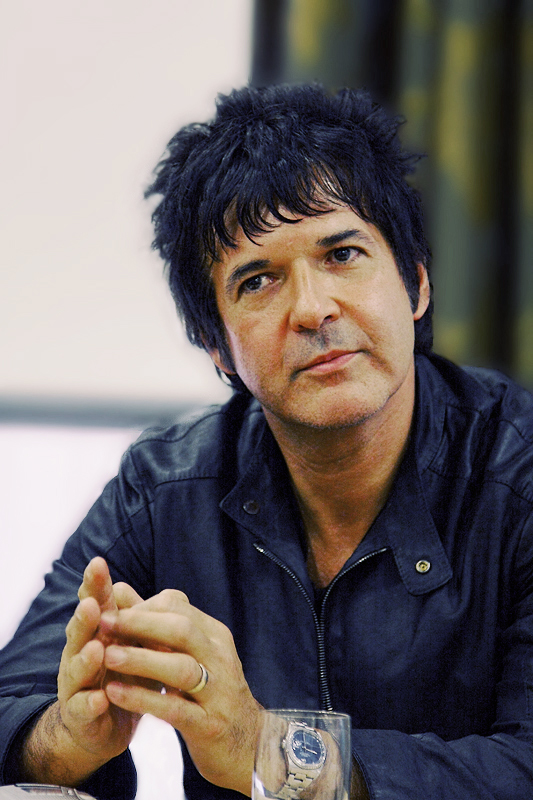
Clem Burke’s death this week, at 70, has affected  me. It’s like a door has opened, and all these memories are flooding back, all bound up with Blondie. They were such a central part of my growing up. I was just a kid in the 70s, completely captivated by Debbie Harry on Top of the Pops. There was something about her – a kind of cool detachment mixed with this raw energy – that was just mesmerising.

Those early Blondie videos are etched in my mind. “Picture This,” with that yellow dress, “Atomic” with the bin bags (which, at the time, seemed so edgy and daring), “Heart of Glass” with that sparkly black dress, and “Dreaming” with the red jumpsuit. And always, running through it all, was Clem’s drumming. That incredibly powerful, driving beat, full of energy, that gave those songs their danceable, joyous thump. It was a sound that, in many ways, defined that era.

Back then, vinyl records were expensive. They were a real treat, something you’d get for a birthday or Christmas. I desperately wanted “Parallel Lines,” but it was simply out of reach. Then, I found a pristine copy lying in the street, at the end of my cul-de-sac. It felt like some kind of sign. My parents, being the decent sort, reported it to the police, but after a week, it was mine. I played that record non-stop. I reckon I could still sing the whole album, pretty much word-perfect.

I remember staying up late to watch Blondie’s Old Grey Whistle Test New Year’s Eve show. Debbie was wearing this pink and yellow striped outfit, and Clem was in a shiny gold suit. At the time, I was disappointed. It didn’t sound like the record. I hadn’t yet grasped the difference between a live performance and a studio recording. Watching it again this past Friday, as a tribute to Clem, I saw it with different eyes. I saw a frontwoman under immense pressure, delivering a high-energy performance, carefully pacing herself to get through the set. No backing dancers, no backing tracks, just her, right up front, performing songs that were already becoming iconic. It was actually brilliant.

Blondie were more than just a band; they were a phenomenon. They emerged from the New York punk scene, but they were always more than just punk. They had a real pop sensibility, a knack for writing incredibly catchy, memorable songs. They blended punk, new wave, disco, and even reggae, creating a sound that was uniquely their own. And Debbie Harry, with her striking looks and that cool, almost detached persona, became a true icon. She was a feminist icon, a style icon, a pop icon. She challenged the norms of what a female rock star could be.

But there was a darker side to it all, of course. The constant objectification, the relentless scrutiny. Debbie Harry was constantly being judged on her looks, her age, her voice. There was this expectation that she should maintain this impossible standard of beauty and youth, and when she inevitably didn’t, she was criticised for it.

I saw Blondie in the 90s, on the No Exit tour, at Sheffield City Hall. My boyfriend at the time, who’d had far too much to drink, climbed onto the stage, grabbed Debbie, and kissed her. He was, quite rightly, chased out of the building by security. I stayed and watched the rest of the show, and I remember seeing a flash of fear in Debbie’s eyes. At the time, I was just annoyed with him for his drunken antics. Now, I see it through the lens of male entitlement; the way some men seem to think they have a right to women’s bodies. It was probably just one of many such incidents for her; an unpleasant part of her story of fame and objectification.

I had a small taste of that myself, once. I was playing in a Bowie tribute band, and we had a fantastic gig. The crowd was buzzing, high on the music. As I came off stage, a group of overexcited men surrounded me, trying to hug and kiss me, grabbing at me. It was genuinely frightening. Luckily, we had a roadie, Martin, a lovely, mild-mannered guy. He just lifted me up and carried me out of the building, away from the crowd. It was a relatively minor incident, but it gave me a glimpse of what women like Debbie Harry had to deal with on a daily basis.

She was completely objectified at the height of Blondie’s fame, and then castigated for daring to age, for not maintaining that ethereal beauty, that distinctive voice that was both honey and grit. It’s a sad reflection of our society’s obsession with youth and beauty, particularly when it comes to women in the public eye.

I imagine she’s feeling utterly bereft this week, having lost Clem. He was, by all accounts, a great guy. He always seemed like someone who’d be good company. I hope he’s drumming in the great blue yonder, keeping the beat going. And I hope Debbie has the support she needs to get through this horrible time for her. 

Blondie’s impact on the 70s and 80s was immense. They weren’t just a band; they were a cultural force. They represented a new kind of female rock star, one who was strong, independent, and unapologetically herself. They challenged the status quo, and they did it with style and wit. They created a soundtrack for a generation, a generation that was looking for something new, something different.

And Clem Burke was a crucial part of that sound. His drumming was the backbone of Blondie’s music, the driving force that propelled their songs. He was a powerhouse, a master of his craft. He was a vital part of the band’s identity.

It’s strange how these figures from our youth can have such a profound impact on us. They become part of the fabric of our lives, their music woven into our memories. And when they’re gone, it feels like a piece of our own history has been taken away. Clem Burke’s passing has brought back a rush of memories, a reminder of a time when music felt like it could genuinely change the world. And in a way, it did.

Photo credit: By shiver_shi – https://www.flickr.com/photos/shiver_shi/2658661948/, CC BY-SA 2.0, https://commons.wikimedia.org/w/index.php?curid=146773862

A Mirror to Brokenness

The local park, a space intended for communal well-being, now presents a distressing reflection of societal challenges. Originally donated in an era of philanthropic generosity, it has devolved into a site marked by escalating antisocial behaviour. The nightly fires, fuelled by stolen wheelie bins, and the pervasive litter, including broken glass and human waste, render it not only unpleasant but also hazardous. My daily walks with my dog, Loki, are a constant reminder of this degradation, as he scavenges amongst the debris, often to his detriment.

The young boys responsible for much of this disruption, barely into their teens, are themselves victims of systemic failures. Their actions, while destructive, stem from a lack of adequate care and guidance. They exist in a state of near-ferality, largely unreached and unsupported. The schools, already overburdened, struggle to provide the necessary interventions. Shalom, our local youth centre, a long-standing institution, offers a crucial lifeline, yet even this resource is occasionally subject to abuse, highlighting the complexity of the issues at play.

A fundamental deficit of social capital underpins these problems. The community is characterised by instability, transience, and economic hardship. This lack of cohesion, the absence of robust support networks, leaves individuals ill-equipped to navigate life’s inherent difficulties. My involvement with East Marsh United, though impactful on a small scale, feels like a limited response to an overwhelming crisis. My attempts to engage with those in positions of authority often yield sympathetic words but insufficient action. The focus, it seems, remains on bureaucratic processes rather than tangible social change.

The recent police intervention at a peaceful gathering in a Quaker house has further eroded my sense of security. The violation of a space traditionally regarded as a sanctuary raises profound questions about the protection of civil liberties and the erosion of trust. This incident, coupled with the resurgence of austerity measures and the looming spectre of war, creates a deeply troubling context. The most vulnerable members of our society face increasing marginalisation and neglect.

My own experiences mirror these broader societal trends. While yesterday offered a fleeting sense of equilibrium, today I am once again confronted with exhaustion. The need for emotional release, for a moment of respite, is palpable. This oscillation between resilience and weariness is a recurring pattern, a testament to the ongoing nature of these challenges.

Life, as these observations underscore, is inherently complex and unpredictable. It is a journey marked by both joy and adversity, success and setback. To navigate this complexity, individuals require not only personal strength but also robust systems of support. These support systems, however, should not be viewed merely as safety nets; they are also essential catalysts for social progress. Those who have experienced hardship are often best positioned to advocate for systemic change and to champion the cause of social justice.

The difficulties faced by the young people in the park are not isolated occurrences; they are symptomatic of a more extensive societal breakdown. The lack of resources, the absence of structure, and the prevalence of neglect create an environment in which despair can flourish. Addressing these issues demands a move beyond superficial solutions towards long-term, sustainable interventions. This requires a fundamental re-evaluation of our priorities, a recognition that social justice is not a peripheral concern but a core societal imperative.

We must cultivate a society that prioritises the well-being of its most vulnerable citizens. This entails significant investment in education, youth services, and community initiatives that foster social cohesion and mutual support. It necessitates a commitment to tackling the root causes of poverty and inequality, rather than simply managing their consequences. It requires a willingness to challenge prevailing norms, to hold those in positions of power accountable, and to advocate for policies that promote equity and inclusion.

The work undertaken by East Marsh United, and similar organisations, is of critical importance. We operate on the front lines, witnessing firsthand the impact of societal neglect. We serve as advocates for those whose voices are often marginalised. However, our efforts are frequently constrained by inadequate funding and a culture that prioritises discussion over decisive action.

The current situation demands urgent and comprehensive change. We can no longer afford incremental progress. We must invest in our communities, empower our young people, and strive to create a society in which all individuals have the opportunity to thrive. This is not an idealistic aspiration but a fundamental matter of human rights.

The park, in its present state, serves as a stark reminder of what is at stake. It symbolises the consequences of neglect and indifference. Yet, it also possesses the potential for transformation. It can be reclaimed as a space of healing and renewal, a testament to the enduring capacity of the human spirit.

Realising this potential requires immediate and sustained action. We must channel our collective frustration into constructive engagement. We must build alliances with those who share our commitment to social justice, and we must demand meaningful change from those with the power to effect it. We must hold onto the belief that, even in the most challenging of circumstances, positive change is possible.

Creating Your Personal Sanctuary

A recent visit to Windsor Castle got me thinking. We don’t all live in such grand places. Palaces and sprawling estates are far removed from how most of us experience daily life. This made me consider how we find contentment and comfort within our own more modest surroundings. It’s in these everyday spaces that we seek peace, where we fashion our own personal haven; regardless of circumstance, everyone deserves a sanctuary, even if it’s just a quiet corner.

Creating such a space starts with imagining it. You have to envision its essence, believe it’s achievable, and then set about making it real. I’m fortunate to have the resources to develop a tangible little Eden in my garden. My focus this year is on new structures, extensive planting, and growing food. But I realise this isn’t the reality for everyone.

I was talking with my Best Human who’s currently dealing with ongoing illness. We were in our living room. It’s a simple space, but the new settee and the television my sister gave us have created a little area where we can sit together comfortably. This provides a sense of ease, which is especially valuable when recuperating. While a television doesn’t solve everything, it highlights the importance of having a space where you can relax, particularly during difficult times.

This situation prompted me to think more about my neighbours, many of whom face considerable challenges. I gave my previous settee and a chair to one neighbour, and a coffee table to another. These contributions are intended to help them establish their own domestic sanctuaries. This outreach is part of my work but it also comes from my basic sense of human empathy and belief that everyone deserves a decent home.

It’s with this principle in mind that I’m planning to plant more flower containers to sit outside our front doors. Our living environment has a tangible impact on our well-being. At the moment, things are particularly demanding; making any space that can be enhanced with beauty or offer a bit of comfort is incredibly valuable. These spaces don’t need to be expensive, elaborate, or luxurious; they simply need to be cared for.

The idea of a personal Eden extends beyond the physical. It’s about cultivating inner peace, finding moments of tranquility amidst external chaos. It’s about appreciating simple sensory experiences – the smell of rain on dry earth, the glow of candlelight, the rustling of leaves in the breeze, the feeling of sunlight on your skin, the smooth texture of a stone in your hand, and making time for quiet reflection; an internal sanctuary.

In difficult times, we all need a refuge, whether physical or mental. A place where we can feel secure and find some peace. This is what I’m trying to create, for myself and for others. It’s not about escaping reality, but about finding the strength to confront it.

It’s vital to recognise our inherent capacity for creating beauty, regardless of our circumstances, our capacity to find moments of joy, those details that make life tolerable, even during tough periods. This helps us to have faith that things can be better even if they seem hopeless at times.

It also involves a sense of community: sharing what we have and helping others to establish their own personal Edens, an acknowledgement of our interconnectedness and the universal need for peace, comfort, and beauty.

I believe that a good space is, fundamentally, a cherished space. It’s a space that receives attention, a space that’s created with care. It’s the intention, the investment of care, that truly defines it. I’ve seen people transform tiny areas into havens of beauty, using colour, plants, and light, exercising their imagination, and personalising the space.

Self-compassion is also crucial. It’s about giving yourself permission to seek peace and experience joy, even when things are difficult. It’s about practising self-care, about prioritising your own well-being. It’s about acknowledging that everyone, without exception, deserves some degree of peace and beauty.

Resilience, too, plays a vital role; finding the strength to persevere, even when faced with adversity and identifying those small moments of joy, those details that make life bearable. It’s about cultivating faith (in the secular sense) even when it appears lost. It’s about recognising that even in the midst of chaos, inner peace is achievable. Faith is essential; maintaining the belief that circumstances can improve, that even in the darkest of times, a glimmer of light persists. The work is in  nurturing that faith about believing in its potential to make change. 

Small acts of kindness have a significant impact. Recognising our shared humanity and the importance of mutual support is paramount. Everyone deserves a space where they feel safe and at peace. A decent home, a secure and comfortable environment, is a fundamental human right. It’s our responsibility to work towards ensuring that right is a reality for everyone. This extends beyond mere physical structures; it encompasses the feeling of security, of belonging, of having a sanctuary where you can be yourself and find respite from external pressures.

The concept of creating your own Eden, regardless of location, is therefore of paramount importance. It’s not a luxury, but a necessity. It entails taking ownership of your environment, however limited, and transforming it into a space that provides solace. It involves discovering beauty in the ordinary and acknowledging the profound impact that even the smallest creative act can have on your well-being.

For me, this goes beyond a pleasant garden or a comfortable living room. It’s about establishing a sanctuary, a space for personal reconnection and the pursuit of peace amidst life’s challenges. It’s about those sensory details – the tactile sensation of soil when planting, the quiet satisfaction of watching things grow, and the simple pleasure of reading in a comfortable setting. It also involves sharing this sense of sanctuary with others. Recognising our interconnectedness and understanding that assisting others in creating their own Edens enriches our own lives while improving theirs. It’s about fostering a community where everyone feels valued, supported, and has a place to call home.

Ultimately, creating a personal Eden involves cultivating inner peace and resilience. It entails identifying moments of joy and gratitude that provide strength during difficult times. It’s about acknowledging and utilising your capacity for creativity and beauty to transform your circumstances and the lives of those in your community as well as establishing a personal sanctuary, wherever you are.

This is an ongoing process, rather than a final destination involving continuous self-care, personal growth, and the cultivation of those qualities that enrich existence. It entails being present, appreciating simple pleasures, and discovering joy in everyday experiences. Finally, it means accepting what is beyond your control and focusing energy on what you can influence.

Garden Reboot: Stone Frogs and the Art of Letting Go

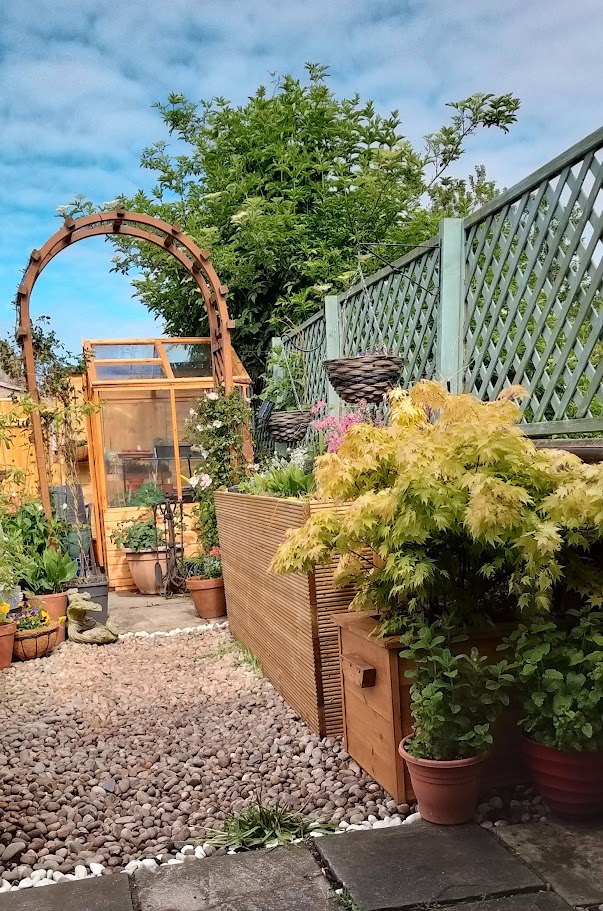
The garden’s been turned inside out, quite frankly. Necessary, of course. The old sheds were beyond saving, and if I’m honest, I’d been putting off the inevitable for far too long. Now, we have a new planter, ready for its layers of native perennials –  I think of it as a seasonally curated buffet for bees and butterflies. The shed is almost finished, too, a proper space finally, and I’m determined to keep it tidy. Spiders are welcome on the condition that they don’t creep up on me. 

Then there’s the garden room, replacing my old lean-to, the “Growlery.” A Dickensian term, I know, but it suited the place. A charming, if dilapidated, space where I’d ruminate, fulminate and, yes, occasionally growl. The new cabin, with its French doors, is a definite upgrade. It will be a place to sit, to watch the garden, perhaps with a glass of something in hand. I suspect I’ll still do some growling, but hopefully in greater comfort.

A small greenhouse is planned, for the usual tomatoes and cucumbers. The wheelie bins are getting their own cupboard – a small victory – and the side of the house is being transformed with plum-coloured flint, a home for shade-loving plants.

There’s much to look forward to. The seaweed fertiliser is ready, and I managed to rescue the old hydrangea, Billy’s mum’s. And her stone frogs, a whole collection of them, ready to be reinstated. They’re part of the garden’s story, a thread of continuity.

But to get here, a lot had to go. The Growlery, reduced to rubble. The shed, a pile of rotten wood. Mountains of ivy, ripped out. And years of accumulated debris, disposed of as responsibly as possible.

That’s where the difficulty began, really. The clearing out. The ripping, tearing, and discarding. What was once a feature, now just a problem. And the sheer volume of waste, having to pile it in the street, in a neighbourhood already struggling with such things. It felt wrong. But it’s done now, and we can move on.

@

The rain has paused the work, but we’ll be back at it soon. A couple of weeks, hopefully, and the garden will be ready for planting.

It’s a strange process, this change. You know it’s necessary, but it still feels like a wrench. Tearing down the old, even when it’s falling apart, feels violent. Like erasing a piece of history. And the waste, the sheer volume of it, is sobering.

But gardens aren’t static. They evolve, they change. You can’t cling to the past indefinitely. You have to let go, make way for the new. And sometimes, that means demolition.

I keep thinking about the stone frogs, though. Billy’s mum’s. They’ve seen it all, those frogs. They’ve witnessed the garden’s transformations, its ups and downs. And they’re still here, still watching. A bit weathered, perhaps, but resilient.

And the hydrangea, too. A close call, that one. Thought I’d lost it. But it’s a survivor, like the frogs. A bit of a metaphor, really. Life, gardens, everything. You have to adapt, you have to keep going.

There’s a strange anxiety in letting things go, even when it’s the only sensible course. It’s not just about the objects themselves, but the memories, the associations, the sense of familiarity. You know it’s for the best, but the process of dismantling, of discarding, feels unsettling. It’s a kind of grief, I suppose, for what was, even if what was had become untenable.

So, I’m moving forward. Building the new garden, creating a space that’s both practical and beautiful. A space for wildlife, a space for contemplation, a space for the moments of quiet reflection, and most likely the moments of frustration.

I’m looking forward to the bees, the scent of herbs, and the birdsong. And the stone frogs, of course, keeping watch. It will be a good garden when it’s done. A place of peace, a place to grow. I’m going to find the right chairs and place them in the perfect spot for the necessary unwinding and occasional growling. 

@

The Unfolding Canvas: Art, Revolution, and the Search for Common Ground

The British Library hums around me, a low, constant thrum of activity. I’ve ensconced myself in a public space, though I fully intend to rectify that with a reader’s pass and membership; this place is a treasure trove, a haven for the curious mind. The coffee and cake, admittedly, are a touch exorbitant, but after paying £5.50 for mineral water at The Conduit last night I’m beginning to recalibrate my expectations of London prices.

This space, while not serene, is conducive to thought. I’m attempting to write myself into this moment, to capture the ephemeral threads of inspiration that linger after a night spent in the company of Brian Eno, Bette A, and Jon Alexander and a group of artists and thinkers engaged with the question of what art is for and why now is a good time to ask that question.  I’m not expecting to synthesise everything here, but I am hoping to untangle some of the questions that have been swirling in my mind.

Last night at The Conduit was, to put it simply, a moment. Brian Eno radiates charisma, a quiet, almost otherworldly presence. He speaks with the authority of a sage, yet his words are grounded in a profound understanding of the world. Bette A appears intimately connected to the practicalities of her art, her relationship to the everyday and her profound joy in making. Jon Alexander, author of Citizens, Why the Key to Fixing Everything is Us and our exuberant host, is a force of nature, a passionate advocate for the power of art and the role of the citizen and a truly good human. His genuine appreciation for the  work being done at East Marsh United was deeply moving.

The conversation revolved around the role of art in our fractured world, a world where the hoped for revolution has failed to materialise. The spectre of fascism, a persistent shadow throughout the latter half of the 20th century, has re-emerged with renewed vigour in the 21st, its mask finally slipping. Trump, Musk, and their ilk have laid bare the ugly truth and there is no credible opposition within the established political system. The liberals, adrift and clinging to the status quo, offer little more than token gestures, while remaining steadfast in their devotion to the military-industrial complex and its insatiable appetite for war. The left, fragmented and disillusioned, seems to have lost its way.

It strikes me that the very notion of left and right, of entrenched ideologies, has become a debilitating constraint. To adhere to such rigid frameworks is to limit our thinking, to position ourselves on opposing sides of an increasingly irrelevant divide. Surely, the most pressing task for any thinking human is to seek common ground, to transcend the outdated political paradigms that have led us to this precarious juncture.

And this, of course, brings us back to art. Brian and Bette articulated a powerful idea: art is everything we don’t have to do. We must eat, maintain our bodies, and strive for economic security (though even that is a point of contention). Beyond these basic necessities, we are constantly making artistic or aesthetic choices, from the clothes we wear to the way we decorate our homes. They posit that everything, from chewing gum wrappers to grand architectural designs, is art. This is a liberating concept, one that challenges the elitist notion of art as a rarefied pursuit, the exclusive domain of experts and connoisseurs.

My mind drifts back to Mr. D, one of the art teachers in my secondary school. I can still hear his voice, dripping with disdain, as he declared my painting of grass to be “council house green,” before obliterating it with his own, supposedly superior, brushstrokes. His language was not only classist but deliberately humiliating. He chose to mock rather than teach, to crush rather than encourage. That moment, though decades past, has left an indelible mark. I still hear his sneer whenever I pick up a paintbrush.

This, I believe, lies at the heart of the matter. How we perceive, discuss, and value art has profound consequences. Children, naturally creative and uninhibited, are often robbed of their artistic freedom by well-meaning but misguided adults who impose their own rigid standards. Play, experimentation, and mark-making, essential for developing cognitive and motor skills, are dismissed in favour of measurable outputs and quantifiable results.

I recall a particularly disheartening experience during my time as a teacher. My A-Level Literature students, when asked to sketch their idealised human form, male and female, refused outright. They claimed they “couldn’t” draw, that their efforts would inevitably be “crap.” This simple, lighthearted exercise, intended to spark a discussion about the nature of beauty and desire, was met with resistance and self-deprecation. They were trapped, I realised, in a culture that demanded perfection, that equated creativity with technical skill. My attempts to reassure them, to emphasise the process over the product, were futile.

That lesson, and countless others like it, convinced me that I was no longer fit for the classroom. The increasingly absurd exam syllabi, the pervasive anti-intellectualism, had eroded any semblance of meaningful pedagogy. In 2012, the system was already a shadow of its former self.

So, where does this leave us? Where does it leave Brian, Bette, Jon, and my own exploration of the relationship between citizenship, creativity, and climate? I find myself grappling with more questions than answers. I firmly believe that unlocking the doors to creativity, imagination, and expansive thinking is essential for building a more just and sustainable future.

Yet, our governments, and even some of our supposed allies, remain stubbornly blind to the transformative power of art. It is relegated to the margins, underfunded, and dismissed as a luxury. The opposite should be true. Creativity should be at the heart of everything we do, from education to governance. The stifling of creativity in our schools has contributed directly to the mental health crisis among young people. The relentless pressure to pursue STEM subjects and money-oriented degrees, the relentless focus on economic productivity, has come at a terrible cost.

The rise of talent shows like Britain’s Got Talent and The X Factor has reinforced the myth of perfection, perpetuating a culture of shallow aesthetics and celebrity worship. Social media, a tool of manipulation and addiction, has rendered us passive and controlled.

What, then, can we do? How can we reclaim our creative selves, our intuitive capacity for wonder? How can we assert the centrality of art to our humanity, its power to solve problems, foster collaboration, and generate joy? How can creativity and art become pathways out of conflict?

We need only look to examples like El Sistema, the East West Divan Orchestra, and other courageous artistic endeavours to see the transformative potential of art. Instead of perpetuating cycles of war, conflict, and polarisation, we can choose to embrace imagination, creation, and collaboration. When we share an artistic experience, whether it be a concert, a play, or a simple act of drawing together, we transcend our differences and discover common ground.

This is not a utopian fantasy; it is a proven reality. It is a way of living that works. It is a way to build a future based on shared humanity and creative expression. I don’t claim to have all the answers, but I am increasingly convinced that the answers lie in asking the right questions, in embracing curiosity, and in shedding the outdated ideological baggage that has held us captive for too long. I am opening myself to new ways of thinking, to new ways of being, and to the transformative power of art. I’m choosing to be curious, and to create.

Dreaming and Greening

@

This week, my focus has been on the burgeoning life in my garden and the subtle greening happening in my community. It’s a community that faces a stark reality: a mere 3% canopy cover. This leaves our terraced streets vulnerable to sweltering heat in the summer, the concrete and lack of shade creating a desert-like feel. When the wind whips off the docks, it barrels down the streets, unchecked, often scattering rubbish from overflowing bins. Yesterday, it was a particularly grim scene.

But we’re not resigned to this. We’re actively working to change it. Just this week, our efforts were featured in The Guardian, highlighting our tree planting and green space development – central to our commitment to making the East Marsh a greener, healthier place.  

I’ve spent a lot of time in the park this week, walking Loki and observing the 30 trees we planted, now showing signs of budding. The Pocket Park, despite its controversial fencing within a historically gifted public space, is a testament to what’s possible. It’s a thriving ecosystem, full of young trees and planted beds. Over at the church, our team is tending a wild planting bed, nurturing new trees, and an edible garden for the community. Little gardeners join the adults, caring for their small piece of nature.

@

A visit to the Oasis Community Garden was also on the cards, where I picked up a day lily, rudbeckia, ragged robin, and a bay tree for a modest £1.80. The Oasis garden is a place of beauty and dedication, producing affordable plants and offering valuable gardening knowledge.  

Back home, I’ve added primroses to the tubs by my front door, a splash of colour. These tubs have been targeted before, but I refuse to be deterred. I repair, replace, and replant. It’s disheartening when they’re damaged, but the joy they bring outweighs the risk. They serve as an example, showing that plants can thrive here.

My back garden is coming to life. The snowdrops are in full bloom, the trees are budding, and the spring flowers – daffodils, hyacinths, crocus, and tulips – are pushing through. This year, the garden is getting a facelift: a new shed, greenhouse, raised beds, and a summer house. We’re retiring tired plants to the compost and making way for new life. Soft fruits, salad crops, beans, and peas will be grown, not just for me, but to share with my neighbours.

@
@

My mum often speaks of my Great Uncle Tom, whose garden and allotment fed family and neighbours during World War Two. His tomatoes were legendary. I remember Uncle Tom and Auntie Lizzie, living next door to my Grandma and Auntie Helen, a close-knit community that held people together during difficult times. Much of that has been lost, but echoes remain in stories and memories. We can use these to rebuild our broken communities.

We face broken streets, poverty, alienation, and a sense of hopelessness. But we also have each other, ideas, and dreams we can put into action. I’ve been nesting, creating a sanctuary amidst the concrete, broken glass, and overflowing bins. Our houses, built in the 1850s, need love and to be lived in properly. I make my home welcoming, filled with flowers, houseplants, and cushions. I open my door and feel enveloped by its warmth.

Everyone deserves a safe home, a harbour of safety and love. It seems radical to think this way, given the scale of our problems. But if we don’t imagine it, we’ll never build it. And build it we must.

https://eastmarshunited.org/2025/02/20/our-community-deserves-beauty-emu-in-the-guardian/