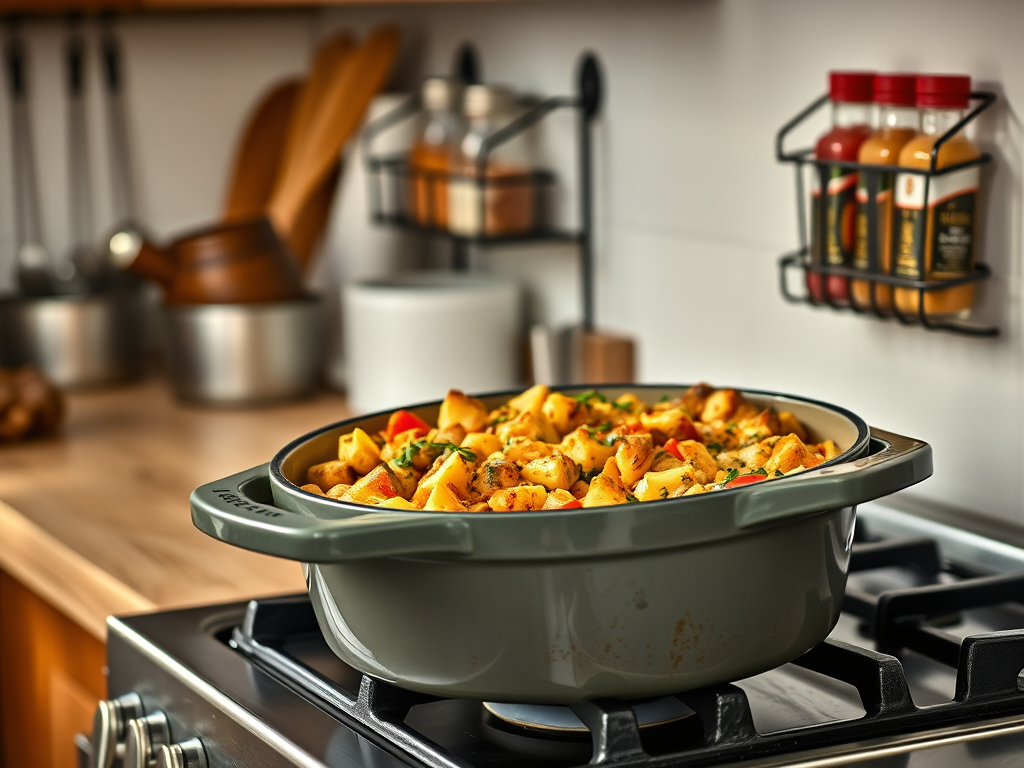
A strange craving for vegan sausage casserole last week revealed a culinary oversight: I haven’t owned a proper casserole dish in years. A perfectly acceptable hob-top version fuelled my desire for the real thing – a heavy, dependable cast iron casserole, a cauldron for slow-cooked dishes, infused with love and intention. Yesterday, I found it in my favourite shop. I’d already been to Freeman Street Market for my veg. I am trying to buy all my fruit and veg locally these days, enjoying the connection to the growers and the rhythm of the seasons. On my way home I imagined the dish I would cook and the rich, earthy scents of a slow-cooked Imbolc meal, marking the first stirrings of spring.
Back home, a rummage in the fridge unearthed the week’s leftovers: half a tin of butter beans, half a red onion, half a butternut squash, potatoes on the verge of sprouting, and some slightly sad-looking celery. I have a particular ritual when I cook, a way of creating a calm and focused space. First, the kitchen is cleaned. Then, I select my knife, and place my ceramic bowl, bought at a festival decades ago, ready to receive peelings and trimmings. My chopping board occupies its usual spot between the sink and the cooker, a small but efficient workspace. If I’m not careful, my culinary enthusiasm can quickly descend into messy chaos, so I try to be mindful and contain the spread.
The potatoes, butternut squash, and carrot were chopped into roughly equal chunks and placed in the steamer to soften. While they cooked, I turned my attention to the aromatics. The remaining half red onion, the celery, and two cloves of garlic were finely chopped and sautéed in a couple of teaspoons of olive oil. A good pinch of dried chives was added to the pan, their subtle oniony notes complementing the other flavours. Once the vegetables were softened and slightly caramelised, I added the butter beans and a generous handful of Quorn pieces for protein. A dash of gluten-free soy sauce and a drizzle of maple syrup were added, coating everything in a glossy sheen. The heat was turned off, and I waited for the potatoes, squash, and carrot to reach the perfect stage of tenderness.
A pint of vegetable stock was made up using my favourite gluten free stock cubes (a convenient cheat). The oven, meanwhile, was preheating, humming quietly to itself, a promise of warmth and deliciousness to come. When the steamed vegetables were ready, I carefully tipped them into the brand new cast iron pot, joining the sautéed mixture. Everything was thoroughly combined, seasoned generously with dried sage, sea salt, and freshly ground black pepper. For extra depth of flavour I added a more generous glug of red wine than I intended. A moment of panic ensued as the casserole turned an alarming shade of purple. But I have faith in my cooking instincts. I knew that given enough time in the oven, the colour would mellow, and the wine would work its magic. Into the oven it went, the heavy pot feeling satisfyingly substantial in my hands.
I usually give my improvised casseroles about forty to fifty minutes in the oven, checking and stirring every ten minutes to ensure everything is cooking evenly and nothing is sticking to the bottom. And I always allow the finished dish to stand for at least ten minutes before serving. This resting period allows the flavours to meld and deepen, and the casserole to thicken slightly.
Last night we enjoyed our Imbolc dinner together in our cosy living room. The bobbing heads of the white roses I’d bought, a symbol of spring’s tentative arrival, seemed to nod in approval. The casserole was wonderful – hearty, rich, but not overly so. The red wine, despite its initial purple outburst, had mellowed beautifully, adding subtle complexity to the flavour. The meal was nourishing, both physically and emotionally, and filled with the love I feel for my Best Human. Nourishing him, caring for him through food, is something that’s deeply important to me.
It made me think about the women who instilled in me a love of cooking: my maternal Grandma, my Great Auntie, and my Mum. They taught me not just how to cook, but also how to appreciate food, to understand its power to connect and comfort. I grew up surrounded by good food, shared meals, and the warmth of family. Our dinner tables were places of laughter and conversation, of occasional disagreements and outbursts but mostly of togetherness. In my community, where I live and work, many of us share this belief in the power of food to strengthen the bonds of friendship and neighbourliness. Growing, cooking, and eating together forge deep connections, taking us on a journey from the soil to the table, united by the shared experience.
With Imbolc passed and the days lengthening, my thoughts are turning to the garden. It’s time to start planning, to sow seeds, and to prepare the soil for the food and flowers I’ll grow and share in the coming year. Spring is stirring. The snowdrops are already blooming, and there are whispers of more life to come. This is a season of delicate beauty, a time to put our hands in the earth, to nurture new growth, and to embrace the slow, comforting rhythm of slow-cooked food. In a world that often feels fractured and disconnected, cooking and sharing food is an act of defiance, a powerful affirmation of our connections to each other and our commitment to nurture and care. It’s a way of building community, one meal at a time.

