The Deep Midwinter: Light and Radical Love

I sit here at my desk on the morning after the Solstice.The world outside my window is noisy. Two doors down, the clattering racket of renovation marks the progress of another East Marsh United house in progress. Usually, such a racket would fray my nerves, but today it sounds like a lullaby of possibility. It is the sound of a safe, forever home being made ready for a family in the New Year. It is the sound of the future we are choosing to make.

I am, by my own admission, a devout skeptic. I am a child of the sun, a lover of the spring and early summer but if I had to pin my heart to one short season, it would be Advent. There is something in the Hellenic simplicity of the Nativity in the story of the Holy Family, the young mother, the child refugee, and the angels singing into the darkness that resonates for me in a way that no other season can match. It suggests that the miraculous is found in the simplest, most overlooked places. It is a story that stands in absolute opposition to our modern perceptions of power and authority; a reminder that the radical can also be simple, transcendent, and gives us the faith to work for a better future. 

The Social Cement of Joy

This December at East Marsh United has been a testament to that principle of simple transcendence. We have moved through this month at a pace that has left me, at 58 and a half, feeling every second of my time on this blue planet. But what a month it has been.

We have been busy growing our community with loving kindness. We’ve seen the tactile focus of wreath-making and crafting sessions where families came together to create beautiful things from scratch. We’ve shared joyful Christmas lunches and hosted a fabulous toy drop, where families could access lovely gifts donated to the NSPCC. We ensured that adults spending Christmas alone weren’t forgotten, and we took groups to see Santa and the panto. 

These aren’t just events. They are the social cement that binds us. They allow us to engage in that precious sense of anticipation that Advent brings; the joy, the fun, and the simple beauty of being together. Across the team, there has been a relentless flow of compassion. The EMU team has given everything they have to give; they have been the Light of Love in a winter that feels particularly heavy.

Jazz, Legacy, and Finding a Voice

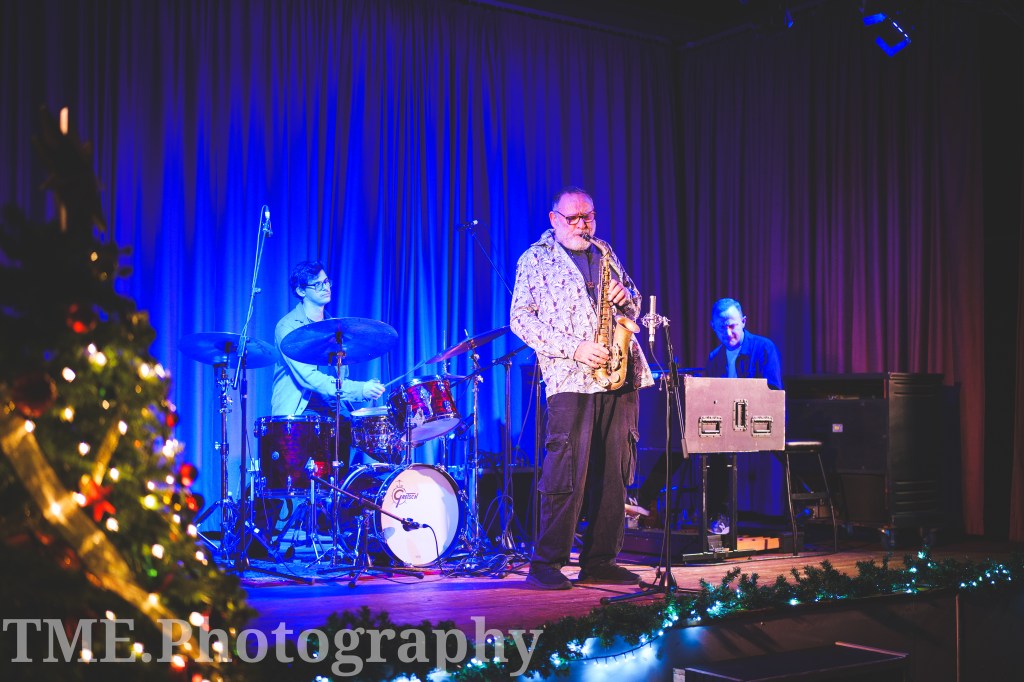
On December 5th, the roof was practically blown off the venue, Grimsby Central Hall,  when my friend Gilad Atzmon and Organology came to town. Gilad is a warrior for justice and a kindred spirit; spending time with him and hearing him play is always a tonic for the soul. Alongside Ross Stanley and Joel Barford, truly the best of their generations, they brought a wild, free jazz energy to Grimsby that was nothing short of transformative. For me, sharing the gig with my jazz loving Dad made it extra special. 

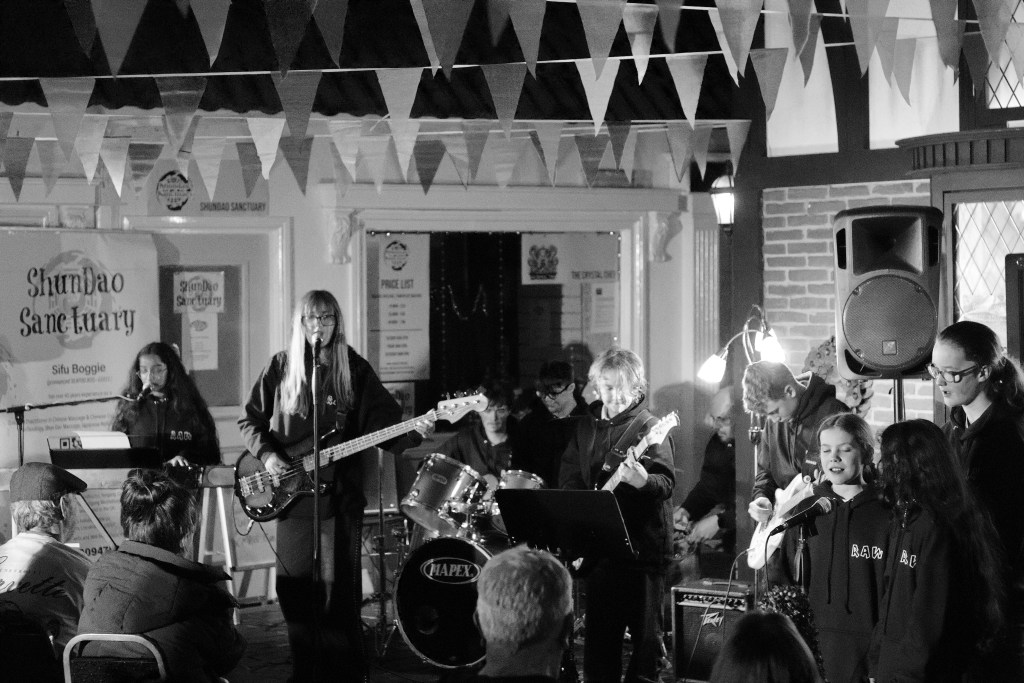
That same spirit of creative defiance carried through to the finale of our Hear Me RAW project. Named after the local legend Roy Arthur Wright, who spent decades helping Grimsby’s youth find their voices, the project was inspired and  guided by his memory. Last Thursday, a group of young people who had formed their own band launched their song, Leap of Faith. With the support and guidance of local musicians and teachers, those young people achieved something spectacular 

Too often,  our systems tend to do things to young people, rarely trusting them to lead. Here, they owned the process. Watching them perform to a rapturous audience of families and friends was a profound reminder of what happens when you create space for people to thrive. Special credit must go to our EMU Outreach lead, Sue Baker, a true force of light and joy who made this all possible.

Photo Credit: Gordon Wilson

Poking Bears and Speaking Home Truths

While the heart of the month was in the Marsh, I found myself twice in London, rattling cages in rooms where power is usually spoken of in abstract and sanitized terms.

At The Shard, I had the opportunity to give a reality check to a room full of people talking about AI and tech automation. I spoke about poverty, the lack of literacy, and the 20-year gap in healthy life expectancy we face here. I know I made some people uncomfortable. That’s fine. I’ve spent too many years being a people-pleaser, frightened of speaking out. Now, I feel I have a moral responsibility to speak the truth as I experience it.

Power structures don’t act until they are discomforted by the harsh and ugly truth of life at the sharp end. We don’t need mealy-mouthed tinkering; we need radical change that puts the voices of the silenced into the rooms of authority and forces them to face head on the shame of systemic poverty and inequality. 

The Foundation of Home

Our housing work is our most practical act of resistance. What we do as an ethical social landlord is a direct rebuttal to the wreckage of the free market, which has left us with 1930s style squalor and fear. By restoring tired houses into beautiful, secure sanctuaries, we are putting back the security that was stolen from the working class. A home is the very beginning, the place from which a person can feel safe enough to thrive. We are 16 houses into our goal of 100 houses for 100 years, and we will continue to build on our foundations next year. 

The Righteous Rage of the Carol

Last night at St John’s and St Stephen’s, we sang Once in Royal David’s City. Not the 19th-century version of middle-class idealism, but a radical version rewritten with words of righteous rage about the state of our modern world. Our church, in the heart of the Marsh has no time for the abstract or the pompous; we sang about the reality of lived experience on the ground.

So many of our carols are hymns of peace and goodwill. Lovely as they are, it is hard to sing of peace while the horror of genocide in Palestine continues. We cannot look away from genocide and violence and honestly call this a holy season. The Nativity, the story of a refugee child in a dangerous land  should move us to raise our hearts and voices to say NO to war and misery. This isn’t just a Christmas sentiment; it is a human necessity if we want to truly live in the peace that we sing of with such vigour at our Christmas services. 

Entering the Radical Rest

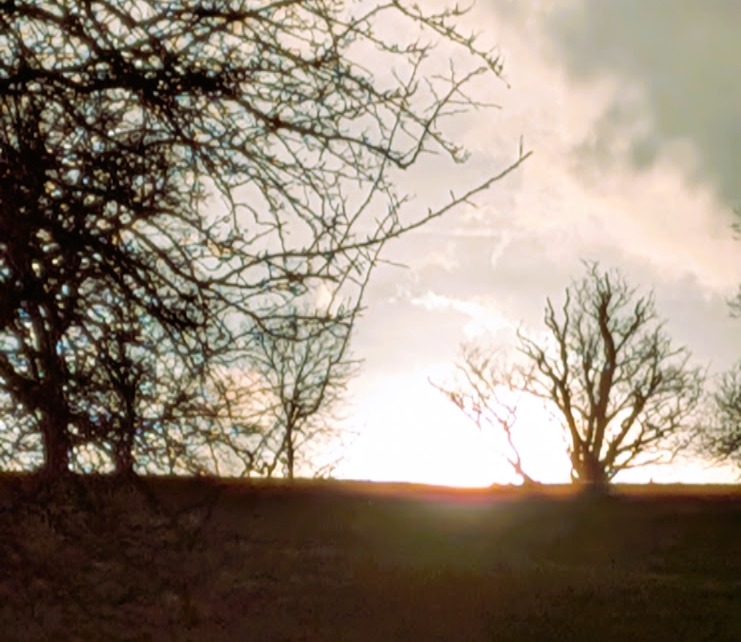
I am tired. Our team is tired. More than that, I would say we are all depleted. We have given everything we have to give this year. Now, it is time for Radical Rest. We must now give ourselves permission to enter the Deep Midwinter. To sit in the quiet with our beloveds and allow ourselves to rest, recover and reflect on the great achievements of the year. 

“The way to the future is the future you get.” If we want a future of kindness, we must start by being kind to ourselves. We must lay down our tools and trust that the light we have built together will stay lit while we sleep.

I leave you with the final lines of Requiem, the jazz and poetry suite I co-wrote and performed with The Alan Barnes Octet in 2019. 

Let there be rest. 

Let there be peace. 

Let all bloodshed, war and violence cease. 

Let us seek with all courage that which is right, 

And when darkness falls, let us search for  light.

Embracing the She-Bear: Listening to My Seasonal Self

This year, the onset of autumn has been felt keenly, and the seasonal adjustment has been surprisingly difficult. Among our team at EMU, there’s been a collective, almost Canute-like desire to hold back the change, if only for a little while longer—an unwillingness to pull on the big jumper and sturdy boots, and to say a final goodbye to what was a long, hot summer.

As the sunshine disappears, so too do the fiercest memories of it: the worst moments of that baked air when it was impossible to enjoy being outside on the East Marsh. The concrete prevalence and lack of canopy cover creates a heat island that makes the summer hard to manage. But even knowing that, it is still difficult to let go of the long days and balmy evenings and embrace the sudden drop of night, the cooler air, and—at least in my case—a profound desire to be in bed by 9:00 pm. The change of the clocks to Greenwich Mean Time has only deepened that strange seasonal grief that comes with the reduction in the light.

The Call of the Inner Animal

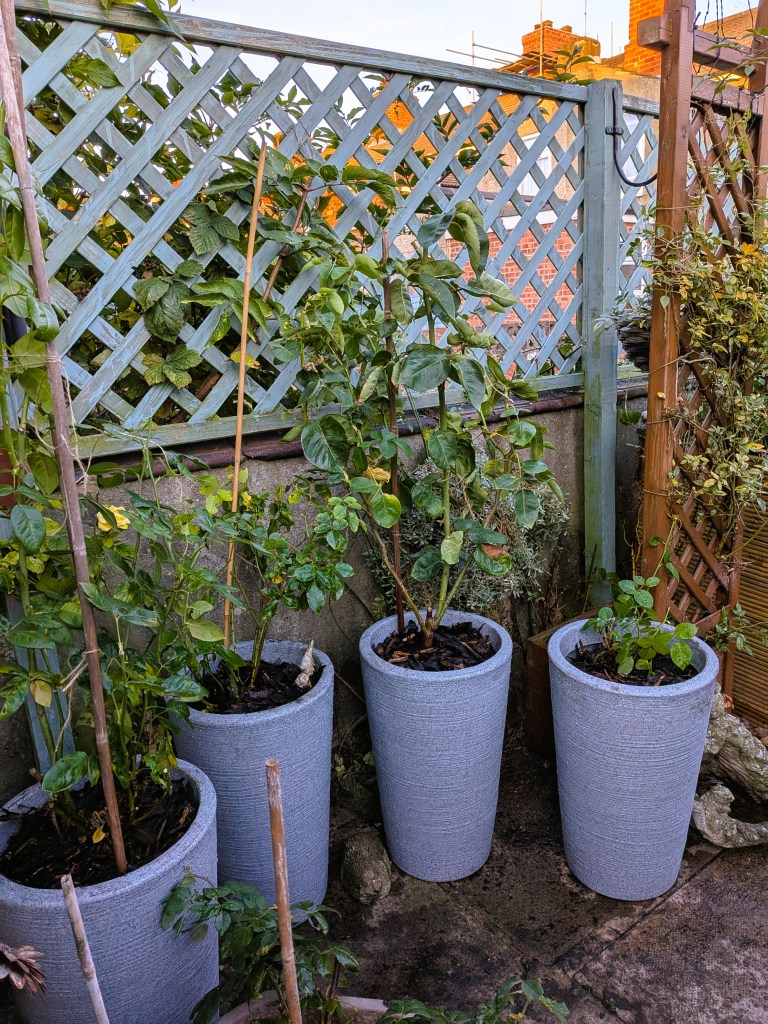
Now, as November approaches, I am finally in the process of putting the garden to bed for the winter, reaching for woolly socks and jumpers, and accepting the season’s inevitability. In doing so, I find myself connecting deeply with my inner bear.

It is too easy to forget our animal self and the powerful effect that seasonal change has on us, yet we ignore these things at our peril. We have an animal nature and are part of an ecosystem that is seasonal and demands different things of us at different times. We are simply not the same being in May as we are in October. Understanding this better can help us transition between the seasons with greater ease and acceptance.

I feel that my shadow has changed shape; walking beside me now is the she-bear. She is getting closer, and as I finally let go of summer, she and I will integrate and ready ourselves for the winter. As I grow older, the she-bear becomes a much more important archetype for me in terms of what she represents on a symbolic and psychic level.

Finding Sanctuary with the Mother Bear

Identifying with the Mother Bear archetype as winter approaches is rich with meaning, especially around the concepts of introspection, fierce protection, nurturing, and renewal. The Bear is strongly linked to winter through the concept of hibernation.

Here is what I believe this connection is asking of me:

A Need for Deep Introspection and Rest: The bear’s retreat into the den is a symbol of a profound need for solitude and turning inward. As winter settles, I am feeling a clear pull to slow down, disengage from external demands, and dedicate time to self-reflection and inner work. Hibernation isn’t just sleep; it’s a period where accumulated resources gestate. I feel I am processing the year’s experiences, allowing them to transform into wisdom and deeper self-awareness. New ideas are gestating, much like a mother bear gives birth in the quiet of the den.

Fierce Protection and Strong Boundaries: The Mother Bear is a symbol of unwavering protection. Aligning with her suggests an awakening of my instinct to guard my boundaries, my loved ones, and my most vulnerable projects against external threats or distraction. This protection also extends to my internal world. I am ready to defend my need for quiet time, my emotional well-being, and my right to rest against the busy, often over-scheduled demands of the world.

Connection to the Earth’s Cycles: The bear’s re-emergence in spring with new cubs is a symbol of renewal. Honouring the she-bear means honouring the natural cycle of life and rebirth. I understand that this period of “darkness” and withdrawal is necessary for a potent and energetic re-emergence when spring finally arrives. I am seeking to tap into that primal strength, resilience, and grounded presence that the bear embodies.

The she-bear archetype calls to me before winter as an invitation to honour my body’s need to slow down, to fiercely protect my inner space, and to trust that great wisdom and new life will emerge from the quiet, restorative darkness of the season.

However you are this season, I hope peace, rest and quiet will come to you.

Autumn and the Swirl

The last few weeks have been a melange of events, encounters, experiences, and realisations. The context is unignorable. From the ever-more distant and solipsistic political elites to the genocide in Gaza and the tantrums of the giant man-baby in Washington, the global circus and its devastating effects on citizens’ lives are affecting everyone. An atmosphere of unease—an Unruhe—leaves us unmoored and uncertain about the future. The pitiful, cynical handouts from the UK government are paltry sums, merely designed to keep the third sector and local government busy while achieving no real change. They are simply buffers against Farage and his grotesque menagerie of petty bourgeois opportunists, hell-bent on sinking the country and running off with the spoils.


I’ve stepped away from the mainstream media and wound down my social media engagement over the past few weeks. The air is easier to breathe as a result, and I’ve found more time for solitude, reflection, and focus on the things that matter most. I’m also detoxing. I’ve finally found an approach to eating well that works, and I’m starting to feel more at one with my body than I have in a very long time. Autumn feels like a good time for this change.


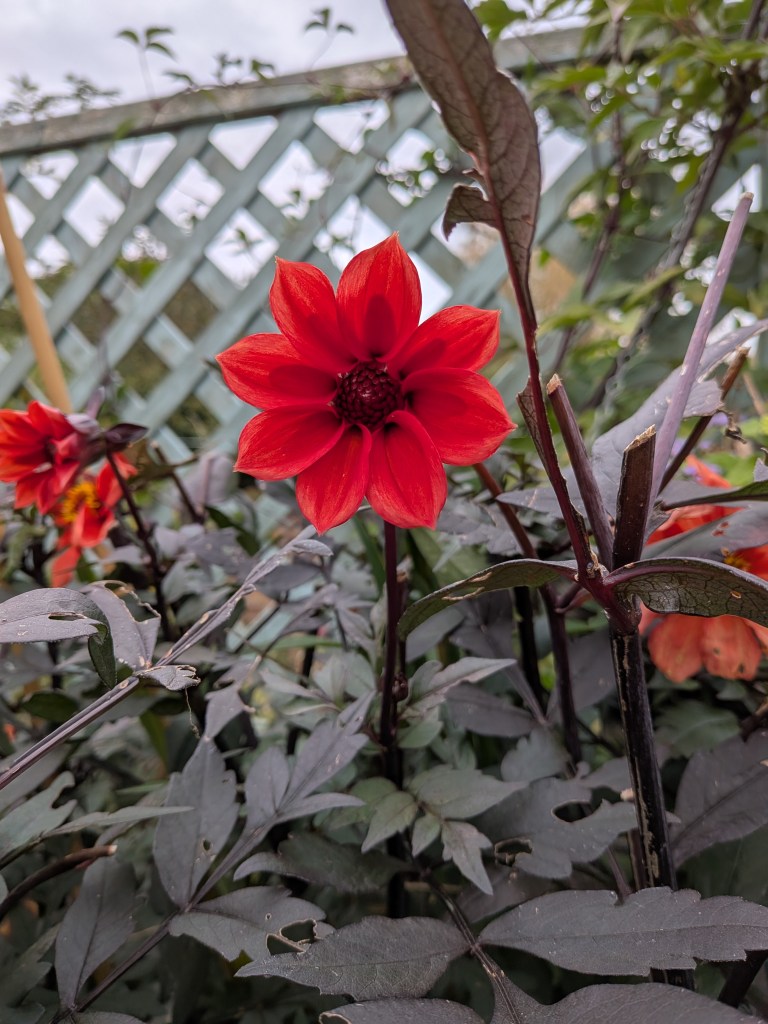
In the garden, the season change is speeding up. I’ve been eaten alive by mosquitoes and been bumping into spiders every time I go out. It’s time to shelter the more fragile plants, lift the dahlias, and get everything ready for a long winter sleep. Demeter’s breath is settling in the morning dew as Persephone begins her painful walk back to Hades. Knowing she will return in the spring is small comfort as each day fades faster than the one before and evenings turn cooler.

Overnight rain has added damp to the cooler air today, and the smell of petrichor is pulling me away from my desk. There is so much to do out there. I spent my weekend potting on my roses and harvesting the last of the tomatoes. I have a basket of green ones in the greenhouse; they need a bit more sunshine if they are to ripen now, but today is sunless, though still warm. Perhaps the air will clear this afternoon and the sun will show himself.


The hardness of the street and the neighbourhood is creeping in. A mournful, lonely dog is howling. Thumping music from cars, the neighbour’s dull music, raised voices, and the usual underscore of menace interrupt the birdsong. Yesterday, a gathering of birds—a robin, great tit, chaffinch, house sparrow, blue tit, dunnock, spotted flycatcher, white wagtail, and long-tailed tit—were in conference in the elder tree next door, enjoying the sunshine as I was. I have two bird baths, but no feeders because of the sheer number of rats; it’s a big risk I can’t take with a baby next door.

That baby is almost one and is absolutely adorable. She waves to us at night from her bedroom window and delights us with her vocal gymnastics. I feel so lucky to have the neighbours we have. Our corner is a good corner with people we know and care about. It makes all the difference. Wherever you live, wherever you find yourself, it’s never the location, never the house, always the people. If you have people, you’re OK and you can crack on with the job of living.

Rain, Roses, and a Riven Nation

Autumn has arrived not in a season of mists, but in a blistering whirl of hard rain and hail, floods, and sultry warmth, bringing mosquitoes and blackflies. A warm spring and a hot, dry summer have left places like the East Marsh, which has been an urban heat island for months, with nowhere for the water to go. Rain has bounced moss and muck out of gutters onto the streets, adding to the ever-present mess of dog shit and litter.

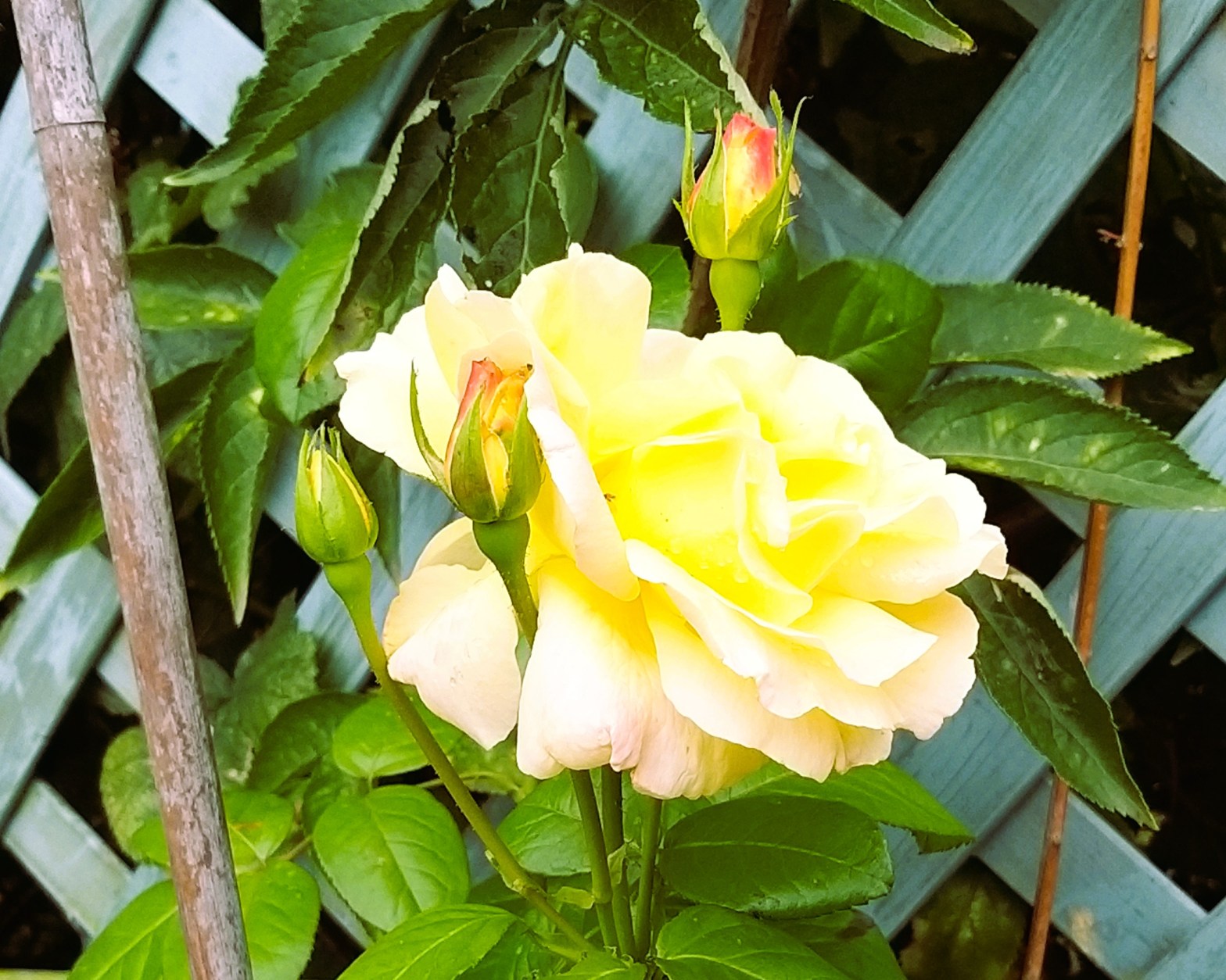
In my back garden, the second flowering of gold roses—roses that are increasingly poignant for me—faced a battering. They opened their petals to rain so fast and ferocious they didn’t stand a chance. The day I was born, my grandma cut a small posy of gold roses from her garden and placed them beside my mum’s bed. Throughout my life, my mum has reminded me of this, and so gold roses are more than just flowers; they are a memory and an invisible thread that lightly ties the hands of my grandma, my mum, and me together.

On August 31st, I had one of my regular back-to-school dreams. In the dream I was due to go back to teaching, having taken a job I really didn’t want. The sense of dread was overwhelming as I bargained with the universe for just a few more days and wondered if I could simply not turn up. I left teaching in 2012, but I am still haunted by the ghosts of former classrooms and students. In my dreams, the places and the children I taught mingle into a blurry mess of anxiety and stress, of the wrong kids in the wrong school and me having no clue what I’m supposed to be doing. 

The current education secretary has been urging parents to ensure their children go to school this term, following a huge increase in absenteeism. A sensible education secretary might ask difficult questions about why this is. But then they would have to face uncomfortable truths about school refusal: the links to poverty, the inadequacy of SEND support, the irrelevance of the curriculum to 21st-century life, the stress of the exams system, the cost of uniforms, and the idiotic rules about socks, speaking, and going to the toilet. No one would argue that education isn’t a critical factor in being able to reach your potential, but a system that too often stymies and stifles that potential is an underlying issue requiring attention. However, it is so much easier to blame parents who ‘can’t be arsed’ to get their kids to school.

In the wildness of this seasonal change and the surprise of these storms, the country finds itself battling for its identity.  The flag of Saint George is flying everywhere. Following the recent rearrangement of the political deckchairs on the Titanic, the former Home Secretary—now Foreign Secretary—gave her permission for flags to be flown anywhere, claiming she “likes a good flag as well.” Starmer hastily put up some St George’s bunting to show his support for the huge spate of vandalism: ugly, red spray-painted crosses and racist graffiti on businesses and homes. The irony is sickening; this is the flag of St George, the patron saint of Palestine.

@

The flag of St George, so well beloved across many countries and cultures, should be the flag of everyone. While there have been well-intentioned attempts to reclaim it, that horse has bolted at least for now.  It is clear to anyone who is honest exactly what this spate of flag flying is about: it is part and parcel of the anti-immigration rhetoric that is dividing communities and encouraging thuggery outside hotels and on the streets where racist abuse is increasingly commonplace.

Underneath all of this is a level of crisis and confusion being manipulated by cynical political games. We have the spectacle of Farage and Reform, unabashed in their peddling of hate, pretending to be on the side of the “everyman” while being a very lucrative business rather than a political party. Their MO is to fan the flames of division and hate, setting neighbourhoods alight with antagonism between neighbours. 

We have the shame of overcrowded detention centres where traumatised people wait to have their asylum claims processed in a backlog caused by political failure to address immigration sensibly.  We have the language of “swamps” and “swarms” to describe the myth of being overrun due to the deeply problematic small boats immigration route. In this tragic situation the only winners are criminal gangs exploiting vulnerable people and putting their lives at risk while the government does nothing to secure safe routes, nothing to counter false narratives and nothing to address the backlog in asylum claims. 

All the while,  the bourgeois political class pretends to be in full support of the flaggery, when we all know the only time they have previously entertained flags has been at The Last Night of the Proms or at public occasions that required a show of patriotism, such as a royal drive-past or a VE Day commemoration. The hypocrisy stinks and would be laughable if it weren’t so serious and damaging.

The flag of St George flag has a short history in terms of its most recent presence in English culture.  It dates back to Euro ’96, when it became associated with football and specifically the England team. As Richard Herring noted in his 2010 podcast, https://www.bbc.co.uk/programmes/b00vhgc7 this is a relatively new association as he unpicks the short history of a flag that has now become so ubiquitous and synonymous with the hard right. Of course there is a much longer history than this but for the purposes of this conversation, its relative newness in the culture is interesting, particularly its progress from being a genuine symbol of English pride in the national football team to a threatening symbol of the hard right. 

In the ’80s, the National Front appropriated the Union Flag. I remember seeing them in Newcastle on Saturday mornings, gathered around the Monument, sullen-faced in their uniforms of bomber jackets, jeans, and Doc Martens. They would hold up their magazine, Bulldog, and people would mostly avoid them. I remember a friendly copper telling me to cover my face because there were National Front photographers around during an Anti-Nazi League demo I attended in London. How times have changed. Today the police are under government orders to arrest peaceful protesters for holding up cardboard signs with words on them – particularly if they are elderly or disabled. Those who are standing in solidarity with the people of Palestine as they endure a live-streamed genocide are demonised while the government dismisses the insidious racism stalking our streets and manifesting in a sinister proliferation of the St George flag and cross as innocent patriotism.  

So what does all of this flag-waving and graffiti actually mean? There is a strong case to be made that in post-industrial, disadvantaged communities, where poverty is high and opportunity is scarce, the flag has been grasped as a means of demonstrating power and resistance. When people have little or no power, are alienated and disenfranchised, then any chance to take power becomes attractive. The power to shout, intimidate, spray paint, and shake your fist is better than no power at all. Of course, these communities have been sold a fat lie: that the reason their lives are so difficult is because brown people on small boats are taking over their country. They are being encouraged by those with real power to punch down, to attack those who have even less than them.

While they’re busy punching down, they don’t have time to look at the real reasons for their multitudinous problems. The bourgeois political elites know this and use it to their advantage as they continue to asset-strip and manage the country’s decline. They prioritise the interests of capital and kleptocracy, the industrial military complex, and the corporations that rely on their nefarious behaviour to go unseen and unchecked. Our problems as a country are many and complex, ranging from the extortionate price of energy bills to the shit in our rivers and seas, from a mental health crisis in young people to a care crisis for our elders.  Governments should be afraid of the people, but with increasing authoritarianism, surveillance, attempts to silence dissent and protest, and austerity measures that keep people economically oppressed, the government is ensuring that people are afraid of it.

The fight for the flag, overt racism, the demonisation of migrants, and the suppression of dissent are not new. Powerful elites  have played these games many times, and it never ends well. History doesn’t repeat itself, but it does provide useful examples we could use intelligently to create a better present and fairer future. 

There are many comparisons currently being made to the 1930s and the rise of Nazism and Fascism in Europe. While it’s useful to understand those events, they had their own context, which is not the same as now. Still, there are similarities. I see a similar sickness and decadence in our bourgeois political elites as existed in the Weimar period in Germany—a similar arrogant belief that you can fan the flames of civic discord without getting burnt. Newsflash: you can’t. 

There is a similar self-indulgence and distance from the lives of citizens, and a sense of entitlement that the rules don’t apply if you hold the power. Every now and then, they throw one of their own under a bus. This week it’s Angela Rayner bearing the red mark of the scapegoat. She’s been caught out and her greed exposed, but she’s by no means the worst offender in the rotten political class. The scapegoat provides a useful breathing space where the attention is diverted and the light is shining brightly on the ‘bad apple.’  They will never turn the spotlight on the whole circus or take an honest look at just how decrepit and corrupt the entire system has become.

So, what the hell do we do about all this? How can citizens stand against hate, cynicism, and the moral decay of the government? There are no easy or quick answers. 

Each of us lives on one miraculous planet that is supporting life in the vast loneliness of space. We each have one short life, and then we are enfolded in the great mystery of the eternal universe. Isn’t it a bit stupid, given that indisputable fact, that we would choose hate, division, corruption, and greed over love, community, honesty, and generosity?  We do have an opportunity to choose the latter rather than the former in our immediate communities.  We can choose to be good neighbours, build friendship, trust, kindness, and mutual support. We can find out why people are angry and afraid and have grown-up conversations about the real reasons that people are living difficult lives. We can come together and find common ground, focusing on the things that matter to all of us. This is not utopian idealism; this is the work that is happening across the country at a grassroots level right now. On an increasingly big scale, people are finding each other, sharing their knowledge, expertise, and understanding, and working hard to shift away from division and into solidarity.

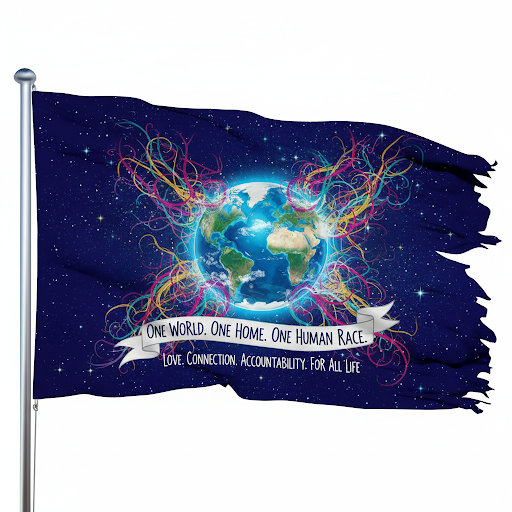
This is the work that truly matters, and it is the work that will most frighten elites and governments because it is beyond their reach, beyond their circles of power and influence. Not that they won’t try to co-opt and control it but we mustn’t let them. Our work is messy, organic, chaotic, and lovely. It is fierce, committed, and powered by love and compassion. If it had a flag, it would be an image of our blue planet against a background of stars, a reminder of what we all fundamentally share; one world, one home, one human race, and a plethora of more-than-human life in a beautifully connected ecosystem. If we can embrace connection and reject division, we have a real chance of healing the wounds inflicted on us by those whose interests it serves to have us at each other’s throats. Perhaps with that connection we have a greater chance of holding power to account and distributing it more equitably in the interests of all lives on Planet Earth. 

The True Saint George: Why He Deserves a Better Flag

We’re all seeing a lot of it recently; the flag of St. George, a simple red cross on a white background. It’s an image that’s supposed to make us feel proud of being English, but lately, it feels like it’s been claimed by a very narrow, specific idea of what that means. Some people hold it up as a symbol of a thousand-year-old tradition, but I can’t help but wonder if they’ve ever truly looked at who St. George was. The more I learn about him, the more I realise the man whose flag they fly stands for everything their beliefs reject.

He’s a Global Hero, Not a Local Lad

For so many of us, the idea of St. George is wrapped up in English legend. Some picture him as a medieval knight or a figure straight out of our own folklore. But the truth is far more inspiring and, frankly, a little more personal. The real St. George was a Roman soldier of Greek-Cappadocian descent, born in what is now Turkey in the 3rd century AD. He wasn’t English at all. He was executed for his Christian faith in Lydda, Palestine which means he was, in a very real sense, a Middle Eastern martyr.

Think about that for a moment. This man, a symbol of English identity, didn’t come from here. His story isn’t just a part of our history; it’s a part of the world’s history. He’s a patron saint for countless places, from Palestine and Georgia to Ethiopia and Portugal. It’s a profound irony, isn’t it? A symbol claimed by some to promote a singular, nationalistic identity actually belongs to the entire world—a world that is increasingly reflected in England’s own population. In fact, according to the 2021 Census, over 16% of the UK population was born abroad. The most common countries of birth for migrants include India, Poland, Pakistan, Romania, and Ireland, proving that our national story is a global one.

His Legacy Is Protection, Not Division

Many of us know at least something of the myth of St. George slaying the dragon to save a princess. It’s a classic tale of an archetypal hero fighting evil. The dragon represented malevolence, and George’s victory was about the triumph of good. This is the core of what he stands for: standing up for the vulnerable and defending the innocent.

So when I see his flag used to demonise refugees, to fuel hateful views, or to call for violence against those seeking safety, my heart hurts. It feels like the flag is being used in the service of the very dragons he fought against. This is especially painful when you consider the realities of migration. Many people seeking asylum arrive in the UK with no legal route to do so. Amnesty International points out, they are not legally required to claim asylum in the first country they reach. Many are simply looking for a safe place to land, perhaps somewhere where they have family, or friends.

Once asylum seekers get here, the system isn’t easy. If they’re destitute, they can receive basic housing and financial support, but it’s often as little as £49.18 per week. Most asylum seekers are not allowed to work while their claim is being considered, which forces them into a difficult situation. It shows us that they aren’t coming here for financial gain; they’re coming here because they are desperate for safety.


Who and What is English Anyway?

When we talk about “Englishness,” we’re not talking about a single, pure lineage. Our history is a story of countless journeys and new beginnings. From the original Celtic Britons to the Romans, the Anglo-Saxons, the Vikings, and the Normans, our identity has always been a blend of different peoples who came, fought, and settled here. “English” isn’t a race; it’s a shared experience of a people built from different parts of the world. It’s a powerful idea, and it’s one that has been true for centuries.


Let’s Reclaim the True Story

It’s easy to get angry when we hear hateful and xenophobic views, especially when they come from people we know and love. But we can challenge the ideas without attacking the person. This is where the true story of St. George becomes so powerful. It provides a simple, factual counter-argument to a hateful narrative. Instead of getting into a heated argument, we can simply share a piece of knowledge: “Did you know St. George was from the Middle East? He wasn’t English.”

This small fact can plant a seed of doubt and open a door to a different way of thinking. It redirects the conversation from a hateful attack on people to a factual discussion about a symbol. The flag of St. George is a symbol of compassion, protection, and a global spirit. It belongs to all of us who are willing to fight for what is right, regardless of where we come from. I believe it’s time we took back the true meaning of the St. George’s Cross.

A Beautiful Noise: La Luna and the Power of the Small

With thanks to Leasha Waddingham for the photo

Back in 2017, I launched La Luna, a tiny independent press. The goal was simple: to give a platform to local voices and have total control over producing my own work. My first project, funded by Arts Council England, produced three books, a collection of writing by young people, a visual art and poetry collaboration between two artists, and my own third poetry collection.

I knew these books would never be bestsellers; I simply don’t have the infrastructure for that. Instead of being disheartened by this, I decided to treat each book as a limited-edition object, beautiful in its own right. I became meticulous, working with a painstaking designer and local artists. I used a local printing company that let me sit for ages, feeling different paper textures with my eyes closed until I found the right one. We built a relationship, and they let me have as many proofs as needed to get things perfect. Every book was launched with a celebration, honouring the process and the people involved.

La Luna books are beautiful because beauty and care matter. This philosophy has guided every book since, from poetry and children’s stories to local history. Each book is something to be treasured, a source of pride for everyone who contributes.


A Story of Courage

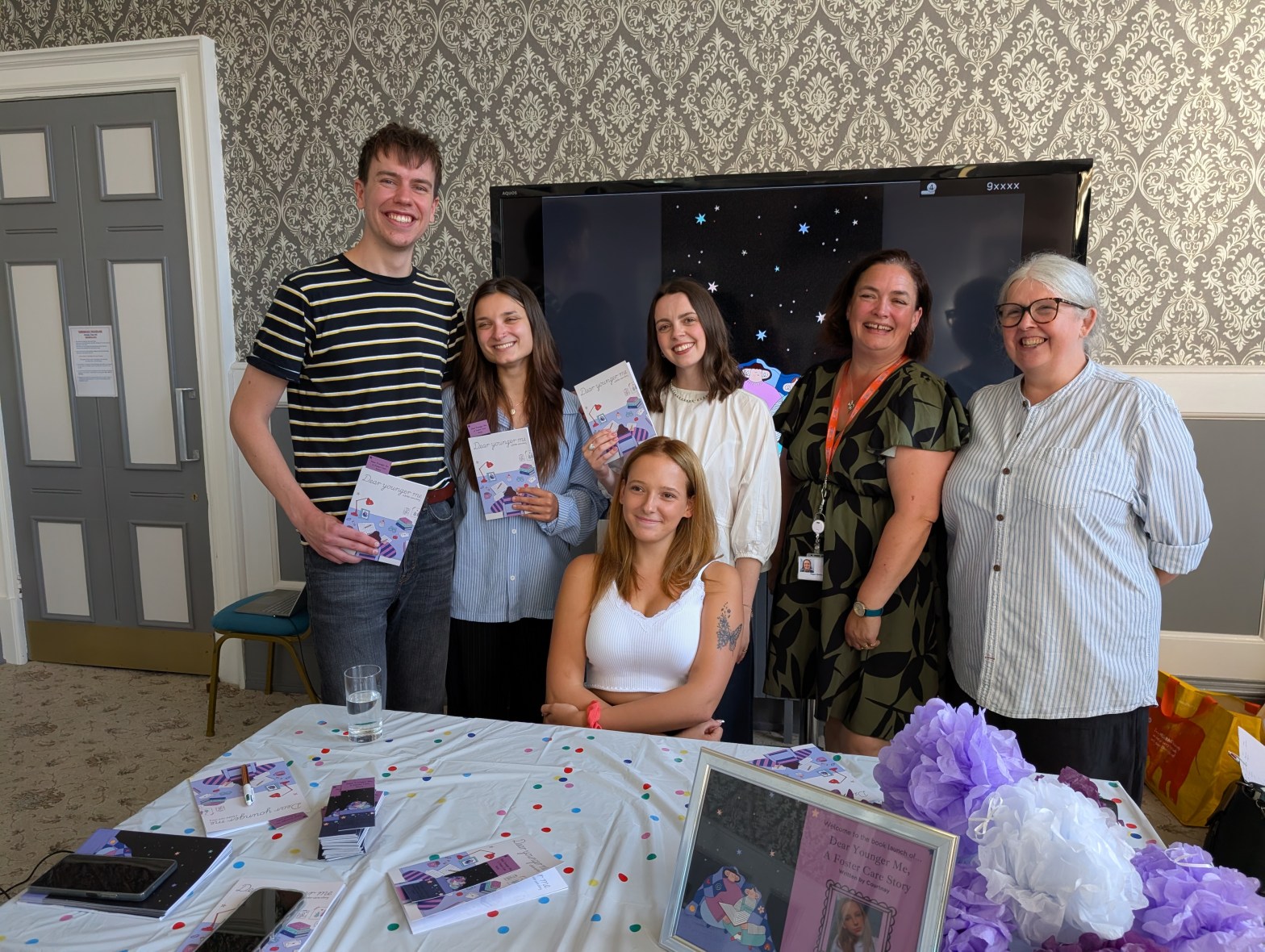
On August 4th, we launched a truly special book, Dear Younger Me by 18-year-old Courtnay. It’s a beautiful, generous, and big-hearted book dedicated to children entering the care system. Courtnay shares her lived experience, offering a guide and a friend through a painful journey. It’s a book of exceptional courage and compassion, and its journey to publication began five years ago.

In 2020, Pippa Curtin, a force of nature who works with children in care, approached me. She led a group of young advocates called Your Voice and asked if we could bring something creative to them. She also mentioned one young person, Courtnay, who had written her story and wondered if we could publish it.

I brought in two exceptional young people, Lisa February and Matt Gray (now lowercase theatre). They went to sessions, got to know the young people, and with mine and Pippa’s support, guided a creative process that led to Courtnay’s book. Last year, Matt took stewardship of the book’s production. He brought in the deeply sensitive and unique local illustrator, Hollie Fuller, and worked with our long-time designer, Paul Davy, and our trusted local printers, GSB.

Over many months, with Pippa’s continued support and Matt, Hollie, and Paul’s diligence, the book came to life. They were careful with every detail, ensuring it was as perfect as it could be when it went to print.


The Power of Community

Monday’s launch at Grimsby Town Hall was Courtnay’s moment to shine, and shine she did. After a moving welcome from Ann-Marie Matson, Director of Children’s Services, Courtnay spoke eloquently about her book and her experience, reading to a rapt audience. She was surrounded by supporters, foster parents, children and champions of children.

I was struck by the love and care in the room; there were many tears. Ann-Marie made an observation that truly resonated: all of this happened because of the people in our small community—the right people doing outstanding work to support young people in care, the right creatives, and the right producers, all committed to ensuring Courtnay’s voice was heard and acknowledged permanently.

“We must always remember that even the youngest voices can make the loudest noise. Let us all commit to building a world where every child feels seen, heard and valued.” — Ann-Marie Matson

East Marsh United, an organisation that amplifies the voices of the marginalised, contributed resources to this book. La Luna is a publisher with a purpose that isn’t about sales but about the art of the book and enabling voices that would never get a second look in mainstream publishing.

Monday was a powerful reminder of why I set up La Luna and why it must continue. It reignited my passion for creating spaces for unheard and unseen writers and artists. It will always be small, local, homemade, and lovely.

Monday was also a powerful reminder of the power of storytelling. Thank you to absolutely everyone involved for making this happen.

The Quiet Resilience of a Summer Garden

@

The mid-July rain is torrential now, drumming a relentless rhythm on the roof. Just a couple of hours ago, though, there was a brief reprieve, a window of calm that allowed me to step out into the garden. I spent that time deadheading, a quiet, repetitive task that brings a small sense of order, and potting on the baby strawberry sprouts, nurturing new life. Gardening, for me, is often a process of constant adjustment; I move things around until they settle into a place that feels right. My daylilies and agapanthus, despite being well-fed and watered, are showing no signs of flowering, so a move is on the cards for them. I also rescued my neighbour’s little boy’s tomato plant today, potting it into a much bigger container, pinching out the side shoots, and giving it a good feed. I’ll take it round to him when the rain finally eases.

Outside our front door, the street is a hard, concrete expanse with no greenery, and it’s running with water. We have no soakaways, no rain gardens, and the drains are Victorian. The threat of floodwater is very real. This stark reality, this vulnerability, has been a constant hum beneath the surface of the summer. The heat, too, has been oppressive. We’ve been fortunate to have invested in excellent sun blinds, and we’ve managed to keep the house cool by keeping windows closed, blinds down, and curtains drawn during the day, then opening everything up at night when the temperature drops. But the lack of canopy cover outside, the absence of trees to cast a natural shade, has been acutely felt.

This summer has been a period of profound challenge. I am still post-viral from a bout of COVID in June, and the fatigue of CFS and fibromyalgia has been relentless. On top of that, I’ve been dealing with bursitis and tendonitis, adding layers of physical pain and limitation. Yet, through it all, the garden has been my steadfast companion. Even on the really bad days, when I’ve felt utterly awful, it’s been there, a constant, quiet presence.

Beyond the physical, the garden has offered deep psychological support. The past few months have brought very difficult things to navigate, and those pressures are not easing. I have felt a sense of fragmentation, a deep pain about my parents and their struggles with failing health and chronic disease. As much as I am able, I support them, and I truly feel it is a privilege to be able to do that. This week brought a new shock: my sister’s sudden experience of a detached retina, emergency surgery, and the possibility of visual impairment. The whole family has rallied to support her, though she is not close by, and we can’t get to her just yet.

Illness this summer has also meant missing many important and lovely events at work. It has been a battle for me to let go, to simply take care of my health. It has felt, ridiculously, like a personal failure—a classic case of ‘Head Girl Syndrome,’ I suppose. But now, in mid-July, it’s time to change some plans, cancel a few things, and reorient myself. I need to prepare for the first breaths of autumn, which will come soon enough. The season of mists always announces itself to me through that most subtle change in smell and a softening of the light. I am not wishing summer away; it is a blessing and a pleasure. But there is something so delicate and melancholy about the first kiss of autumn, and I always look forward to it.

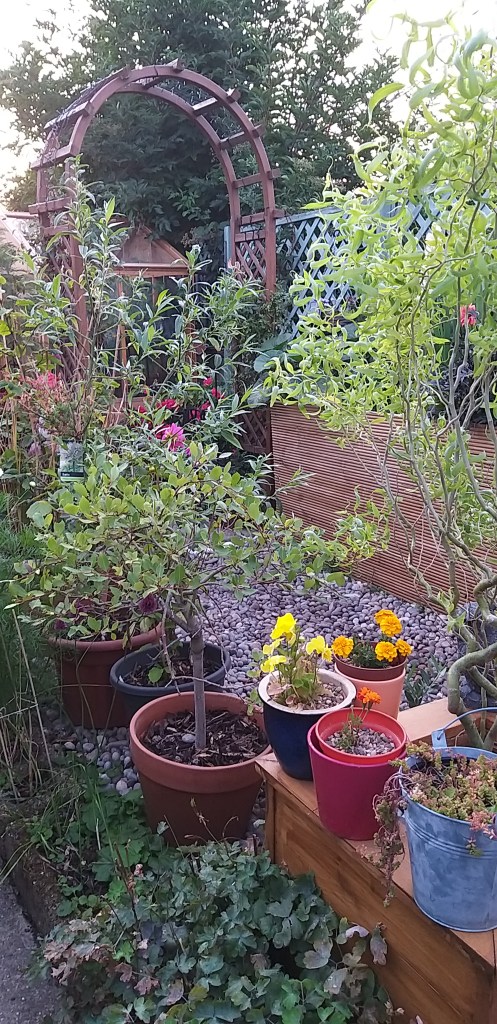
In this context, my garden is more than just a plot of land; it is an act of resistance. It stands as an example of what can be possible on a slum street. Its aspect makes it a very sunny garden, and being long and narrow, it’s like a corridor at the back of the house. It stands in stark contrast to the bleak frontage of our home and the surrounding area. Most of the gardens here are totally neglected and overgrown; there is no pride, no sense of connection with the environment. My garden, however, is a place of abundant growth and direct relationship with nature.

I am always delighted to see the bees and butterflies it attracts, to hear the birds. Our most prolific bird is the herring gull; they live on our rooftops and make a hell of a noise, but they are lovely and excellent parents to their young. The fledglings are now more or less all in flight, so there will be less squawking and dive-bombing for a while. I love to see them in flight; they have such grace. But I also love the little birds: sparrows, swallows, wrens, blackbirds, swifts, robins. There just aren’t that many here. We do have bats, though, and they are wonderful. They dance about at dusk, so fast and acrobatic.

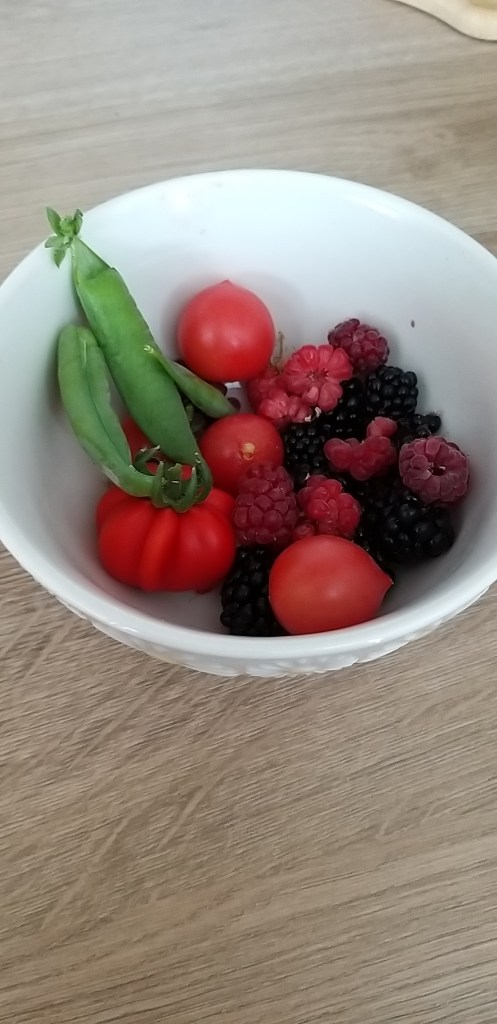
The garden’s produce has been a source of quiet joy. There were a few lovely strawberries, not many, but better tasting than anything I’ve bought in the shops this summer. My raspberries have been abundant and are reproducing new stalks; once they finish, I will move them to much bigger containers. Some of my tomatoes got bottom rot, but the rest seem fine and are turning red slowly—they are very tasty. Mini cucumbers are growing, I’ve had a few peas, and the beans are growing and should flower soon; they were a bit late going in. The one fruit I have put no effort into is the brambles: great, big succulent berries poking through from next door and in my own managed bramble corner. I have to be ruthless and do a lot of cutting back of brambles; they would take over if left to their own devices. I’ve had a few berries this week, and they are wonderful. I think there will be enough to go through to the autumn. Although, if Mr. Spugwell Brown, the very vocal house sparrow who has made his home in next door’s elder tree, runs out of elderberries, he may move on to the brambles—there are enough for us to share. In other parts of the garden, the hydrangeas are going strong, the hostas are flowering, and the sunflowers are ready to come into flower. The hollyhocks are leafy but have no flowers, and similarly, I have a cosmos bush with not many flowers. Despite these minor disappointments, the overall abundance is a comfort.

@

The troubling reality of the garden overheating on very hot days has solidified some plans. I had considered shade sails, but I think I am going to have a pergola built and plant a couple of fast-growing trees. A copper beech will provide dense, long-term shade, and a white lilac, which I just love, will add beauty and fragrance.

The concrete street and its water problems have also reinforced the need for better water management in my own space. Where the garden slopes, water pools, and this is where I envision a rain garden. It will help manage stormwater, allowing it to soak away naturally rather than contributing to street flooding.

Another significant change will be replacing the pebbles with a grass lawn. The grass died previously, leading to the pebbles, but I’m going to have some grass relaid. This will soften the garden’s appearance and, crucially, provide another soakaway. I plan for it to be a clover lawn, which will be wonderful for the bees. These changes, along with my new shed, greenhouse, and ‘growlery’ (my summer house built on the back of the house), are all part of making the garden more resilient and more deeply connected to the natural cycles.

In this summer of physical and emotional strain, the garden has been my anchor. It has been a space where I can engage in small, purposeful acts of nurturing, where I can witness the relentless, beautiful growth of nature, and where I can find moments of quiet joy amidst deep pain. It helps me to reset, to feel intact again, and to remember that even when human systems fail, and personal challenges feel overwhelming, there is still profound healing to be found in the earth, in the flight of a gull, or the dance of a bat at dusk. My garden is not just a garden; it is a testament to resilience, a small, vibrant act of resistance against the bleakness, and a constant source of solace.

@

Redefining Value in a Work-Driven Society

Over the past month or so I have been in that strange liminal world of unwellness, where you are drifting on the edges, looking in at the things you can’t do and grieving because you can’t do them. I’ve missed so much big and important stuff at work, and have felt the inevitable guilt and sense of failure that comes from a life-time of social conditioning around illness being a personal failure. I have been watching, with dismay, the Westminster Theatre of Cruelty unfold as I’ve been unwell. 

The current government’s proposed ‘reforms’ to the welfare bill, framed as measures for positive change and encouraging engagement with work, face a righteous and formidable tide of opposition. While some concessions on the bill have been offered, these have been largely ill-received, creating a perceived two-tier system of benefits that remains inherently harsh and will undeniably harm vulnerable individuals. These concessions, it is crucial to note, do not stem from a moral shift within the government, but rather from a pragmatic desire to stave off a backbench rebellion and maintain a firm stranglehold on power. Critiques from across the political and charitable sectors, alongside widespread public concern, consistently highlight the potential for these changes to push vulnerable individuals into extreme poverty. Within the specific mechanisms of this legislation, elements emerge that strike not just as impractical, but as profoundly cruel. Consider, for instance, the proposed tightening of Personal Independence Payment (PIP) eligibility: under the revised points system, an individual unable to perform a fundamental act of self-care, such as washing themselves below the waist, might not qualify for essential support if they present with no other complex needs. In a nation purportedly upholding dignity, such an outcome is not merely unjust; it is obscene.

This legislative agenda, however, is merely a symptom of a far deeper systemic malaise. It represents a pervasive, broken approach to health and well-being that dehumanises the individual. Illness and disability are too often misconstrued not as acute challenges demanding support, but as character flaws – personal deficiencies in drive or moral fibre. This perspective wilfully ignores the escalating crisis of poor health across the UK, a crisis inextricably linked to systemic poverty and a prevalent culture of work that is frequently devoid of meaning, often physically damaging, and inherently demeaning. The Cabinet, in particular, is increasingly appearing as an arrogant and detached cabal of individuals with no practical understanding of the lived experience of those navigating illness and disability. It is becoming increasingly apparent that a better societal model is not only possible, but desperately needed. What is required is a fundamental paradigm shift in how we perceive ill health, disability, and the varied capacities for work; these are not inherent defects in the individual, but rather real-world systemic problems, demonstrably exacerbated by the environment in which we live and work. My own life serves as a stark illustration of this critical failure.

From the age of thirteen, having been raised in a working-class family where contribution was encouraged, I embraced work. My parents wanted us to learn the value of money and to take responsibility for ourselves. We didn’t have to contribute to the running of the family home, but it was clear that money was finite and if you wanted something, you either had it as a gift for birthdays or Christmas or you bought it yourself. Whether it was in my great uncle’s newsagent shop, as a babysitter or nanny, or in physically demanding summer jobs through university, the principle that “there’s no such thing as a free lunch” was deeply ingrained. The single summer spent claiming unemployment benefits during my university years was among the most miserable and isolating periods of my early adulthood, reinforcing my intrinsic desire to contribute. 

The challenges I found myself having to face were not for want of effort. Issues I had navigated since childhood – emotional overwhelm, profound fatigue, and a deep-seated need for periods of solitary recovery from overstimulation – found no accommodation within the conventional workplace. While my mother had intuitively allowed me necessary respite as a child, the professional world offered no such understanding. I internalised the crushing belief that something was horribly wrong with me, that I was useless, lazy, and incompetent for simply not being able to perpetually cope, work, and be well. In response, I pushed myself relentlessly, always striving to go above and beyond, volunteering for every opportunity – even as my body and mind silently rebelled, resulting in frequent absences from unsustainable environments and situations. This was not a character flaw; it was the direct consequence of navigating undiagnosed ADHD and chronic fatigue, and an unspoken expectation of ‘presenteeism’ that offered no quarter for my particular human frailty.

The inherent pressures of the workplace became devastatingly clear in 2006. Just weeks after returning from a significant mental health breakdown, I fell from a horse on Cleethorpes beach. While the immediate emotional trauma of the incident is a distinct and complex narrative, the physical consequences proved to be life-altering. The crucial detail, and indeed a stark indictment of systemic oversight, was the missed diagnosis of an L1 vertebral fracture by the Accident & Emergency department. Dismissed with advice for soft tissue damage, I was sent home, unknowingly carrying a broken back. Had this severe injury been correctly identified, the protocol would have been a long period of sick leave, recognising the danger of physical exertion. Yet, burdened by the recent three-month absence due to my breakdown, and met with a dismissive response from my superior when I reported the fall, I made a reckless decision. After only one week of ‘convalescence,’ I returned to work, enduring constant, screaming agony. This decision, driven by fear of professional judgment, set in motion a profound and irreversible deterioration of my health.

Within a year, I developed Chronic Migraine Syndrome; within two, the debilitating onset of Ulcerative Colitis. My absenteeism from work escalated dramatically, not from choice, but from an inability to function amidst relentless pain, severe mental health instability, and the terrifying, unpredictable nature of my new conditions. The fear of public accidents due to ulcerative colitis, for instance, led to months of social isolation. Concurrently, the physical environment of the college where I worked became actively detrimental: harsh lighting, oppressive heat, and incessant noise fostered overwhelming sensory overstimulation, leaving me profoundly depleted, miserable, and suffering from debilitating headaches by day’s end. By 2012, acknowledging the unsustainability of my situation, I made the decision to leave stable employment with no immediate prospects. This step, born of sheer exhaustion and inability to cope, was a direct consequence of a healthcare system’s initial failure to diagnose my injury and a workplace culture that fostered an environment of fear over welfare. 

The hope that self-employment might offer a panacea proved to be an illusion. Driven by the direct link between work and income, I found myself pushing even harder, often working in situations where I demonstrably should have been resting, only exacerbating my illnesses. This relentless cycle continued until a comprehensive diagnosis in 2017 revealed PTSD-induced fibromyalgia, chronic fatigue, and pervasive chronic pain – a recognition of the ‘wreck’ my body had become. While I accept responsibility for the initial accident – I was not a good enough rider to be on a horse of her size and power and should have had better judgment – its cascading consequences, amplified by systemic failures and an unforgiving societal framework, irrevocably altered the trajectory of my life. My daily reality remains one of persistent pain, fluctuating mobility, profound fatigue, and ongoing, undiagnosed ADHD, forcing difficult decisions about future economic activity. This reality is not a choice; it is a life being lived, and the prospect of being further penalised for this trajectory by welfare policies is, quite frankly, despicable.

I am far from alone in having forced myself into work when seriously unwell, overriding the sensible human impulse to rest. This compulsion stems from a deep-seated fear: fear of negative judgment, fear of losing a job, or fear of punitive HR procedures. We do not inhabit a culture that genuinely makes space for rest, recovery, or convalescence. Instead, these fundamental human needs are perceived to diminish our value as a viable economic unit of productivity. In the relentless pursuit of growth under late capitalism, driven by the ruling elite’s obsessive work agenda, the message is clear: if you need bed rest, if you need time out, if you are unwell—mentally, physically, psychologically, or emotionally—then you are inherently at fault. Period.

This brutal, Victorian work-time discipline, utterly counter to human well-being, must be robustly questioned, challenged, and ultimately undermined. The pervasive fear of harsh judgment for illness or disability makes life extraordinarily difficult. My own experience with mobility issues underscores this: using a walker in public, I frequently felt like a nuisance, perpetually in everybody’s way due to my slower pace or the space I occupied. The audible “tut” of impatience from passers-by reinforced this perception, embarrassing me to present publicly as a person in need of a mobility aid. This ingrained societal judgment, born of a system that prioritises relentless output over human fragility, is not just pervasive, but deeply damaging.

Beyond Economic Units: Reclaiming Our Human Value

The relentless drive of our workplace culture often attempts to force individuals into neat boxes of productivity, stripping away the very essence of our humanity. Yet, each human being is an individual with unique needs, flaws, and strengths. We are complex, interesting, and holistic beings; we simply do not fit into tidy, pre-defined categories. I want a future where the stigma, blame, and punitive policies ingrained in current HR practices vanish entirely. In this future, we are all recognised as finite beings, not endlessly exploitable machines. Everyone requires rest, everyone needs care, and everyone will, at some point, experience illness or pain. This is an intrinsic part of the human experience, not something separate or a personal failing. It is simply how humans are built; we are not, by design, machines.

One of the hardest consequences of illness, all too often, is isolation. During my initial, acute struggles with ulcerative colitis I felt utterly detached from the world. The fear of having an accident in a public place left me housebound for months, consumed by the shame and stigma of such a possibility. I even woke up panic-stricken from dreams of these very accidents. This level of fear impacted my mental health, eroding my ability to cope with daily life, let alone the demands of a workplace. In that period of acute illness I became terrified of food and even of my own body. It took immense time and effort to move into recovery and remission – a state I’m fortunate to have maintained for a long time now, primarily through diet, despite a GP’s dismissive assertion that diet had “nothing to do” with my ulcerative colitis.

This systemic disregard for lived experience in policymaking is, in my view, deliberate. To this government, the disabled and unwell community are evidently a massive inconvenience. By deliberately depriving this community of resources and power, effectively rendering them completely dependent on draconian and vicious welfare measures, the aim appears to be to disempower and silence them. The implicit expectation is that people, desperate just to survive, will lack the energy to fight back.

Designing for Well-being: A Collective Responsibility

If our ambition is genuinely to improve the quality of life for everyone – in our workplaces, in our communities, and particularly for those of us living with disability and chronic poor health – we must critically examine our built environment. A significant proportion of our buildings, designed without genuine consideration for human well-being, are, quite frankly, violent in their exclusion. They are frequently noisy, overheated, difficult to navigate with narrow passages, and feature staircases that are hard or even impossible for many. The choice of lighting, and the presence or absence of natural light and fresh air, makes a big difference, not just to those of us who are unwell, but to everyone.

It defies logic that we collectively tolerate living and working in what are, in essence, ‘sick buildings’. For individuals like myself, who are hypersensitive to these environmental factors, the impact is immediate and overwhelming. The wrong lighting can induce unwellness within minutes. Excessive noise renders me incapable of focus, making it impossible to listen or process information. A lack of natural light triggers an immediate sense of deterioration. This is not an individual failing; it is a fundamental flaw in design.

The onus, therefore, lies not on the individual to ‘cope’ with hostile environments, but on society to cultivate a workplace and a workplace culture that is inherently healthy, inclusive, adaptable, and flexible. Such a transformation would significantly enhance the chances for individuals currently excluded from the workforce to not only access work, but to thrive within it. To place an ill person in a sick building is to guarantee their swift departure, as their capacity to cope will inevitably be overwhelmed. None of this burden should rest solely on individuals. This represents a monumental cultural and societal responsibility, demanding collective effort to devise sensible, future-focused solutions for how we live and work. Our aim must be to enable all of us to contribute, but critically, without that contribution being laden with the arbitrary value judgments, HR-driven pressures, and inherent cruelties that can so easily accompany life when you are living with illness.

The Myth of Scarcity: A Political Choice, Not an Economic Reality

The notion that our nation’s budget must be managed the same as a household’s, subject to the same constraints and limitations, is a pervasive myth. This fallacy, peddled by those in power, serves to obfuscate the true reality of economic priorities and resource allocation. It is a deliberate lie. The capacity of a sovereign government to invest in its people and infrastructure bears no resemblance to the modest budget of a small family. The speed with which funds materialise when a political will exists starkly exposes this deception. We need only observe the recent NATO declaration, where member countries committed five percent of their GDP to arms – a decision I find personally abhorrent and shocking. This is not a question of an empty treasury; it is exclusively a question of priorities, a question of political choice.

We possess the collective capacity to foster a society where everyone is genuinely cared for. We could ensure a decent standard of living, robust safety nets, truly flexible working arrangements, inclusive environments, and a far more adaptable and engaging approach to the entire world of work. This is entirely achievable, if it were the political choice. However, our current government remains dementedly committed to the false economy of endless growth. It wilfully ignores what true sustainability looks like, disregards the power of cooperation, and places, front and centre, the interests of capital and capital investment above all else. This is a deliberate political choice.

The public, crucially, is not naive. People recognise this underlying agenda and are beginning to question it with increasing force. My ongoing work, including my capacity for thought and effort amidst the constant navigation of chronic illness, is focused on fostering a major paradigm shift in how we, as a society, live and care for one another. This involves fundamentally altering how we perceive and respond to illness and disability; challenging the damaging myths that frame a limited ability to work as a personal failing rather than a systemic barrier.

There is no discernible appetite for war within the United Kingdom, in spite of the ceaseless propaganda and focus on war readiness. What is palpably evident, however, is a widespread weariness and a creeping degradation of people’s lives. This is a volatile combination that, if left unchecked or, worse, deliberately harnessed, could quickly become toxic and dangerous, particularly if exploited by the far right. True national security lies not in military excess, but in the collective well-being of its citizens – a robust social safety net, equitable access to support, and a societal infrastructure designed for human flourishing, not merely economic extraction. This paradigm shift towards a truly humane and inclusive society is not merely an aspiration; it is an urgent imperative.

‘Eyeing the Universe’: A Milestone in Purposeful Art

Pivotal Pieces: One: ‘Eyeing the Universe’

Embarking on a journey through my creative life means revisiting pivotal pieces, understanding the path they forged, and the lessons they offered. Among these significant works, ‘Eyeing the Universe’, the album I created with my beloved Billy under the name Tide Times, stands as a profound marker. It’s more than a collection of songs; it’s a testament to the driving forces behind my art, particularly my evolving commitment to art as social practice.

An Organic Evolution: Process Over Predetermined Product

The creation of ‘Eyeing the Universe’ was far from a linear path. Spanning several years, it was an organic, often start-and-stop process that taught us both the power of letting a work find its own form. Our initial aim wasn’t to produce a commercial album or to meet a specific market demand. Instead, it was a deeply process-led journey, an exploration of shared ideas and personal narratives that gradually coalesced into a cohesive whole. This extended period of incubation allowed the album to evolve authentically, shaped by our evolving understanding and collaboration.

Billy was instrumental in this venture. His technical expertise and keen ear for sound were matched by his willingness to infuse the album with his own personal stories. Our collaboration wasn’t just about crafting music; it was about merging our distinct experiences into a unified artistic statement.

Weaving Personal Narratives and Universal Contemplation

The album’s rich tapestry is woven from diverse threads of experience. Billy contributed raw, autobiographical pieces that delve into his family history and poignant reflections on the industrial complex’s impact on the working class. These tracks ground the album in tangible realities, honouring lived experiences and societal concerns.

My own contributions include two original pieces, ‘Me and Jesus’ and ‘Mr. Crow’. ‘When I Saw Jesus’ emerged from a period of intense personal distress, isolation, and spiritual yearning. It chronicles a direct, intimate dialogue with the divine during a moment of profound vulnerability. For me, this piece embodies a very personal form of myth-making—the act of forging meaning and solace from my own narrative when facing life’s darkest moments. It speaks to how we construct our understanding of existence in the face of despair.

In contrast, ‘Mr. Crow’ delves into the natural world and draws upon rich cultural sources, referencing the old English folk song, ‘Gallows Pole’. This track explores a dreamscape, an imagined conversation with a crow that guides a journey through both familiar and otherworldly realms. It represents a different facet of myth-making, one that taps into ancient archetypes and our deep-seated connection to animals and the subconscious. The crow, often a symbol of mystery and transformation, becomes a potent figure in this exploration of mind and nature.

The inclusion of Alan Watts’ spoken word extracts from ‘Cloud-Hidden’ served as a pivotal conceptual anchor. Watts’ philosophical insights into consciousness and our place in the universe elevated our personal narratives to a more profound, even esoteric, level. This element was instrumental in helping Billy and me understand our individual stories within a larger, cosmic context, truly embodying the album’s title, ‘Eyeing the Universe’. It transcended our own experiences, offering a framework for shared contemplation of existence.

From Vision to Sound: The Role of Collaborative Production

While Billy and I provided the core concepts and raw material, the album’s polished sound owes much to the expertise of two highly skilled music producers, Ayken and Kyle. With our limited equipment, we simply could not have achieved the ‘glorious sounds’ that emerged from their dedicated work. Their technical prowess and supportive approach were invaluable, transforming our initial recordings into a truly resonant and professional production. This collaboration underscored how external talent and shared vision can elevate an artistic endeavour to its fullest potential.

Art for Purpose: Beyond Commercial Imperatives

A defining aspect of ‘Eyeing the Universe’ is its funding model and purpose. Our primary motivation was not financial gain, but rather to share a work that held deep personal significance. Crucially, all proceeds from album sales are donated directly to East Marsh United, supporting vital community work in the East Marsh of Grimsby.

This decision affected the album’s identity and reinforces my belief in art as an integral part of life, not a separate pursuit. For me, art is woven into the fabric of my wider activities—writing, gardening, community development, and my role as an ambassador for EMU. I cannot operate as an artist removed from these realities; I neither have the means nor the desire.   This pragmatic truth has helped to forge my creative work as art for social practice.

My artistic philosophy dictates that art must possess integrity and meaning. It is never merely performative or created for spectacle. ‘Eyeing the Universe’ stands as a powerful embodiment of this principle: a work born from mine and Billy’s authentic personal experiences, enriched by collaboration, and dedicated to tangible community benefit.

A Milestone Defined: Clarity of Purpose

‘Eyeing the Universe’ marks a significant creative milestone for me for several reasons. Its organic, process-led development taught invaluable lessons about creative patience and allowing art to unfold naturally. The interweaving of personal narratives with universal philosophical inquiry underscored the album’s capacity to transcend individual stories and connect with broader human concerns.

Ultimately, this album helped clarify my artistic purpose. The choice to dedicate proceeds to East Marsh United cemented our commitment to art as a tool for social good, a vehicle for meaningful contribution beyond artistic expression alone. It helped me understand that the ‘why’ behind the art is as crucial as the ‘what’. 

This reflective journey, revisiting pivotal works like ‘Eyeing the Universe’, is a vital step as I navigate towards my next major project – what will likely be a multi-faceted endeavour involving writing, photography, drawing, painting, music and immersive storytelling. Each piece sheds light on the path, revealing the evolving narrative of my artistic life.

If you would like to purchase the album and in doing so support East Marsh United, here is the Bandcamp link :https://tidetimes.bandcamp.com/album/eyeing-the-universe

The Land of the Unwell: Finding Sanctuary in the Garden

This week, I’ve found myself in that peculiar and isolating place I’ve come to understand as the land of the unwell. It’s a territory, where the usual rhythms of life cease, and where I am  left to navigate the profound impact of a body and mind in distress. For someone living with complex chronic conditions—fibromyalgia, chronic pain, chronic fatigue, and ADHD—this isn’t merely a temporary setback. This is a full-blown crash out, a period where the delicate balance of managing these conditions shatters, leaving me unable to cope with even the simplest demands. It’s as if my internal operating system has simply lifted the anchor, leaving me marooned.

The very nature of chronic illness is its ebb and flow, its unpredictable tides. Some days, it’s manageable, a familiar, irksome, companion. I can navigate the world, do my job and be a functioning adult. At other times, like this week, it’s an overwhelming force, stripping away all capability, leaving me feeling like a ship without a rudder in a particularly choppy sea. A recent day, in particular, felt like a battle lost, a day when the weight of it all pressed down relentlessly, leaving me flattened. The world outside, with its work responsibilities, its social expectations, its endless demands, became an insurmountable barrier. I’ve had to drop responsibilities, retreat from social contact, and contend with a mood that has plummeted to murky depths. It’s a strange, internal exile, a place where others, no matter how well-meaning, can’t truly follow. They can stand on the shore perhaps waving in sympathy, but the terrain within is mine alone to traverse.

Part of this profound exhaustion, I suspect, is the aftermath of a prolonged period of intense personal challenge. A significant life event, demanding immense emotional and practical heavy lifting—caregiving, running a home, maintaining a semblance of normalcy when everything felt anything but normal—has taken its toll. For many months, I ran on adrenaline, a high-octane fuel that kept me going, pushing through my fatigue and pain, the emotional strain. But now, that powerful surge has finally dissipated, leaving my adrenals depleted and my strength undermined. It’s as if the body, having fought the good fight, has decided enough is enough, and now demands its due. The constant backache and hip pain, usually a dull throb I’ve learned to live with, have sharpened into a relentless, all-consuming focus, forcing an undeniable retreat from the world. My body has staged a coup.

In this forced retreat, my garden has become both a sanctuary and, at times, a curious source of further physical strain. The joy it offers is immense, a deep, visceral connection to life and growth that no amount of internal turmoil can entirely extinguish. It’s a place where the plant life, the buzzing of bees and the earthy scent of damp soil, offer a grounding presence. Yet, the impulses of my ADHD often lead me astray within its embrace. I lose myself in time, that curious phenomenon where hours melt into minutes, pushing past my physical limits, as I did recently moving heavy, water-saturated hanging baskets. I knew, even as I was doing it, that I shouldn’t have. But there’s this obsessive drive to complete a task, a hyperfocus where everything else fades, and the immediate objective consumes all caution. It’s a peculiar paradox: the very thing that brings me solace can also, through my own reckless enthusiasm, exacerbate my physical woes.

Conversely, this same ADHD-driven intensity can manifest as deep paralysis. I have some lovely embroidery pieces, painstakingly crafted, that I want to wash, iron, board, and frame. The other day, I had them all laid out in front of me, a beautiful array of work  And yet, I couldn’t do a thing. I just stared at them, my mind blank, thinking, “I don’t know what to do now.”That’s the overwhelm, taking control. By putting everything in front of myself, I create a mental blockade, unable to find a starting place. I’ve got better in the garden with this, thankfully. Now, I go out, do some deep breathing, and consciously think, OK what am I going to do first? I’m taking a much more logical approach, and crucially, I’m not beating myself up mentally if I can’t get everything done that I wanted to. The beauty of a garden is that it’s a lifetime’s work. It’s not an hour or two on a Tuesday afternoon. It is a profound commitment to deep ecology, and to being part of the garden, present in it with all its life, becoming at one with it. It’s a living, breathing testament to patience and persistence, qualities I often struggle to embody.

In this space of retreat, my thoughts have turned to the divine, particularly to matters of faith and spirituality. As a devout skeptic in terms of organised religion, I find myself contemplating the divine not in dogma or ancient texts, but in the tangible, living world around me. If God exists, surely She resides in gardens—in the rich, dark soil, the vibrant flora and fauna, the myriad creatures that inhabit it. A garden, shaped by human hands, feels like a piece of creative art in God’s image, a reflection of the symbolic Eden, a place of absolute connectivity, equality, equity, beauty, joy, and love that the human soul perpetually craves. It’s a primal yearning, etched deep within our collective consciousness.

I was thinking recently that the garden is a microcosm of existence. It demands patience, nurtures growth, and accepts decay as part of the cycle. It teaches me about resilience, about the quiet strength of a tiny seed pushing through hardened earth. It’s a constant, gentle reminder that even after the harshest winter, spring will always return. The colours, scents and textures; the velvety softness of  rose petals, the sharp smell of tomatoes, the cool dampness of the soil beneath my fingers – all these sensory experiences ground me, pulling me back from the swirling chaos of my own mind. Here, in this patch of earth, I find a profound sense of peace, a connection to something ancient and enduring that transcends my immediate troubles. It’s a spirituality that doesn’t require grand pronouncements or ornate buildings, but simply presence and observation.

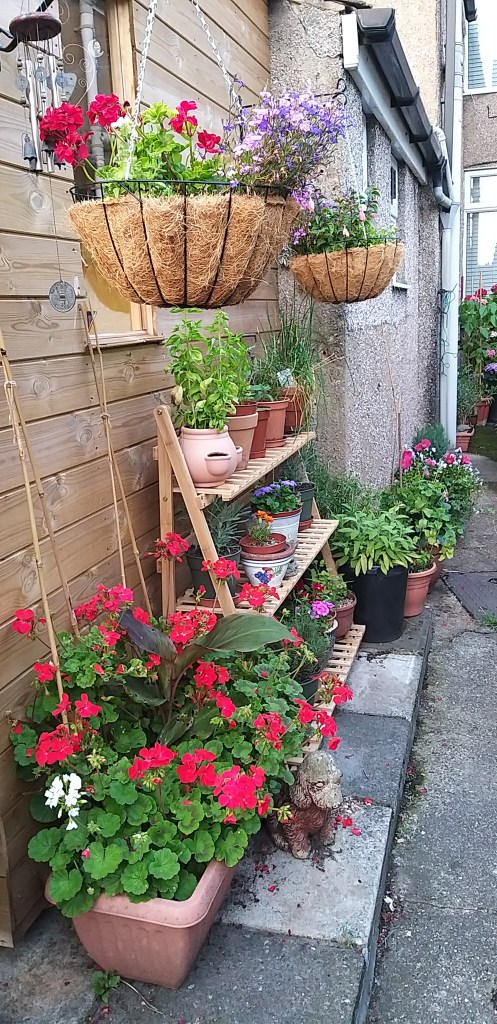
This belief was affirmed in a recent encounter on the street, a small moment that resonated with spiritual weight. My friend and I were moving pear trees from my garden to our local developing  community garden. We had them in an unstable trolley, carefully attempting to move them along the street. As we trundled along, we met two young men, East Marsh lads with their Staffie dog. These are the kinds of individuals who are often overlooked, or shunned. They find community with each other in a world that hasn’t always shown them much love. And yet, they stopped, their faces lighting up, exclaiming with genuine pleasure, “Oh, how brilliant, look at those trees! Aren’t they great? I love trees, me, I think they’re great and we need trees!” In a barren street, where my own small front garden is confined to a hanging basket, a wall basket, and a window box because the door opens straight onto the street and pots often get stolen, this moment of shared appreciation for nature, for something beautiful and alive, felt significant. It was a testament to finding God, if there is a God, in the simplest, most human of connections, appreciating nature’s quiet grace in an unexpected place. It was a reminder that beauty and wonder can be found even in the most unlikely of settings, and that the human spirit, regardless of circumstance, yearns for connection to something greater than itself.

Letting go of those pear trees, which I had rescued from a neglected property and nurtured for a year, was a spiritual act in itself. I had watched them suffer, so I rescued them, looked after them, fed them, and cared for them. I always knew at heart that they weren’t truly mine, and their rightful place was in the ground, thriving in the community garden, where so much vital work is being done in partnership with our church and community. The joy of seeing them planted up, hoping they will flourish and contribute to our shared space, was immense. It’s a powerful reminder that even in the midst of personal turmoil, there are moments of spiritual release and connection, a letting go that brings its own kind of peace. It’s always hard for me to let go, especially when I’ve nurtured and loved something, but the joy I got from those trees moving to where they needed to be, where they can truly grow and thrive, was emancipatory. I’m so grateful that we have that space as part of our community’s development.

This “crash out” has been a harsh reminder of my vulnerabilities, a stark confrontation with the limits of my own resilience. It has also, however, offered unexpected clarity and moments of grace. It’s a difficult journey, this navigating of chronic illness and the relentless demands of life. Recent stressors, though now subsided, were a brutal reminder of past traumas, dealt with as best I could by disengaging from the source – a necessary act of self-preservation when already running on fumes. And then there are the ongoing responsibilities of family life to contend with. The complex dynamics of family caregiving, supporting loved ones through their own struggles adds another layer of challenge. For me, hypervigilance adds to the general anxiety I feel and impacts my wellbeing. The ongoing journey of understanding and managing my own mental health, including fluctuating moods, feels more pronounced than usual right now. Self care is so important and not always easy for me.  The world is darkening, there is suffering and horror out there on a scale that feels impossible to comprehend and I have to be so careful to not give in to despair and to always look to the light. 

In this difficult time, in the land of the unwell, there are gardens to tend, trees to plant, and unexpected connections that reaffirm the enduring beauty of life. The garden, my sanctuary, continues to be a place of faith, a living testament to growth and renewal. It reminds me that even when I feel utterly depleted, there is still life to be found, nurtured, and shared. It is a constant, gentle whisper that even in the deepest winter of the soul, spring will eventually arrive, bringing with it the promise of new beginnings and faith that all things pass and that is OK.