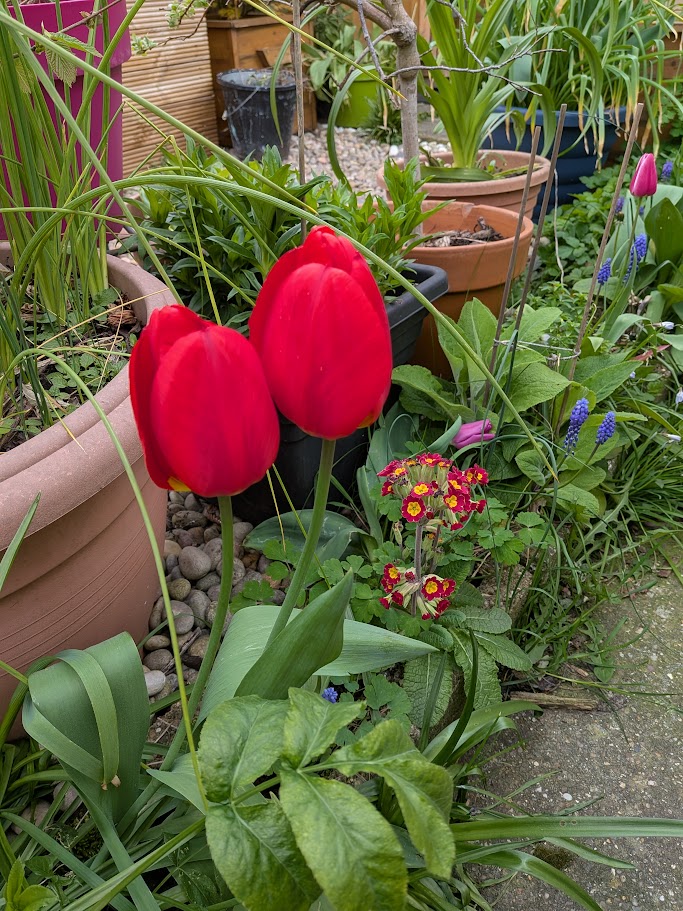
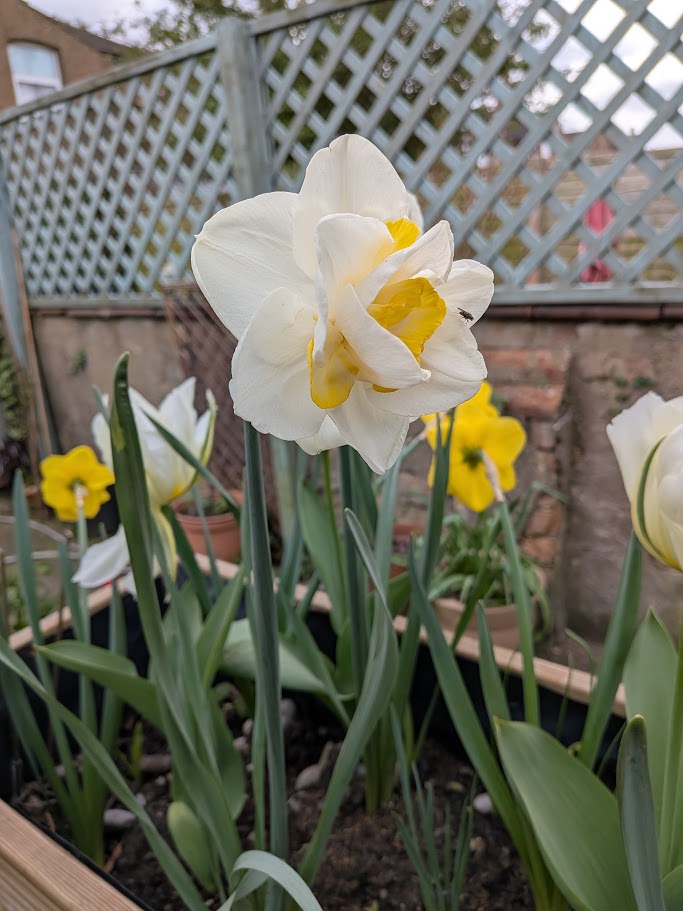
April is well underway. Spring has sprung in spite of the rain, the cold, the storms, and the lack of sunlight. My garden is currently a riot of defiant blooms: daffodils, grape hyacinth, tulips, bluebells, and primroses. The first buds on the rose trees have appeared and the clematis is about to explode into flower.
I have been the custodian of this garden for eight years now. It is over 150 years old, the same age as the house, and I have grown to understand its ways. It must have seen a great many green fingers over that century and a half.
While the world growls in an insane racket of war and violence, I go back to the garden and sit with its rhythm. It is a reminder of the tenacity of nature; a comfort in a world spinning out of control. When world leaders behave like toddlers having tantrums or technocratic managers, it is easy to fall under the shadows of fear and despair. People speak of “something in the air,” acknowledging a collective sense of wrongness. We know when the moral compass is broken. No one escapes this feeling, not even the demagogues pushing for annihilation.
Yet, history already knows them for what they are. They will be swallowed into the Mystic in their turn, just as my tulips will fall away and the spring becomes the summer.
The Radical Act of Gardening
Voltaire famously advised us to cultivate our own garden. In times of significant threat, this is not a retreat, it is an assertion of agency. To be a gardener is to be a custodian of the world we want to see grow.
Consider the power within a single seed. It holds total potential. What if, even in the smallest actions of our lives, we hold seeds of similar potential? It matters how every one of those seeds is planted and nurtured. Perhaps one day we, as a species, might learn the true value of every seed and what it produces.
Why the Small Scale Matters
In a world of unprecedented storms, the garden offers us three vital truths. First, the seed as agency. Choosing to nurture growth is an act of faith. It is an assertion that the future is worth preparing for. Then there is the perspective of ime. A 150-year-old garden has weathered previous follies and survived. It remains rooted, indifferent to the tantrums of the day. Finally the cycle of accountability: Just as a garden fails without care, systems fail when they ignore their foundational seeds.
History may remember the destroyers, but the world is sustained by the custodians. We must start from where we are. We must recalibrate ourselves to a system that actually works; where effort leads to bloom, and where even the most stubborn winter eventually yields to the glory of the daffodil.
 Josie Moon