We’re all seeing a lot of it recently; the flag of St. George, a simple red cross on a white background. It’s an image that’s supposed to make us feel proud of being English, but lately, it feels like it’s been claimed by a very narrow, specific idea of what that means. Some people hold it up as a symbol of a thousand-year-old tradition, but I can’t help but wonder if they’ve ever truly looked at who St. George was. The more I learn about him, the more I realise the man whose flag they fly stands for everything their beliefs reject.
He’s a Global Hero, Not a Local Lad
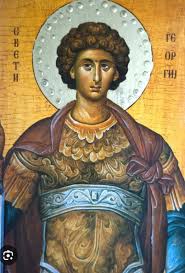
For so many of us, the idea of St. George is wrapped up in English legend. Some picture him as a medieval knight or a figure straight out of our own folklore. But the truth is far more inspiring and, frankly, a little more personal. The real St. George was a Roman soldier of Greek-Cappadocian descent, born in what is now Turkey in the 3rd century AD. He wasn’t English at all. He was executed for his Christian faith in Lydda, Palestine which means he was, in a very real sense, a Middle Eastern martyr.
Think about that for a moment. This man, a symbol of English identity, didn’t come from here. His story isn’t just a part of our history; it’s a part of the world’s history. He’s a patron saint for countless places, from Palestine and Georgia to Ethiopia and Portugal. It’s a profound irony, isn’t it? A symbol claimed by some to promote a singular, nationalistic identity actually belongs to the entire world—a world that is increasingly reflected in England’s own population. In fact, according to the 2021 Census, over 16% of the UK population was born abroad. The most common countries of birth for migrants include India, Poland, Pakistan, Romania, and Ireland, proving that our national story is a global one.
His Legacy Is Protection, Not Division
Many of us know at least something of the myth of St. George slaying the dragon to save a princess. It’s a classic tale of an archetypal hero fighting evil. The dragon represented malevolence, and George’s victory was about the triumph of good. This is the core of what he stands for: standing up for the vulnerable and defending the innocent.
So when I see his flag used to demonise refugees, to fuel hateful views, or to call for violence against those seeking safety, my heart hurts. It feels like the flag is being used in the service of the very dragons he fought against. This is especially painful when you consider the realities of migration. Many people seeking asylum arrive in the UK with no legal route to do so. Amnesty International points out, they are not legally required to claim asylum in the first country they reach. Many are simply looking for a safe place to land, perhaps somewhere where they have family, or friends.
Once asylum seekers get here, the system isn’t easy. If they’re destitute, they can receive basic housing and financial support, but it’s often as little as £49.18 per week. Most asylum seekers are not allowed to work while their claim is being considered, which forces them into a difficult situation. It shows us that they aren’t coming here for financial gain; they’re coming here because they are desperate for safety.
Who and What is English Anyway?
When we talk about “Englishness,” we’re not talking about a single, pure lineage. Our history is a story of countless journeys and new beginnings. From the original Celtic Britons to the Romans, the Anglo-Saxons, the Vikings, and the Normans, our identity has always been a blend of different peoples who came, fought, and settled here. “English” isn’t a race; it’s a shared experience of a people built from different parts of the world. It’s a powerful idea, and it’s one that has been true for centuries.
Let’s Reclaim the True Story
It’s easy to get angry when we hear hateful and xenophobic views, especially when they come from people we know and love. But we can challenge the ideas without attacking the person. This is where the true story of St. George becomes so powerful. It provides a simple, factual counter-argument to a hateful narrative. Instead of getting into a heated argument, we can simply share a piece of knowledge: “Did you know St. George was from the Middle East? He wasn’t English.”
This small fact can plant a seed of doubt and open a door to a different way of thinking. It redirects the conversation from a hateful attack on people to a factual discussion about a symbol. The flag of St. George is a symbol of compassion, protection, and a global spirit. It belongs to all of us who are willing to fight for what is right, regardless of where we come from. I believe it’s time we took back the true meaning of the St. George’s Cross.
 Josie Moon