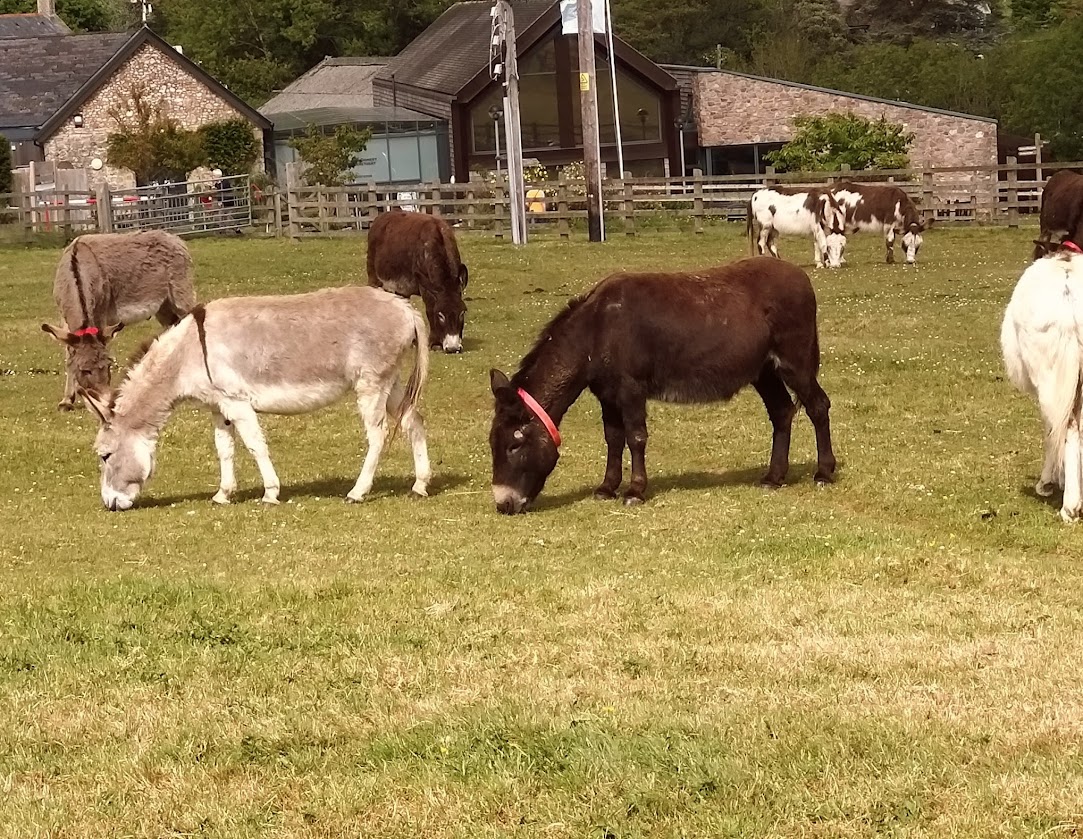
This week I have been thinking about Care and what it means to show, give and receive care when the world seems to hold it in deficit and even contempt. It’s a multifaceted notion that warrants careful consideration. As I’ve been exploring its various dimensions, I find myself confronted with a web of interconnected ideas. The header image is a photograph of donkeys at The Donkey Sanctuary in Sidmouth. This is a place of enormous care and generosity towards creatures who suffer much abuse and mistreatment. It is deeply peaceful and is a great example of care at its best.
Initially, our understanding of care is often (not always) shaped within the family unit. It is within this intimate sphere that we can encounter its most fundamental expressions. In childhood familial care and child raising are the most obvious examples of how care is given and received but as we grow it becomes more two-way such as simple acts of consideration. Someone making you a brew when you’re feeling a bit under the weather, or being there to lend an ear when you’ve had a bad day, exemplify this. It’s that unspoken understanding, that safety net you have (or at least, you hope you have) with the people closest to you.There’s a real privilege in that; knowing you’re not on your own, that someone’s got your back.
Of course, it’s not always straightforward or easy. Not everyone experiences care as a child. As an adult care can be hard work, full of emotional heavy lifting. It can be worrying about someone you love, feeling responsible for their well-being, and sometimes feeling like you’re being pulled in a million different directions. For me the deep moments of connection and support always outweigh the difficult bits. This is something I’m currently truly grateful for.
Beyond the family, the concept of care extends into the wider community, albeit in more nuanced ways. We often observe it in small acts of kindness. This week, the Rail Assistance team gave my Mum solicitous care as we travelled together by train for a family holiday to Devon. I was moved by the respect and kindness the rail staff showed her and their support made the travel so much easier than it would have been without them.
Perhaps care is a de facto aspect of human behaviour. I’d like to believe that it is, but there is so much evidence of where care is missing, where people are falling through the cracks. It’s easy to blame the system, to point the finger at the government or at society but it’s more subtle than that. We’re all part of this and somewhere along the line, we seem to have lost sight of this basic truth: that we’re all interconnected. Looking after each other isn’t just a moral thing to do; it’s essential for our own well-being.
I keep coming back to this idea of how care has been monetised. It feels fundamentally wrong, this notion that something so basic to human existence – looking after each other – has become a commodity, something to be bought and sold. Childcare, elder care, even basic healthcare all comes with a price tag. This makes me question what kind of society we’ve become.
In part, it’s tied up with the relentless emphasis on individualism; the insidious idea that we’re all meant to be self-sufficient units, competing with each other, striving for personal success at all costs. But the reality is that we’re social creatures. We need connection, we need support. When those things are missing, when we feel like we’re constantly having to fend for ourselves, it erodes our capacity to care for others. We’re too busy trying to keep our heads above water.
It’s worth thinking about where this idea of care comes from. Those old words – caritas, kindness, compassion, love – they hint at something deep within us. It’s not just about the practical stuff; it’s about empathy, about feeling someone else’s pain and wanting to alleviate it. For many people, faith plays a big role in shaping their understanding of care, reminding them of their responsibilities to others but I would argue that there is a drive in all of us, whether we have faith or not, to care. The structures we have made in this neo-liberal nightmare often make it hard for us to show our care for others.
How have we ended up in a situation where a lack of care, a lack of basic human decency, has become normalised? It’s evident in the way people talk about the vulnerable, in the cuts to essential services, in the general sense of indifference that seems to permeate so much of modern life. It’s a slow erosion, a gradual numbing of our collective conscience.
This brings me back to this central question: how can we expect people to be caring when they themselves feel uncared for? If you’re struggling to make ends meet, if you feel invisible and ignored by those in power, where do you find the energy, the emotional resources, to reach out to others? It’s a vicious circle, and it’s a difficult one to break.
There is, in spite of all the pressure and difficulty, something comforting in the idea that our capacity to love is infinite. That it’s this wellspring within us that never runs dry. The more you give, the more you seem to get back, not always in a direct way, but in a sense of connection, of purpose. So why are we so stingy with it? Why do we hold back, afraid to be vulnerable, afraid of getting hurt?
Maybe it’s because we’ve forgotten how. Maybe we’ve become so focused on our own needs that we’ve lost sight of the importance of connection. I believe that rediscovering that capacity for care, for genuine empathy and compassion, is crucial. It’s about building a society where everyone feels valued, where support is readily available, and where looking after each other is seen not as a burden, but as the very essence of what it means to be human. At the end of the day, love might not solve all our problems, but without it, we’re truly lost.
 Josie Moon