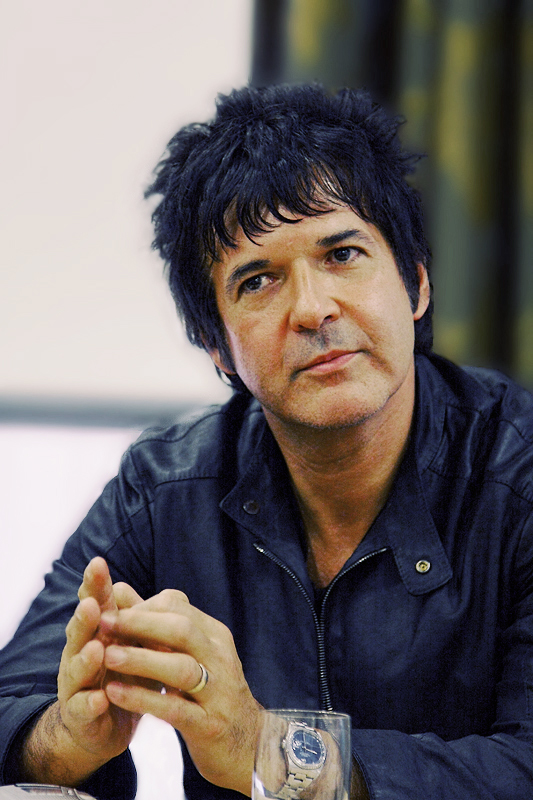
Clem Burke’s death this week, at 70, has affected me. It’s like a door has opened, and all these memories are flooding back, all bound up with Blondie. They were such a central part of my growing up. I was just a kid in the 70s, completely captivated by Debbie Harry on Top of the Pops. There was something about her – a kind of cool detachment mixed with this raw energy – that was just mesmerising.
Those early Blondie videos are etched in my mind. “Picture This,” with that yellow dress, “Atomic” with the bin bags (which, at the time, seemed so edgy and daring), “Heart of Glass” with that sparkly black dress, and “Dreaming” with the red jumpsuit. And always, running through it all, was Clem’s drumming. That incredibly powerful, driving beat, full of energy, that gave those songs their danceable, joyous thump. It was a sound that, in many ways, defined that era.
Back then, vinyl records were expensive. They were a real treat, something you’d get for a birthday or Christmas. I desperately wanted “Parallel Lines,” but it was simply out of reach. Then, I found a pristine copy lying in the street, at the end of my cul-de-sac. It felt like some kind of sign. My parents, being the decent sort, reported it to the police, but after a week, it was mine. I played that record non-stop. I reckon I could still sing the whole album, pretty much word-perfect.
I remember staying up late to watch Blondie’s Old Grey Whistle Test New Year’s Eve show. Debbie was wearing this pink and yellow striped outfit, and Clem was in a shiny gold suit. At the time, I was disappointed. It didn’t sound like the record. I hadn’t yet grasped the difference between a live performance and a studio recording. Watching it again this past Friday, as a tribute to Clem, I saw it with different eyes. I saw a frontwoman under immense pressure, delivering a high-energy performance, carefully pacing herself to get through the set. No backing dancers, no backing tracks, just her, right up front, performing songs that were already becoming iconic. It was actually brilliant.
Blondie were more than just a band; they were a phenomenon. They emerged from the New York punk scene, but they were always more than just punk. They had a real pop sensibility, a knack for writing incredibly catchy, memorable songs. They blended punk, new wave, disco, and even reggae, creating a sound that was uniquely their own. And Debbie Harry, with her striking looks and that cool, almost detached persona, became a true icon. She was a feminist icon, a style icon, a pop icon. She challenged the norms of what a female rock star could be.
But there was a darker side to it all, of course. The constant objectification, the relentless scrutiny. Debbie Harry was constantly being judged on her looks, her age, her voice. There was this expectation that she should maintain this impossible standard of beauty and youth, and when she inevitably didn’t, she was criticised for it.
I saw Blondie in the 90s, on the No Exit tour, at Sheffield City Hall. My boyfriend at the time, who’d had far too much to drink, climbed onto the stage, grabbed Debbie, and kissed her. He was, quite rightly, chased out of the building by security. I stayed and watched the rest of the show, and I remember seeing a flash of fear in Debbie’s eyes. At the time, I was just annoyed with him for his drunken antics. Now, I see it through the lens of male entitlement; the way some men seem to think they have a right to women’s bodies. It was probably just one of many such incidents for her; an unpleasant part of her story of fame and objectification.
I had a small taste of that myself, once. I was playing in a Bowie tribute band, and we had a fantastic gig. The crowd was buzzing, high on the music. As I came off stage, a group of overexcited men surrounded me, trying to hug and kiss me, grabbing at me. It was genuinely frightening. Luckily, we had a roadie, Martin, a lovely, mild-mannered guy. He just lifted me up and carried me out of the building, away from the crowd. It was a relatively minor incident, but it gave me a glimpse of what women like Debbie Harry had to deal with on a daily basis.
She was completely objectified at the height of Blondie’s fame, and then castigated for daring to age, for not maintaining that ethereal beauty, that distinctive voice that was both honey and grit. It’s a sad reflection of our society’s obsession with youth and beauty, particularly when it comes to women in the public eye.
I imagine she’s feeling utterly bereft this week, having lost Clem. He was, by all accounts, a great guy. He always seemed like someone who’d be good company. I hope he’s drumming in the great blue yonder, keeping the beat going. And I hope Debbie has the support she needs to get through this horrible time for her.
Blondie’s impact on the 70s and 80s was immense. They weren’t just a band; they were a cultural force. They represented a new kind of female rock star, one who was strong, independent, and unapologetically herself. They challenged the status quo, and they did it with style and wit. They created a soundtrack for a generation, a generation that was looking for something new, something different.
And Clem Burke was a crucial part of that sound. His drumming was the backbone of Blondie’s music, the driving force that propelled their songs. He was a powerhouse, a master of his craft. He was a vital part of the band’s identity.
It’s strange how these figures from our youth can have such a profound impact on us. They become part of the fabric of our lives, their music woven into our memories. And when they’re gone, it feels like a piece of our own history has been taken away. Clem Burke’s passing has brought back a rush of memories, a reminder of a time when music felt like it could genuinely change the world. And in a way, it did.
Photo credit: By shiver_shi – https://www.flickr.com/photos/shiver_shi/2658661948/, CC BY-SA 2.0, https://commons.wikimedia.org/w/index.php?curid=146773862
 Josie Moon