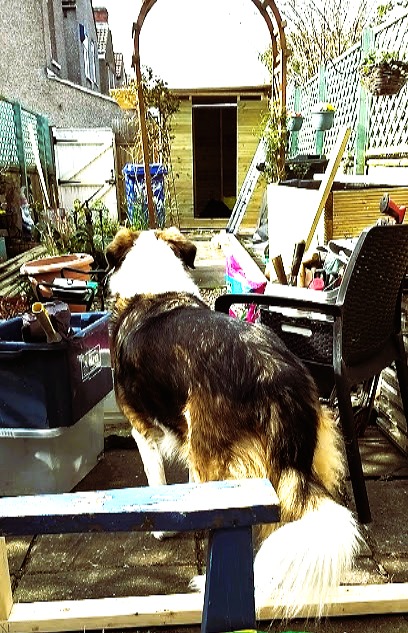
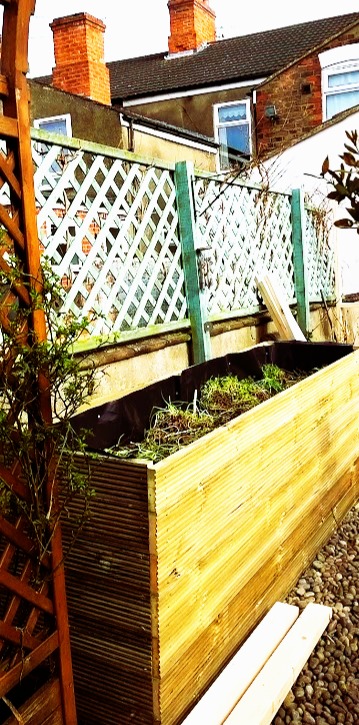
The garden’s been turned inside out, quite frankly. Necessary, of course. The old sheds were beyond saving, and if I’m honest, I’d been putting off the inevitable for far too long. Now, we have a new planter, ready for its layers of native perennials – I think of it as a seasonally curated buffet for bees and butterflies. The shed is almost finished, too, a proper space finally, and I’m determined to keep it tidy. Spiders are welcome on the condition that they don’t creep up on me.
Then there’s the garden room, replacing my old lean-to, the “Growlery.” A Dickensian term, I know, but it suited the place. A charming, if dilapidated, space where I’d ruminate, fulminate and, yes, occasionally growl. The new cabin, with its French doors, is a definite upgrade. It will be a place to sit, to watch the garden, perhaps with a glass of something in hand. I suspect I’ll still do some growling, but hopefully in greater comfort.
A small greenhouse is planned, for the usual tomatoes and cucumbers. The wheelie bins are getting their own cupboard – a small victory – and the side of the house is being transformed with plum-coloured flint, a home for shade-loving plants.
There’s much to look forward to. The seaweed fertiliser is ready, and I managed to rescue the old hydrangea, Billy’s mum’s. And her stone frogs, a whole collection of them, ready to be reinstated. They’re part of the garden’s story, a thread of continuity.
But to get here, a lot had to go. The Growlery, reduced to rubble. The shed, a pile of rotten wood. Mountains of ivy, ripped out. And years of accumulated debris, disposed of as responsibly as possible.
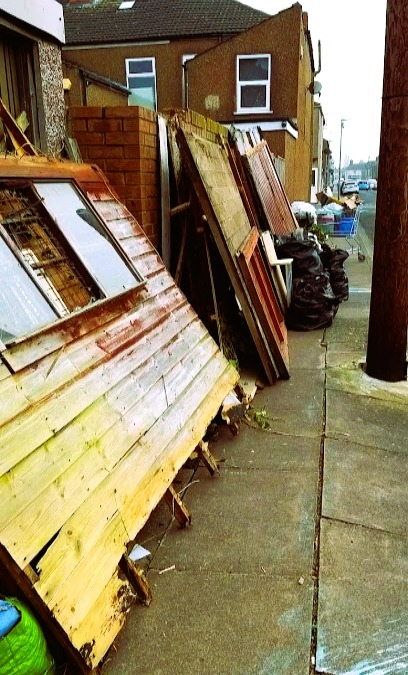
That’s where the difficulty began, really. The clearing out. The ripping, tearing, and discarding. What was once a feature, now just a problem. And the sheer volume of waste, having to pile it in the street, in a neighbourhood already struggling with such things. It felt wrong. But it’s done now, and we can move on.
The rain has paused the work, but we’ll be back at it soon. A couple of weeks, hopefully, and the garden will be ready for planting.
It’s a strange process, this change. You know it’s necessary, but it still feels like a wrench. Tearing down the old, even when it’s falling apart, feels violent. Like erasing a piece of history. And the waste, the sheer volume of it, is sobering.
But gardens aren’t static. They evolve, they change. You can’t cling to the past indefinitely. You have to let go, make way for the new. And sometimes, that means demolition.
I keep thinking about the stone frogs, though. Billy’s mum’s. They’ve seen it all, those frogs. They’ve witnessed the garden’s transformations, its ups and downs. And they’re still here, still watching. A bit weathered, perhaps, but resilient.
And the hydrangea, too. A close call, that one. Thought I’d lost it. But it’s a survivor, like the frogs. A bit of a metaphor, really. Life, gardens, everything. You have to adapt, you have to keep going.
There’s a strange anxiety in letting things go, even when it’s the only sensible course. It’s not just about the objects themselves, but the memories, the associations, the sense of familiarity. You know it’s for the best, but the process of dismantling, of discarding, feels unsettling. It’s a kind of grief, I suppose, for what was, even if what was had become untenable.
So, I’m moving forward. Building the new garden, creating a space that’s both practical and beautiful. A space for wildlife, a space for contemplation, a space for the moments of quiet reflection, and most likely the moments of frustration.
I’m looking forward to the bees, the scent of herbs, and the birdsong. And the stone frogs, of course, keeping watch. It will be a good garden when it’s done. A place of peace, a place to grow. I’m going to find the right chairs and place them in the perfect spot for the necessary unwinding and occasional growling.
 Josie Moon